

Published May 31, 2026 | 7:00 AM ⚊ Updated May 31, 2026 | 7:00 AM

Health spending as a share of GDP also declined, from 3.83 percent to 3.37 percent.

Synopsis: India spent more at retail pharmacies than government hospitals in 2022-23, according to the data released by the National Health Accounts. Pharmacy expenditure rose by ₹9,601 crore to ₹1,62,511 crore, while private hospital spending increased by ₹23,462 crore. The report highlighted rising household dependence on medicines, outpatient care, and private healthcare despite increased public health spending over the decade.
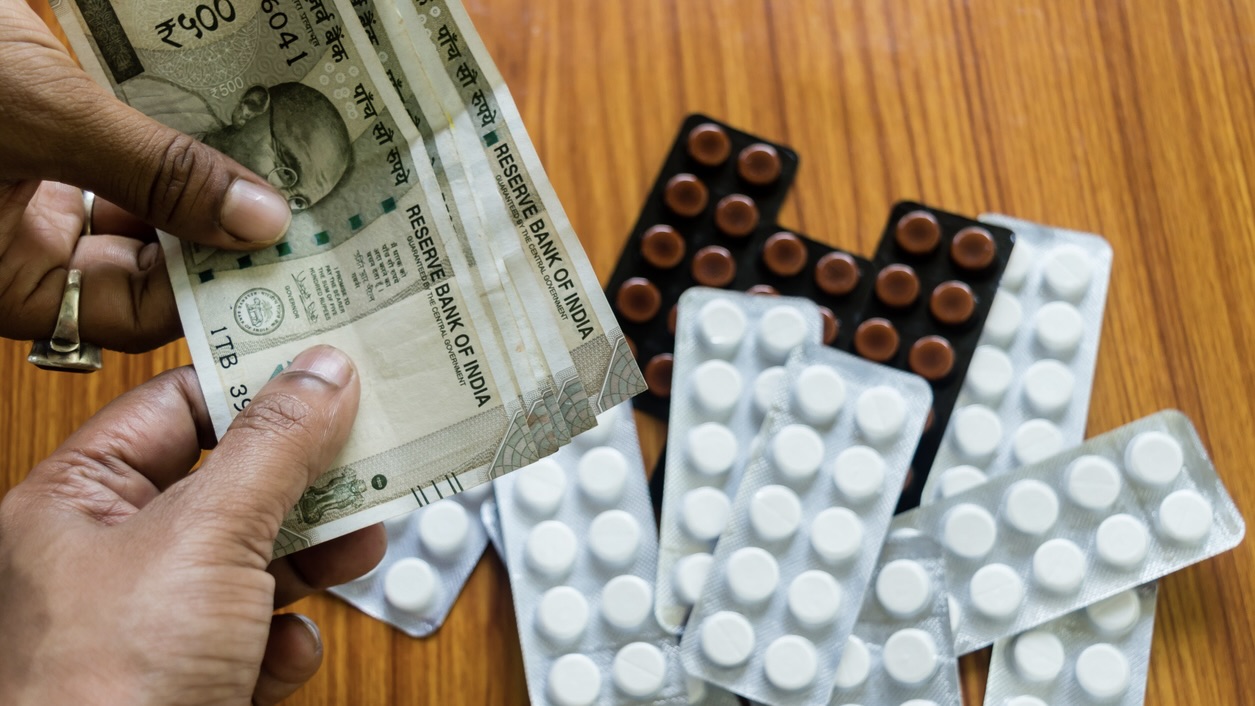
India spent more money at retail pharmacies than in government hospitals in 2022-23, according to the National Health Accounts (NHA) Estimates released by the Union Health Ministry on Wednesday, 27 May.
Pharmacies claimed ₹1,62,511 crore of the healthcare expenditure during 2022-23, up ₹9,601 crore from ₹1,52,910 crore in 2021-22.
Their share in India’s Current Health Expenditure (CHE) also increased from 19.35% in 2021-22 to 21.19% in 2022-23, an increase of 1.84 percentage points.
In contrast, the share of expenditure at government hospitals declined from 18.99% to 16.73% during the same period. Government hospitals accounted for ₹1,28,298 crore of healthcare expenditure in 2022-23, lower than the amount spent through pharmacies across the country.
At the same time, private hospitals increased their CHE share from 26.96% in 2021-22 to 30.83% in 2022-23, the highest level recorded during the decade covered in the report.
In absolute terms, expenditure through private hospitals rose from approximately ₹2,12,948 crore in 2021-22 to ₹2,36,410 crore in 2022-23, an increase of ₹23,462 crore within a single year.
The increase came even as India’s Total Health Expenditure (THE) fell from ₹9,04,461 crore in 2021-22 to ₹8,81,359 crore in 2022-23, a decline of ₹23,102 crore overall.
The data indicated that while overall health spending contracted, expenditure through private hospitals continued to rise both in proportional and absolute terms.
The Union Health Ministry, while releasing the NHA estimates, stated that India had progressed towards universal health coverage over the past decade. It noted that Government Health Expenditure had increased from 28.6% to 43.7% of THE between 2013-14 and 2022-23.
However, the latest annual data also revealed that expenditure patterns within the healthcare system shifted further toward retail medicine spending and private healthcare during 2022-23.
Also Read: In South India, doctor visits cost less, while hospital admissions cost more
The NHA framework defines pharmacies as establishments engaged in the retail sale of pharmaceuticals, including prescribed medicines, over-the-counter drugs, vitamins, and other medical products.
The report noted that prescribed medicines alone accounted for ₹1,34,572 crore, or 17.55% of CHE.
Over-the-counter medicines contributed another ₹26,670 crore, accounting for 3.48% of CHE.
Combined pharmaceutical expenditure reached ₹2,27,311 crore in 2022-23, representing 29.6% of India’s CHE.
The figures included medicines purchased directly from retail pharmacy counters and excluded medicines dispensed in hospitals as part of inpatient treatment packages, which have been classified separately under hospital expenditure.
Also Read: TN treats most of its sick in public hospitals
The NHA data reflected the central role pharmacies have been playing in healthcare access across India, particularly for outpatient treatment and long-term disease management.
For many households, pharmacies function as the first point of healthcare for common illnesses, repeat prescriptions, and chronic disease medication purchases.
Private health insurance accounted for only 9.19% of THE nationally in 2022-23. Most outpatient consultations, diagnostics, and medicine purchases continued to remain outside the effective coverage of insurance and hospitalisation-focused government schemes.
As a result, retail medicine expenditure has largely been financed directly by households through out-of-pocket spending.
Nationally, out-of-pocket expenditure (OOPE) increased from ₹3,56,254 crore in 2021-22 to ₹3,82,629 crore in 2022-23, an increase of ₹26,375 crore within a year.
The Pradhan Mantri Bharatiya Janaushadhi Pariyojana (PMBJP), which provides generic medicines through subsidised outlets, accounted for a relatively small share of total pharmaceutical expenditure.
Under the category “All Pharmaceuticals and Other Medical Non-Durable Goods,” expenditure attributed to Jan Aushadhi stood at ₹100 crore nationally.
This was against a total pharmaceutical expenditure of ₹2,27,311 crore in 2022-23.
States with extensive public procurement and free medicine distribution systems showed comparatively lower household healthcare burden.
For example, Tamil Nadu, through the Tamil Nadu Medical Services Corporation (TNMSC), centrally procures medicines and distributes them free through government health facilities. The state recorded an OOPE share of 38.7% of THE in 2022-23, lower than the national average of 43.41%.
The report also highlighted the growing role of chronic illnesses in India’s healthcare expenditure pattern.
India has a huge burden of non-communicable diseases such as diabetes, hypertension, thyroid disorders, and cardiovascular disease, many of which require long-term or lifelong medication.
Traditional, Complementary and Alternative Medicine systems, including AYUSH-related expenditure, accounted for ₹26,957 crore, or 3.52% of CHE in 2022-23.
Combined expenditure on pharmaceuticals and medicine-related products represented the single largest functional category of healthcare expenditure in India during the year, the report said.
(Edited by Majnu Babu).



