

Published Oct 22, 2026 | 7:44 PM ⚊ Updated Oct 22, 2026 | 7:44 PM

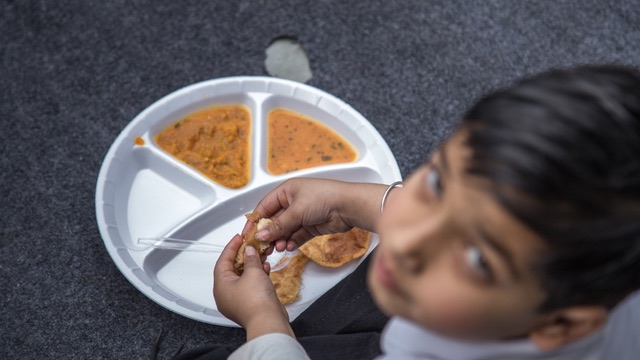
Stunting, which reflects chronic undernutrition, fell to 29.3 percent in 2026, moving India from the “very high” to the “high” category.

Synopsis: India ranked 100th among 122 countries in the 2026 Global Hunger Index, with a score of 24.1, placing it in the “serious” category. Its score improved by just 1.7 points between 2018 and 2026, compared with an 8.2-point improvement between 2006 and 2012, while child wasting remained at 19%, the highest rate in South Asia.
India ranked 100th among 122 countries in the 2026 Global Hunger Index (GHI), with a score of 24.1, placing it in the “serious” hunger category. Published by German aid agency Welthungerhilfe (WHH) and Irish organisation Concern Worldwide, the index measures hunger and undernutrition across countries and tracks progress and setbacks. The 2026 edition draws on data from 2021 to 2025.
The GHI uses a 100-point scale, with lower scores indicating less hunger. Scores from 10 to 19.9 fall in the “moderate” category, while those from 20 to 34.9 are classified as “serious”.
India’s GHI score fell from 38.1 in 2000 to 24.1 in 2026, with 9.8 percent of the population being undernourished. More significantly, the score declined by just 1.7 points between 2018 and 2026, compared with an 8.2-point drop between 2006 and 2012.
“India’s GHI score, considered serious since 2012, mirrors the regional slowdown, with the score easing from 25.8 in 2018 to 24.1 in 2026,” the report said. It added that this “represents a fraction of its steep improvement of 8.2 points between 2006 and 2012.”
The GHI is based on four indicators: undernourishment, child wasting, child stunting and child mortality.
Undernourishment fell to 9.8 percent in 2026. Child wasting, however, stood at 19 percent—the highest rate in the region—and remained high across all the reference years examined in the report. Wasting occurs when children under five weigh too little for their height and is usually a sign of acute undernutrition.
The report also accounts for factors associated with undernutrition, including poor diet quality, infections, and inadequate access to health services, safe water and sanitation.
Stunting, which reflects chronic undernutrition, fell to 29.3 percent in 2026, moving India from the “very high” to the “high” category for the first time. Child mortality also fell, with the share of children dying before their fifth birthday dropping from 9.2 percent in 2000 to 2.7 percent in 2026.
Also Read: Complan boy, Lactogen Pro girl? FSSAI issues notices to Zydus Wellness, Nestlé
India has also fared worse than its South Asian neighbours.
Nepal’s score fell from 18.4 in 2018 to 14.5 in 2026, an improvement of 3.9 points — more than twice the 1.7-point decline in India’s score. Sri Lanka’s score dropped from 11.4 to 10.2, while Bangladesh’s fell from 20.0 to 19.2, placing both countries in the “moderate” hunger category.
Pakistan’s score rose from 24.0 in 2018 to 25.5 in 2026. It ranked 106th, below India, which scored 24.1 and remained in the “serious” category.
The gap with Bangladesh is particularly stark in child nutrition. Child wasting stands at 19 percent in India, compared with 12.9 percent in Bangladesh. Bangladesh also has lower rates of stunting, at 24 percent, and undernourishment, at 8.2 percent.
India has a lower under-five mortality rate than both Bangladesh and Pakistan. The share of children who die before their fifth birthday is 2.7 percent in India, compared with 3 percent in Bangladesh and 5.6 percent in Pakistan.
The Union government has previously rejected the Global Hunger Index (GHI), calling it “a deeply flawed measure of ‘Hunger’” that “does not reflect India’s true position”.
Savitri Thakur, Minister of State for Women and Child Development, told the Rajya Sabha on 5 August 2026, that the index “is a private construct published by 3 Non Government Organizations.”
Three of the index’s four indicators, Thakur said, “are actually related to health and nourishment levels in children” and “do not reflect prevalence of hunger in the overall population.” She also questioned the fourth indicator, which measures undernourishment across the population, saying it “suffers from significant methodological and data limitations”. The methodology, she added, “is unreliable and it cannot be taken to reflect hunger in the overall population.”
Thakur cited government food and nutrition schemes in support of the government’s position. The Pradhan Mantri Garib Kalyan Anna Yojana “substantially supplements the food requirements of up to 75% of the rural and up to 50% of the urban population”, she said. About 79.09 crore people receive free grain under the scheme.
The PM POSHAN scheme covers about 11.20 crore children in 10.36 lakh schools. Mission Poshan 2.0 addresses malnutrition through “cross cutting convergence amongst more than 18 Ministries/Departments”, she said. She also cited National Family Health Survey findings showing improvements in child malnutrition indicators across India.
The GHI report says its four indicators measure distinct aspects of hunger. Undernourishment “captures the food access situation of the population as a whole”, while the child indicators assess nutritional deficiencies among “a particularly vulnerable subset of the population”.
A lack of dietary energy, protein or micronutrients in children “leads to a high risk of illness, poor physical and cognitive development, and death”, the report says. It adds that combining the indicators reduces the effect of measurement errors.
(Edited by Dese Gowda)



