


Published Mar 25, 2026 | 8:00 AM ⚊ Updated Mar 25, 2026 | 8:00 AM

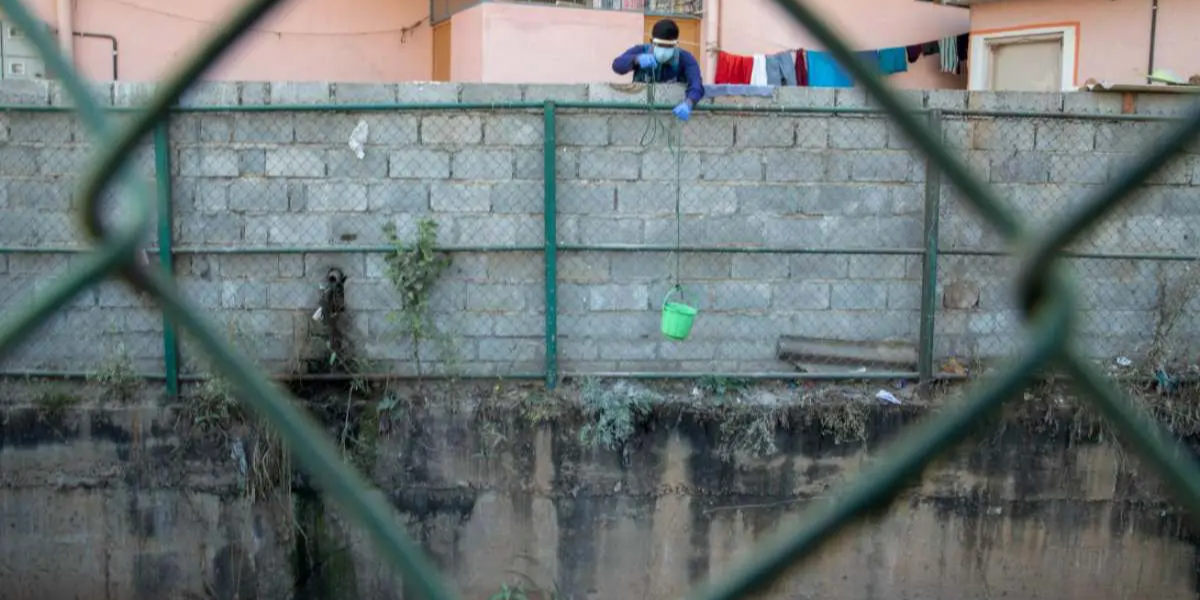
Researcher drawing water from STPs for wastewater surveillance (#COVIDActionCollab)
Synopsis: Scientists analysing Chennai’s wastewater for two years found that more than half the microbial genomes could not be classified at the species level, pointing to a large share of bacteria unknown to science. Across Chennai, Mumbai, Delhi and Kolkata, each city showed distinct microbial communities but the same antibiotic resistance patterns, indicating a shared system of resistance.
Scientists found that more than half the microbial genomes identified in samples from drains and open sewage channels across Chennai over two years cannot be classified at the species level, suggesting most bacteria may be unknown to science.
The findings come from the first comprehensive mapping of antimicrobial resistance (AMR) in India’s urban wastewater, published in Nature Communications.
Researchers from the Hyderabad-based CSIR-Centre for Cellular and Molecular Biology (CCMB) and partner institutions analysed 447 wastewater samples collected between March 2022 and March 2024. They took samples from 19 sites across Chennai, Mumbai, Delhi and Kolkata, using shotgun metagenomics to examine the genetic material of whole microbial communities.
Chennai stood out among the four cities. From 109 samples collected at five sites, researchers identified 242 high-quality microbial genomes and 69 unique antibiotic resistance genes. The city also had the most complex microbial network, with 15 distinct communities, more than any other location studied.
The most significant finding was the high share of unclassified microbes. In Chennai, 52.9 percent of genomes could not be identified at the species level. Researchers said these genomes were of comparatively high quality, which points to novel species rather than gaps in the data.
The World Bank estimates AMR could impose a global economic burden of $1 trillion by 2050. In India, antibiotic use is widespread and over-the-counter access has long been easy, so conditions for resistance to emerge and spread are already in place.
Each city showed a distinct microbial “fingerprint”: Delhi’s wastewater microbiome differed from Mumbai’s, and Chennai’s from Kolkata’s. The clustering was strong enough for researchers to identify a sample’s city of origin from its bacterial composition alone.
That city-specific pattern disappeared when they examined antibiotic resistance genes.
Chennai’s microbial communities were also relatively stable over time. This contrasts with Kolkata, where repeated spikes in Pseudomonas aeruginosa disrupted the microbial balance. Samples from Chennai also showed a higher abundance of sulphur-associated bacteria, which points to possible industrial or environmental influences on the city’s wastewater.
Across all four cities, the same resistance profiles emerged. Dominant classes, including multidrug resistance, tetracyclines, macrolides and beta-lactams, were consistently present, regardless of differences in underlying microbial populations.
Researchers described this as a “shared resistome” across Indian cities. “It is possible that the microbiome is exposed to similar pollutants, antibiotics, physicochemical conditions and other stressors and drivers of AMR, which could have resulted in similar ARG profiles,” they write.
Klebsiella pneumoniae, listed by the World Health Organisation as a critical priority bacterium, was particularly abundant in samples from Chennai and Mumbai. Meanwhile, Pseudomonas aeruginosa, another WHO-listed priority pathogen, was more prevalent in Kolkata, where its periodic spikes disrupted local microbial communities.
The study sets out how antibiotic resistance spreads. “Bacteria develop resistance through specific genes that enable them to block antibiotic entry, neutralise or expel drugs, or break down antibiotic molecules,” CCMB said. “These resistance traits can be shared not only between generations but also among neighbouring bacteria.”
This exchange occurs via mobile genetic elements (MGEs), which transfer resistance genes between bacterial species, even across taxonomic boundaries. Wastewater, dense with diverse microbial life, provides ideal conditions for this transfer.
Researchers found that resistance genes linked to tetracyclines and beta-lactams were more often associated with these mobile elements, which points to higher potential for spread. Macrolide resistance genes showed lower mobility. In Chennai, around 6 percent of resistance-carrying genetic material was linked to mobile elements, lower than in some other cities, but the genes remain embedded in the microbial ecosystem and circulate through the city’s wastewater.
Beyond the findings, the researchers say wastewater surveillance is a powerful, underused tool to track public health threats. Individuals may not access healthcare systems, but their biological data still enters wastewater networks.
Logistics have long limited wider use. Wastewater samples degrade during storage and transport. The CCMB team addressed this directly. “The team has developed a standardised protocol that allows wastewater samples to be stored for up to seven days without compromising data quality, enabling easier transport to centralised testing facilities,” CCMB Director Dr Vinay K Nandicoori said.
This could expand surveillance capacity, especially in smaller cities and towns where immediate laboratory processing is not feasible. The protocol is publicly available, and researchers hope it will support broader AMR monitoring across India.


