

Published Mar 07, 2026 | 7:00 AM ⚊ Updated Mar 07, 2026 | 7:00 AM

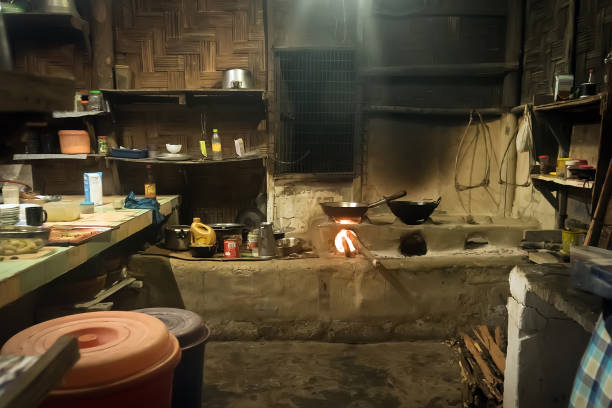
Improved biomass stoves fitted with chimneys, better ventilation, and sustained access to affordable clean fuels could slash anaemia (iStock)
Synopsis: When biomass burns, it releases fine particulate matter, carbon monoxide, and polycyclic aromatic hydrocarbons. These do not float harmlessly overhead. They settle in the lungs. They enter the bloodstream. Once there, they trigger inflammation, attack red blood cells, and interfere with haemoglobin production.
A study published in PLOS ONE has linked indoor air pollution (IAP) with anaemia in pregnant Indian women.
The study, Exploring the Association between Indoor Air Pollution and Anaemia Among Pregnant Women in India, monitored 25,579 pregnant women. It found that one in two pregnant women in the country was anaemic.
The anaemic cases climbed to nearly six in 10 among pregnant women who used firewood, dung, or crop waste in their kitchens.
Picture the kitchen. Four walls, one small window, no exhaust fan, no chimney. A clay stove sits in a corner. The smoke from the hearth envelops the kitchen.
Burning biomass releases fine particulate matter, carbon monoxide, and polycyclic aromatic hydrocarbons. These do not float harmlessly overhead, especially in an enclosed space like the kitchen. They settle in the lungs. They enter the bloodstream. Once there, they trigger inflammation, attack red blood cells, and interfere with haemoglobin production.
The body works at a different level during pregnancy. Blood volume rises. Iron demand rises with it, because the foetus needs oxygen, and oxygen travels on haemoglobin. When smoke disrupts that system, the body cannot keep up. Red blood cells are reduced. Haemoglobin drops, resulting in anaemia.
Anaemia during pregnancy does not just weaken the mother. It starves the foetus of oxygen. It raises the risk of preterm birth. It stunts foetal growth. It damages the placenta.
“Exposure to indoor air pollutants during pregnancy can have long-lasting effects on both maternal and fetal health,” the researchers wrote. “These pollutants can impair fetal growth, increase the risk of preterm birth, and harm placental development.”
The study found that pregnant women exposed to IAP carried a 43% higher likelihood of being anaemic compared to those who were unexposed. Researchers then adjusted their numbers for education, income, age, and geography. The association held. IAP contributed to anaemia independently, separate from poverty or education.
But poverty and schooling still matter enormously to who ends up breathing the smoke.
Most at-risk women were young villagers. They belonged to Scheduled Tribe communities. They sat at the bottom of the wealth index. They have no alternative to wood and dung, because LPG refills cost them money, which they never have enough of.
Around two-fifths of Indian households still depend on biomass fuels for daily cooking. The government’s Ujjwala Yojana programme distributed LPG connections to millions of households across the country, and that counted as progress. But a connection is not the same as a refill. The cylinder arrives once. When the money runs out, the firewood returns, and the smoke fills the kitchen.
In most Indian households, cooking is women’s responsibility, even during pregnancy. The social expectation does not lift because a woman’s blood volume has shifted or because her iron stores have started to deplete.
So the woman in her trimester of pregnancy stands at the hearth even before the sun is up. She inhales and absorbs what the smoke carries. She passes some of it on to the child in her womb.
“Cooking is perceived as a predominantly female responsibility, a social norm that typically persists throughout pregnancy,” the study noted. “This gendered division of domestic labour results in sustained maternal exposure during a critical window when both maternal and foetal health are highly sensitive.”
The exposure does not happen once. It repeats every morning and evening, across all nine months. The researchers noted that prolonged exposure to low concentrations of pollutants from biomass fuels reduced the body’s ability to produce red blood cells and interfered with heme synthesis, the process that builds haemoglobin itself. The harm accumulated quietly.
India runs programmes for iron supplements. It distributes folic acid tablets. It measures haemoglobin levels at antenatal visits. These efforts matter. But the study argued that focusing only on diet and supplementation missed a driver that sat not in the stomach but in the walls of the kitchen.
“Factors like infections, lifestyle changes, inadequate implementation, and poor programme coordination continue to hinder progress,” the researchers wrote. The anaemia numbers have not moved fast enough despite decades of nutritional intervention. The kitchen, largely, has not been counted.
Improved biomass stoves fitted with chimneys, better ventilation in cooking spaces, and sustained access to affordable clean fuels could slash anaemia rates in ways a tablet handed across a clinic counter cannot reach alone. The researchers called for policies for household energy transitions alongside nutritional strategies.
However, the data for the study were cross-sectional, meaning it captures a moment, not a journey. Pollution exposure was estimated through fuel type and kitchen location rather than direct air measurement. Causality, in the strictest sense, remained unproven.
By the time many Indian children take their first breath, conditions shaping their health have already been negotiating with woodfire for nine months.
The stove was lit before sunrise. The smoke filled the room. The expectant mother in the kitchen has inhaled it without having any other choice.
(Edited by Majnu Babu).


