

Published Apr 06, 2026 | 6:12 PM ⚊ Updated Apr 06, 2026 | 6:12 PM

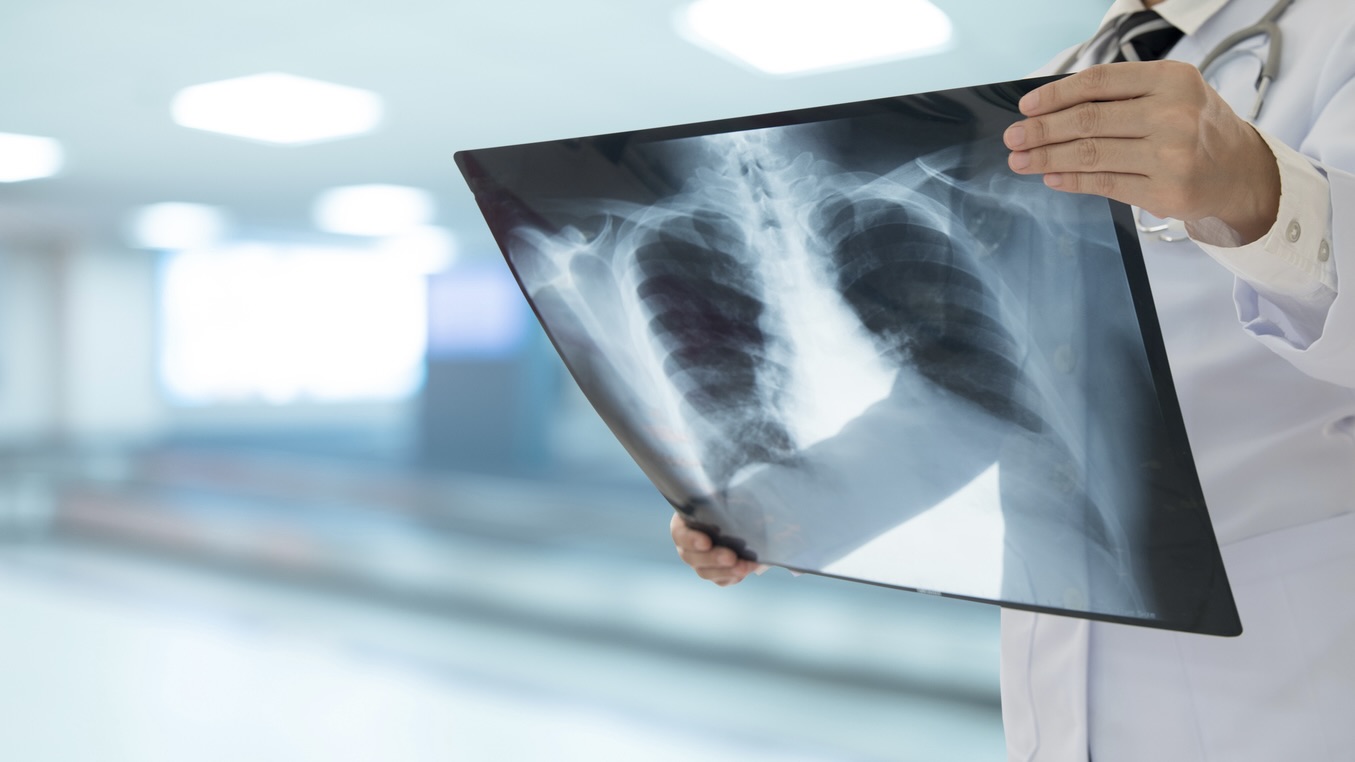
ICMR's "AI-enabled" handheld X-ray device was promoted under the National TB Elimination Programme.
Synopsis: The Indian Council of Medical Research promoted a handheld TB X-ray device as a ‘Make in India’ innovation, but a parliamentary committee has found that its core components were imported from China. The panel has called for a clear definition of ‘Made in India’ and said devices built around imported parts should not be claimed as indigenous.
The Indian Council of Medical Research promoted a handheld X-ray machine as an indigenous innovation under its TB elimination programme.
A parliamentary committee has found that the device’s most critical components were imported and has demanded a binding definition of what “Made in India” must mean.
Earlier this year, a professor at Galgotias University drew national ridicule after she presented a Chinese-made Unitree robotic dog at the India AI Impact Summit in New Delhi, called it “Orion”, and claimed her institution had built it. The video went viral.
The university later tried to distanced itself from the controversy. The episode became shorthand for a kind of institutional dishonesty: branding imported technology as homegrown invention.
Now, a parliamentary committee has found the same problem inside one of India’s most respected government research bodies.
The Department-Related Parliamentary Standing Committee on Health and Family Welfare, in its report on the Department of Health Research, has pulled up the Indian Council of Medical Research (ICMR) over its AI-enabled handheld X-ray device, promoted under the National TB Elimination Programme.
The device was procured through the Government e-Marketplace under the Class I “Make in India” category, but its most critical components were not manufactured domestically.
“Certain components such as the X-ray tube and the detector, which are integral to the handheld X-ray system, were imported,” the committee recorded, citing disclosures from the supplier, Lipomic India Pvt. Ltd. These components, sourced from China, make the device function. The casing, the software interface, the branding – none of these generate an X-ray image.
The committee did not mince its words on what this meant:
“If the core component like X-ray tube, HV tank, etc is being imported, ICMR should refrain from claiming it as their own technology.”
A handheld X-ray machine has two components that do the essential work: the X-ray tube, which generates the radiation, and the detector, which captures the image. If both are sourced from abroad, what remains “indigenous” is largely the assembly.
Domestic companies often procure these sub-components from international suppliers because the capital investment to manufacture them in India does not yet exist at scale.
The panel drew a line between genuine indigenous work and assembled products. It acknowledged ICMR’s development of DeepCXR, an AI-based tool built with the Institute of Plasma Research to automate interpretation of chest X-rays.
“The Committee observes that ICMR, in collaboration with Institute of Plasma Research, has developed and validated an indigenous AI-based tool (DeepCXR)… The Committee recommends that ICMR make such indigenous technology available throughout the country free of cost.”
DeepCXR classifies chest X-ray images as normal or abnormal and is designed to scale TB screening in underserved areas. The committee’s endorsement is unqualified.
But it did not extend that endorsement to the hardware the software runs on. Adding a genuine AI layer to an imported device does not make the whole product indigenous. The committee made this explicit:
“Medical innovation and products should not be an assembly of components to be cited as ‘Made in India’.”
The report does not treat this as an isolated failure. It places the ICMR case within a broader pattern of dependence on foreign medical technology across India’s public health system.
“Our country still relies heavily on imported medical technologies and equipment such as MRI, CT scans, PET-CT, and LINAC systems, which are procured from international companies like Philips and Siemens,” it said.
The committee’s point is that the ICMR handheld X-ray is not an aberration. It shows a procurement and classification system that allows the “Made in India” label to attach to products whose core function depends on imported, often Chinese, components, with no requirement for disclosure and no mechanism for scrutiny.
The committee has called for a formal framework to prevent such misclassification, setting out its demands in specific terms.
“The Committee recommends that ICMR should set up a benchmark for ‘Made in India’ initiatives and derive a protocol wherein ‘Atmanirbhar Bharat’ is encompassed on a true scale,” it said.
Where assembly of imported components is unavoidable, it wants sourcing made visible rather than obscured.
“In case ICMR has to go for compilation of medical devices, the protocol should be clearly highlighted on the dashboard,” it said.
“ICMR should make maximum efforts to develop some mechanism to manufacture these machines in our medical device parks with 100% indigenous value addition, which is essential for regaining public trust in the field of AI.”


