

Published Jul 21, 2022 | 6:22 PM ⚊ Updated Jul 28, 2022 | 2:50 PM

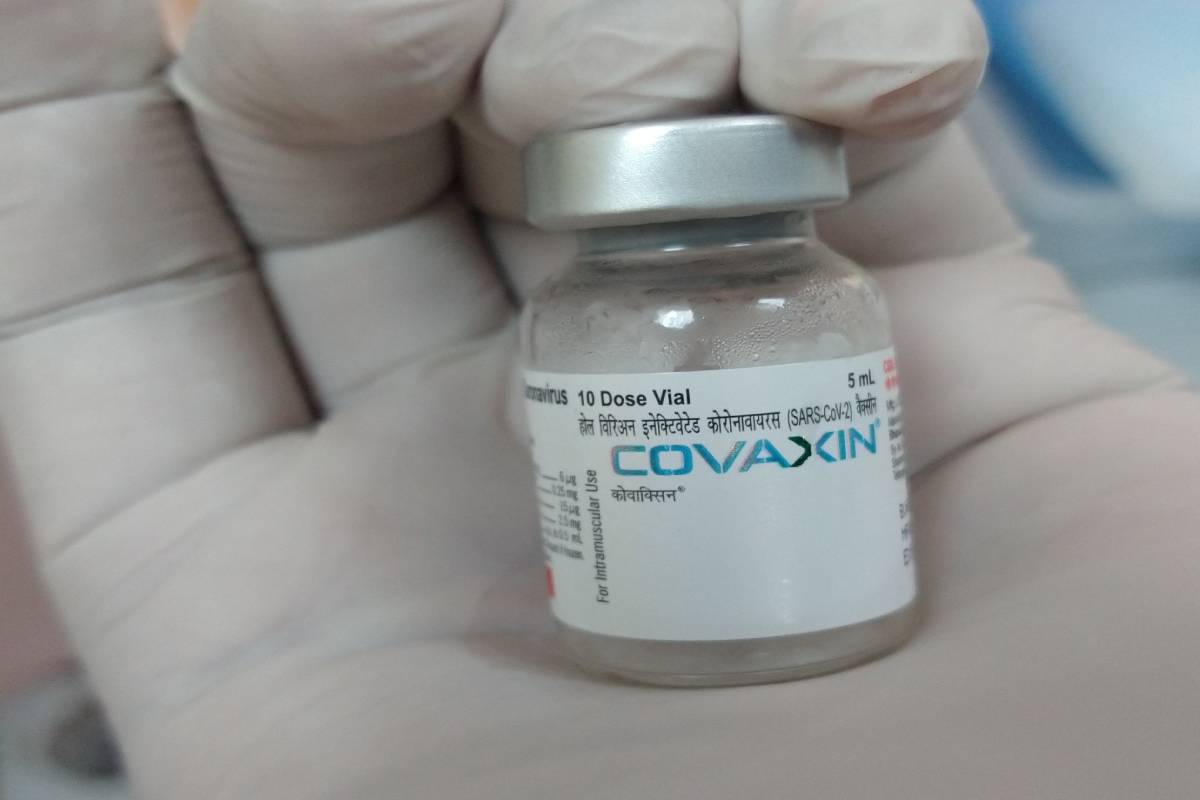
Covaxin provides long term immune response and neutralising antibody responses against alpha, beta, delta, delta plus and omicron variants. (Creative Commons)

A recent study has claimed that Covaxin demonstrates the persistence of immunity proven to be safe against emerging variants.
According to the study, published in Nature Scientific Reports, the vaccine produced by Hyderabad-based Bharat Biotech was also well-tolerated and immunogenic in subjects in controlled clinical trials after the third dose.
The study was conducted on 184 people, around six months after the primary series of two doses.
Covaxin is a ready-to-use liquid vaccine, stored at 2-8-degrees Celcius, with a 12-month shelf life and a multidose vial policy.
According to the study, Covaxin provides a long-term immune response, cell-mediated immunity, and also immunogenicity against spike proteins and N proteins
Its use reportedly demonstrates the persistence of immunity that is proven to be safe against emerging variants
It also neutralises antibody responses against alpha, beta, delta, delta-plus and omicron variants, said the study.
“As most of the population in the country is already vaccinated, the study will give a boost to safety against the Covid-19 virus as we are getting our precautionary doses,” Dr Rakesh Mishra, former Director of the CSIR-Centre for Cellular and Molecular Biology (CCMB) in Hyderabad, told South First.
“Crores of Covaxin doses have already been given to the citizens, which is making us safe from spreading of the virus. Now it’s time to get booster doses as the study has already proven that it keeps us safe from every variant,” he added.
It should be mentioned that only 52 lakh out of the 4.89 crore target population aged 18 and above in Karnataka have taken the precautionary dose of the vaccine.
In Telangana, out of the 2.7 crore target population, only 13 lakh have taken the precautionary dose.
In Andhra Pradesh, out of the 4.35 crore target population, only 64 lakh have taken the precautionary dose.
In Kerala, out of the 2.69 crore target population, only 23 lakh have taken the precautionary dose.
In Tamil Nadu, out of the 5.56 crore target population, only 20 lakh have taken the precautionary dose.
According to the study, administration of a third dose six months after the first two doses dramatically increased neutralising antibody responses against both homologous and heterologous strains.
“Immune responses declined at six months, but increased by 40-fold in subjects who received a booster dose. Immune responses, when assessed against variants of concern, persisted up to 12 months,” said the study.
It is also observed that no serious adverse events — except pain at the injection site, itching, and redness — occurred from the third dose.
No cases of myocarditis, pericarditis, blood clots, or thrombocytopenia were detected.
Dr Krishna Ella, chairman and managing director at Bharat Biotech, said, “Post the booster dose, it has proven neutralising antibody responses against variants of concern and long term protection through memory T and B cell responses.”
She added: “We have now achieved our goal of developing a safe and efficacious vaccine with long-term protection against a spectrum of variants.”



