


Published Mar 24, 2026 | 11:55 AM ⚊ Updated Mar 24, 2026 | 11:55 AM

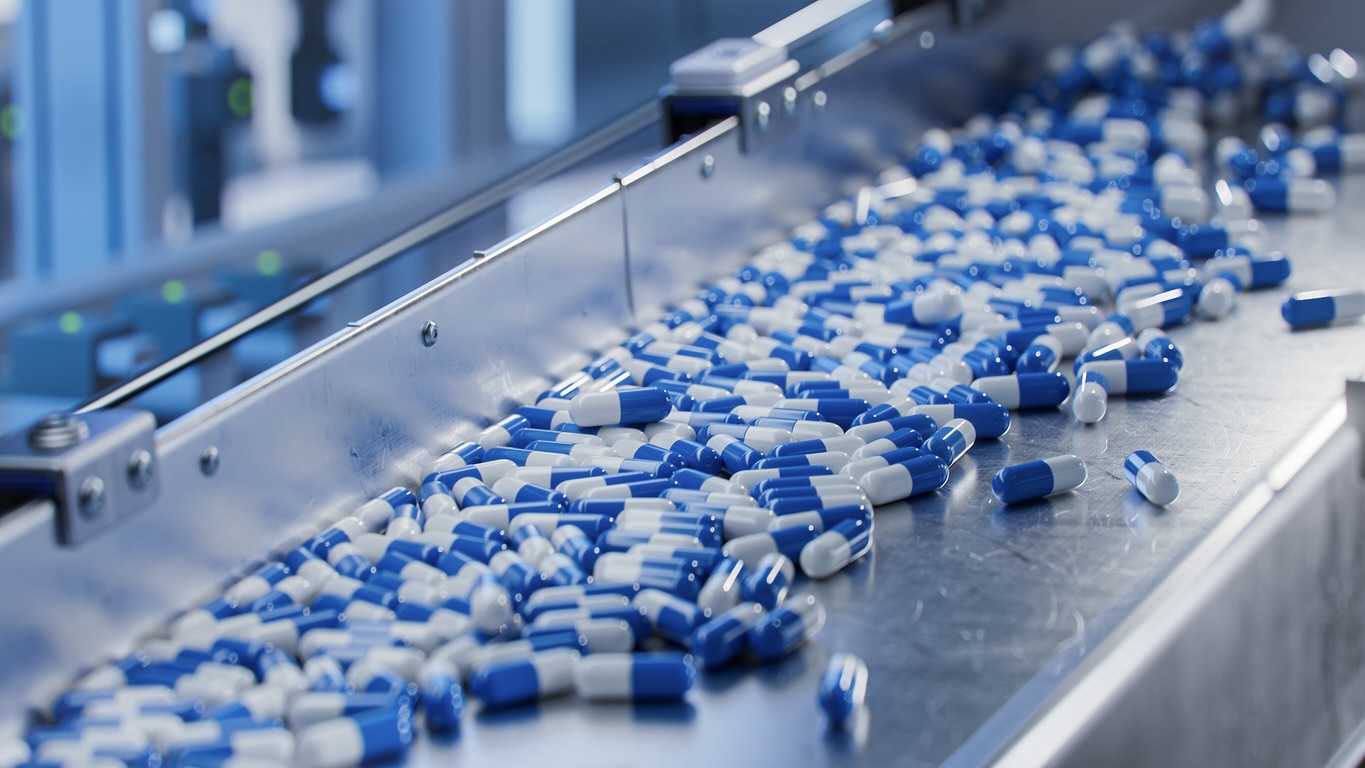
If the disruptions persist, India’s $30 billion pharmaceutical export sector could face losses of $300 million to $500 million.
Synopsis: The US–Israel war on Iran is having a cascading effect on India’s pharmaceutical and medical devices industries, as disruptions in global shipping and petrochemical supply have been hampering supply chains and driving up costs. Industry insiders say higher prices for active pharmaceutical ingredients, packaging materials and transport will push up medicine costs, and warn that if the disruption continues, it could halt production and cost jobs.
Few people associate petroleum with medicines. Yet a surprising number of chemicals derived from the refining of crude petroleum oil serve as the building blocks for modern medicines that are often taken for granted.
Take paracetamol, for instance. Its manufacture begins with benzene, a simple aromatic hydrocarbon produced as a by-product of oil refining. Through a series of controlled steps, benzene is modified to form nitrobenzene, then aniline, then p-aminophenol, with each step altering a small part of its structure and ultimately creating acetaminophen, the active pharmaceutical ingredient (API) in the drug.
The process also involves other petroleum derivatives, such as methanol and ethyl acetate. The packaging in which the tablets are sold is made of PVC, another ubiquitous crude oil product.
Pharmaceutical manufacturing is also energy intensive and is largely powered by natural gas reactors.
The US–Israel war on Iran, now in its fourth week, is thus having a cascading effect on India’s pharma manufacturing industry.
“API prices are going up, and this will definitely have an impact on formulation prices because a lot of the excipients and related materials are imported from Europe and other places, many of them petroleum-dependent products,” KV Rambabu, Managing Director of Pulse Pharmaceuticals and Chairman of the Indian Drug Manufacturers’ Association (IDMA), Telangana, told South First.
“Once petroleum is affected, it has a cascading impact not only on APIs but also on materials like PVC and plastics. A lot of plastic is used in pharma, and that will also be affected. Then there is the cost of transportation going up, along with logistics costs.”
India’s pharmaceutical industry relies heavily on imports from China for API raw materials, along with key intermediates used in vitamins, paracetamol and metformin, according to the Union Ministry of Chemicals and Fertilisers.
In the financial year 2024–25, India imported around 200 categories of APIs, bulk drugs and drug intermediates worth about $4.35 billion, as per HSN (Harmonised System of Nomenclature)-based import data. China accounted for about 73.7 percent of these imports.
“With shipping routes impacted, there will be ripple effects even in places like Telangana and Hyderabad. China itself depends on raw materials from other regions, so their costs will also go up, and they will pass on the increase. That said, not everything is directly imported as APIs from China,” Rambabu said.
“India imports chemical intermediates, and the final APIs are often produced domestically. Even this process will be affected due to disruptions in the supply of solvents, gas and other inputs, especially since the API industry is highly energy intensive,” Rambabu said.
Raw materials such as petrochemicals and others from West Asia, Europe and elsewhere headed to China typically move through the Strait of Hormuz and the Red Sea via the Suez Canal on either side of the Arabian Peninsula. Both routes have crawled to a near halt since the conflict began in late February.
The disruption has led to a near “wild west” in global shipping. According to Maritime Gateway, freight costs from China have nearly doubled, rising from around $1,200 to $2,400 per container.
Shipments to Europe and the Americas are increasingly avoiding the Suez Canal and rerouting via the Cape of Good Hope, adding another 10 to 15 days to transit times.
Raw material prices, in turn, have risen sharply, ranging from 5 percent to 100 percent depending on the compound. If the disruptions persist, India’s $30 billion pharmaceutical export sector could face losses of $300 million to $500 million.
“As of now, I think it is too early to fully assess the overall impact. Some industries are already facing issues, particularly those dependent on gas supply,” Rambabu said.
“In the news and on social media, people often say that paracetamol prices will go up. That is a simplification; it is not just paracetamol. Other drugs will also see price increases. Any increase in input costs will directly impact final prices.”
The medical supplies sector, meanwhile, is stable, though the conflict has pushed up raw material prices. Rajiv Nath, Forum Coordinator of the Association of Indian Medical Device Industry (AiMeD), said claims of shortages of syringes and other disposables are untrue.
“As of now, there are no shortages of syringes or other medical disposables, contrary to circulating rumours. There is no need to panic. Supplies, other than LPG, which affects a few examination glove manufacturers using it as a heat source, have not been disrupted,” he added.
However, the conflict has driven up input and packaging costs by as much as 50 percent and 20 percent respectively, according to Nath.
“[It has also] significantly increased the cost of self-generated power running on diesel. Adani PNG gas prices have nearly doubled, with reduced availability,” he said.
These rising costs are hitting manufacturers operating on thin margins, especially in essential, high-volume products such as syringes, nitrile gloves, catheters and other disposable medical devices.
Nath said earlier delays were manageable, but prolonged disruptions could have more serious consequences.
“While shipment delays of one to three weeks were earlier manageable through buffer stocks, prolonged disruptions now risk production halts, hospital shortages, and rising costs due to inflated prices, including potential market abuse by dominant large raw material suppliers,” he said.
Despite stable availability of key polymer grades such as polypropylene, HDPE and LDPE, Nath said the situation needs close monitoring to avoid disruptions to production timelines and overall industry stability.
He said manufacturers are already adjusting to rising costs and logistical challenges.
“We are witnessing substantial price increases, longer lead times, and highly elevated freight costs, which are putting pressure on cost structures and planning cycles. Many manufacturers have adjusted product pricing by 10–20 percent to sustain operations. The evolving global supply chain dynamics require close monitoring,” he said.
Nath also said India continues to depend heavily on imports for specialised, high-grade medical polymers, which leaves the sector exposed to global supply disruptions.
“India’s medical devices industry continues to depend heavily on imports for specialised, high-grade polymers that meet stringent quality and regulatory standards… Any sustained disruption in these supply lines directly threatens manufacturing continuity and export commitments,” he said.
The AiMeD on Monday, 23 March, formally wrote to Union Commerce and Industry Minister Piyush Goyal, outlining urgent measures to protect over five lakh jobs and safeguard India’s export commitments to markets such as the United States and the European Union.
The industry body raised concerns about rising freight costs and urged that inland haulage charges not be increased at a time when global logistics costs are already high. It also flagged delays in GST refunds, saying manufacturers face acute working capital stress due to unutilised input tax credits that remain unpaid.
“Urgent government intervention is required to safeguard over five lakh jobs, ensure affordable healthcare access under Atmanirbhar Bharat, and protect exports to the US and EU,” Nath said.
He outlined measures that could provide immediate relief, including rationalising freight charges, expediting GST refunds, and addressing structural tax issues that are worsening working capital stress for manufacturers.
“The government can provide immediate relief by ensuring that CONCOR reduces its inland freight haulage charges. It should also honour its assurance to refund excess GST paid within seven days. Delays are causing acute working capital distress,” Nath said.
At the same time, Nath warned against policy decisions that could undermine domestic manufacturing, particularly any move to reduce import duties on finished medical devices. Instead, he suggested targeted support focused on raw materials and components.
“The government should not reduce import duties on medical devices based on rumours of shortages… Instead, it may consider a temporary three-month rebate of 2.5 percent on raw material imports and 5 percent on component imports,” he said.
(Edited by Dese Gowda)


