

Published Jun 17, 2026 | 7:00 AM ⚊ Updated Jun 27, 2026 | 11:13 PM

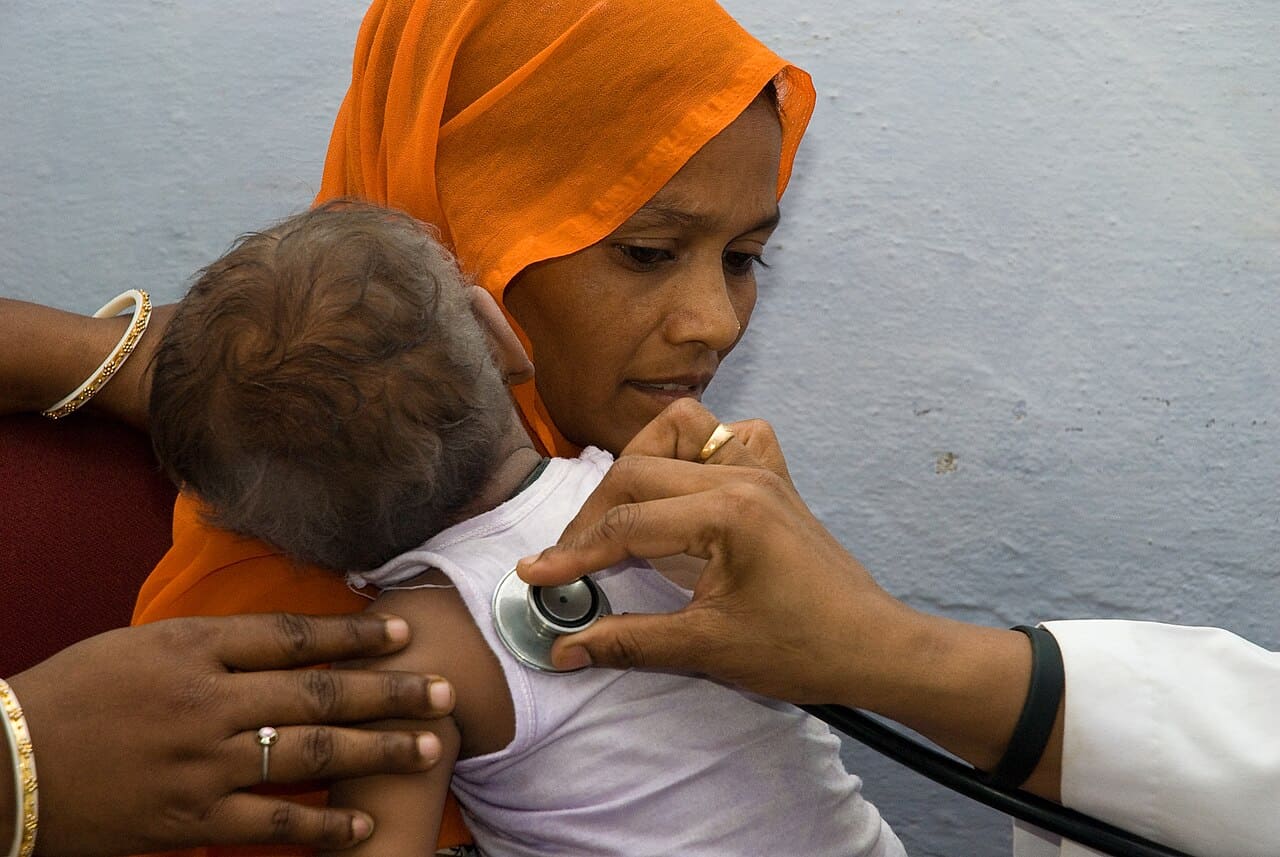
India has one of the highest burdens of TB.

Synopsis: A positive TB diagnosis is received with dread in India. Now, public health professionals are approaching testing with an aim not only to catch the disease but to avoid the stigma associated with it.
India remains the tuberculosis (TB) capital of the world, according to the World Health Organisation.
As part of an implementation research project facilitated by the Implementation Research Division of the Indian Council of Medical Research (ICMR), the role of citizen dialogues, led by TB champions through applied theatre in addressing TB-related stigma, is being explored across three states in India
During my fieldwork on understanding how TB stigma shapes care-seeking behaviour and the measures being adopted to address it, I repeatedly encountered an interesting shift in the way TB screening was being organised.
In conversations with frontline health workers in Jharkhand, one senior TB treatment supervisor described how her team had stopped announcing standalone TB screening drives because, as she put it, “the moment the announcement says TB, people don’t come.” The fear of being associated with a stigmatised disease, she explained, made people reluctant even to provide a sputum sample.
Instead, the team now integrates TB screening within the general health checkup camps, inviting people to get their blood pressure or blood sugar levels checked. These are services that community members actively seek, and that carry no social stigma. Once people have arrived and are engaged in the routine of a health consultation, health workers gently ask about symptoms such as a persistent cough, night sweats, or unexplained weight loss, and if indicated, suggest a TB screening test.
What was particularly striking was that this adaptation was not unique to one location. Nearly two thousand kilometres south, at a primary health centre in Thogaipadi, Tamil Nadu, a mid-level healthcare provider described almost the same approach. “When we go directly to people for TB screening, they hesitate. They worry about what neighbours will think. But when the mobile clinic comes for an NCD (Non-Communicable Disease) check-up—and we integrate TB screening within that—the stigma is simply not there. The sputum sample comes easily.”
The similarity of these accounts, emerging independently from very different social and geographic settings, suggested that frontline workers were intuitively responding to the social costs attached to being publicly associated with TB. What I observed was not an attempt to conceal the purpose of TB testing from people. People knew when they were being screened for the disease, but there was a reconfiguration of the social context in which TB screening took place.
India accounts for more than a quarter of the global tuberculosis (TB) burden, both in terms of cases and deaths. Yet, for every person who comes forward for a diagnosis, another stays away because they cannot bear the social consequences of being seen seeking care for TB. Decades of associating the disease with poverty, risk of transmission, and social disgrace have turned a TB diagnosis into something to be concealed rather than treated.
Across India, countless stories illustrate the enduring stigma surrounding TB. A positive diagnosis has quietly ended marriages, cost people their livelihoods, and created invisible barriers between persons with TB and their own families and communities. This fear of discrimination delays care-seeking, diagnosis, and treatment, allowing transmission to continue unchecked.
India has invested substantially in strengthening its TB response, expanding access to rapid diagnostics such as GeneXpert machines and scaling up the National TB Elimination Programme through multi-stakeholder initiatives such as TB Mukt Panchayat, the 100-Day TB Campaign, and the Corporate TB Pledge, which encourages businesses to create TB-aware, stigma-free workplaces and support employees affected by the disease. These efforts support TB case detection and strengthen service delivery. Yet, stigma remains deeply entrenched, quietly undermining the progress made by the health system and limiting the impact of these investments.
The integration of TB and NCD screening is not merely a workaround. It reflects a clinical reality that has long been underused as a strategy.
Diabetes, among India’s fastest-growing health crises, makes a person two to three times more likely to develop active TB. TB, in turn, disrupts glycaemic control, making both conditions harder to manage simultaneously. Similar links exist with hypertension, tobacco use, and malnutrition. These are not parallel epidemics. They are overlapping burdens carried by the same people, presenting at the same facilities, living in the same households.
The World Health Organisation has long advocated a bidirectional screening approach in recognition of these overlaps. India’s National TB Elimination Programme has moved in this direction: individuals diagnosed with HIV, diabetes, or certain other conditions are to be screened for TB, and persons with TB are to be screened for diabetes. This framework is now being encouraged in the workflow of ASHAs, ANMs, and mid-level health providers. Studies across low- and middle-income countries, including India, have found that the proportion of people with TB identified through diabetes screening is meaningfully high, higher than would be found through passive case detection alone. But implementation has been uneven across states and districts. Health workers describe competing programme demands, insufficient time during NCD clinics to complete TB symptom checklists, and documentation systems that treat the two conditions as separate administrative worlds.
The communities hit hardest by TB—remote Adivasi villages, urban slums, and migrant settlements—are precisely the communities most likely to avoid a TB-specific screening drive. The social cost of being seen there is simply too high.
An NCD screening camp changes the calculation entirely. It brings something people actively want: a blood pressure reading, a blood sugar test, a moment of attention from the health system that is not freighted with shame. In that willing queue, people who would have remained invisible to the health system for months, silently coughing, silently losing weight, begin to surface. Removed from the isolation of a stand-alone camp, with its separate banners, announcements, and visible labels, TB screening loses its ability to single people out as different or a suspect. Instead of marking someone as a potential person with TB, it becomes an ordinary component of a routine health check-up, allowing individuals to engage with the health system without fear of social judgment.
The insight from Jharkhand and Tamil Nadu points to something India’s TB elimination strategy must now take seriously. It is essential to ensure the effective implementation of the bidirectional approach for TB screening. Stigma is not a communication problem that better awareness campaigns will dissolve. It is a structural problem, one that requires structural solutions.
Integrating TB screening within NCD health check-ups is one such solution. It quietly removes the conditions in which TB stigma operates. When TB screening is routine, unremarkable, woven into the ordinary rhythm of a health check-up, it stops being a mark. And when it stops being a mark of shame, people will seek care for TB without fear.
That shift in thinking—from parallel programmes to a single integrated workflow for health care workers—may be the most important implementation lesson India’s health system has yet to fully absorb.
(Edited by R Rajesh Kumar.)
Also Read:
Ayurveda–TB clinical study announced: Can traditional medicine help patients recover better?
WHO recognises Indian research highlighting nutrition’s key role in tuberculosis treatment



