


Published Mar 01, 2026 | 2:48 PM ⚊ Updated Mar 01, 2026 | 2:48 PM

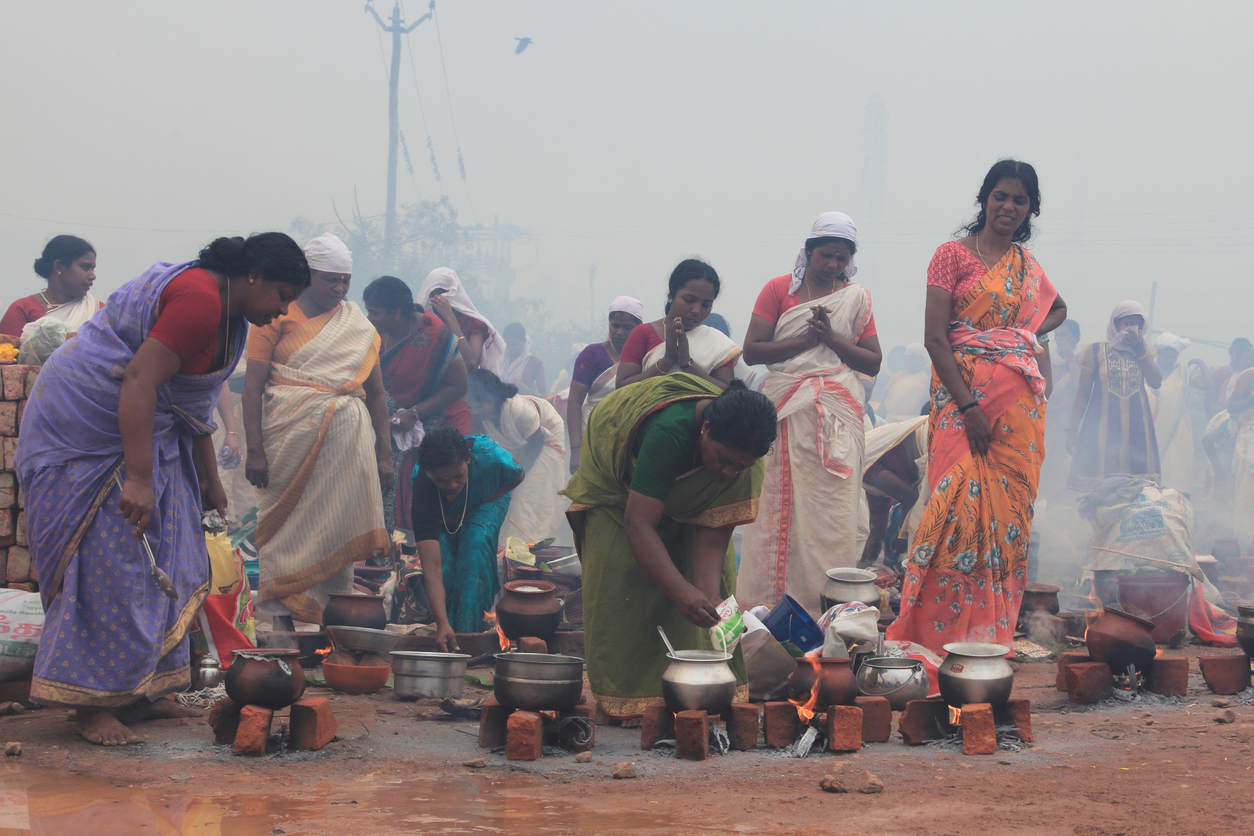
Women offering 'Pongala'. Credit: iStock
Synopsis: The Health Department has rolled out extensive safety measures for the Attukal Pongala on 3 March in Thiruvananthapuram, ensuring medical teams, ambulances, heat-management facilities, and food safety monitoring. With lakhs of women expected, authorities stress precautions against dehydration, fire hazards, and contagious illnesses like chickenpox, while urging strict adherence to health advisories for a safe festival.
With the annual Pongala at the Attukal Bhagavathy Temple in Thiruvananthapuram set to take place on 3 March, the Health Department has put in place an elaborate safety net to ensure that lakhs of women participating in the ritual can offer Pongala safely despite soaring temperatures.
The festival, part of the temple’s annual celebrations and once listed in the Guinness World Records as the largest single-day gathering of women, turns the capital city into a sea of clay hearths and devotion every year.
Health Minister Veena George said all medical arrangements have been completed under the leadership of the District Medical Officer. On the day of Pongala, medical teams and ambulances will be stationed at 10 locations from 5 am until the rituals conclude.
In addition to this, 108 ambulance services, equipped with emergency medical technicians, will operate from 10 points.
Four Bike First Response Teams, Gurkha ambulances and Bike Feeder Ambulances have also been deployed to ensure swift access through narrow and crowded stretches. Special control rooms have begun functioning at the District Medical Office and the temple premises, with additional health personnel stationed at the Collectorate control room.
Given the rising mercury levels, the department has activated special heat-management arrangements in 12 hospitals across the city.
Dedicated facilities have been arranged at Thycaud Women and Children’s Hospital, Fort Hospital, CHC Poonthura, CHC Iranimuttam, FHC Jagathy, FHC Karamana and urban primary health centres at Attukal, Chala, Chakka, Kalipankulam, Palkulangara and Rajaji Nagar.
10 beds each have been earmarked at Thycaud, Fort Hospital and CHC Iranimuttam exclusively for heat-related cases.
Thiruvananthapuram Government Medical College Hospital has also readied emergency systems to handle any serious contingencies. Health centres have been equipped with cooling facilities to mitigate sunstroke and heatstroke, and cooperation from private hospitals in the Attukal region has been ensured.
Calling for public cooperation, the Minister urged devotees to strictly follow health advisories.
With dehydration posing a major risk, she advised participants to drink water frequently even if they do not feel thirsty. Those experiencing fatigue, headache, dizziness or breathlessness have been asked to move to shaded areas immediately and seek medical attention.
The department has also appealed to elderly participants and those with existing ailments to take their regular medications without interruption and to carry details of the medicines they are using.
Food safety has also come under special focus this year. The Food Safety Department has intensified monitoring and awareness activities to ensure hygienic food distribution in connection with the festival.
Registration has been made mandatory for food distribution, and 187 registrations have already been completed. A special control room of the Food Safety Department is functioning at Attukal, and the department’s Food Safety on Wheels mobile laboratory has been deployed to conduct on-the-spot inspections.
Medical camps run by the Ayurveda and Homeopathy departments are also prepared to provide assistance. Authorities have issued a series of precautions for devotees, advising them to wear light cotton clothing, cover their heads to avoid direct sunlight and consume only clean or boiled water.
Fruits with high water content such as watermelon are recommended to prevent dehydration, and only ice made from safe water should be used in drinks. Participants have been asked to rest frequently in shaded spaces and ensure that children are kept away from open flames while being given water at regular intervals.
Fire safety is another area of concern during the ritual, which involves thousands of temporary hearths. Devotees have been cautioned against wearing loose garments that could accidentally catch fire and against placing flammable objects near stoves. Keeping a bucket of water nearby is strongly advised.
In the event of clothes catching fire, people have been urged not to panic or run, but to douse the flames immediately with water and seek help from volunteers.
Burn injuries should be cooled with water, without attempting to remove stuck clothing or apply creams unnecessarily, and medical care must be sought if required. The department has also reminded participants to extinguish their hearths fully with water after Pongala.
Food hygiene remains a parallel priority. Devotees are encouraged to wash their hands thoroughly before eating, avoid consuming unpackaged or already opened food, wash fruits properly and dispose of waste only in designated areas.
Health officials have also flagged another area of concern amid the massive gathering — a recent uptick in chickenpox and seasonal respiratory illnesses in parts of the state.
With lakhs expected to assemble in close quarters, authorities said vigilance is crucial. Chickenpox, they pointed out, is highly contagious and spreads through airborne droplets, direct contact with fluid from blisters and, in some cases, through contaminated objects.
An infected person can transmit the virus one to two days before the rash appears and until all blisters have dried and crusted. Respiratory infections, too, spread easily through droplets released while coughing or sneezing, airborne particles in crowded settings and contact with frequently touched surfaces.
In such circumstances, officials stressed the importance of personal hygiene, use of masks for those with symptoms, and avoiding participation if unwell, to prevent the congregation from turning into a cluster of infections.
In a significant relief to the Health Department, the district committee of the Kerala Government Medical Officers’ Association (KGMOA), which had earlier announced non-cooperation with Pongala duty, has now decided to extend support. The decision is expected to strengthen medical preparedness for the massive gathering.
As Thiruvananthapuram prepares once again to host one of the world’s largest congregations of women in faith and offering, the focus this year is firmly on safety alongside devotion — ensuring that the sacred fires of Pongala burn bright, but without harm.


