

Published Mar 06, 2026 | 8:29 PM ⚊ Updated Mar 06, 2026 | 8:29 PM

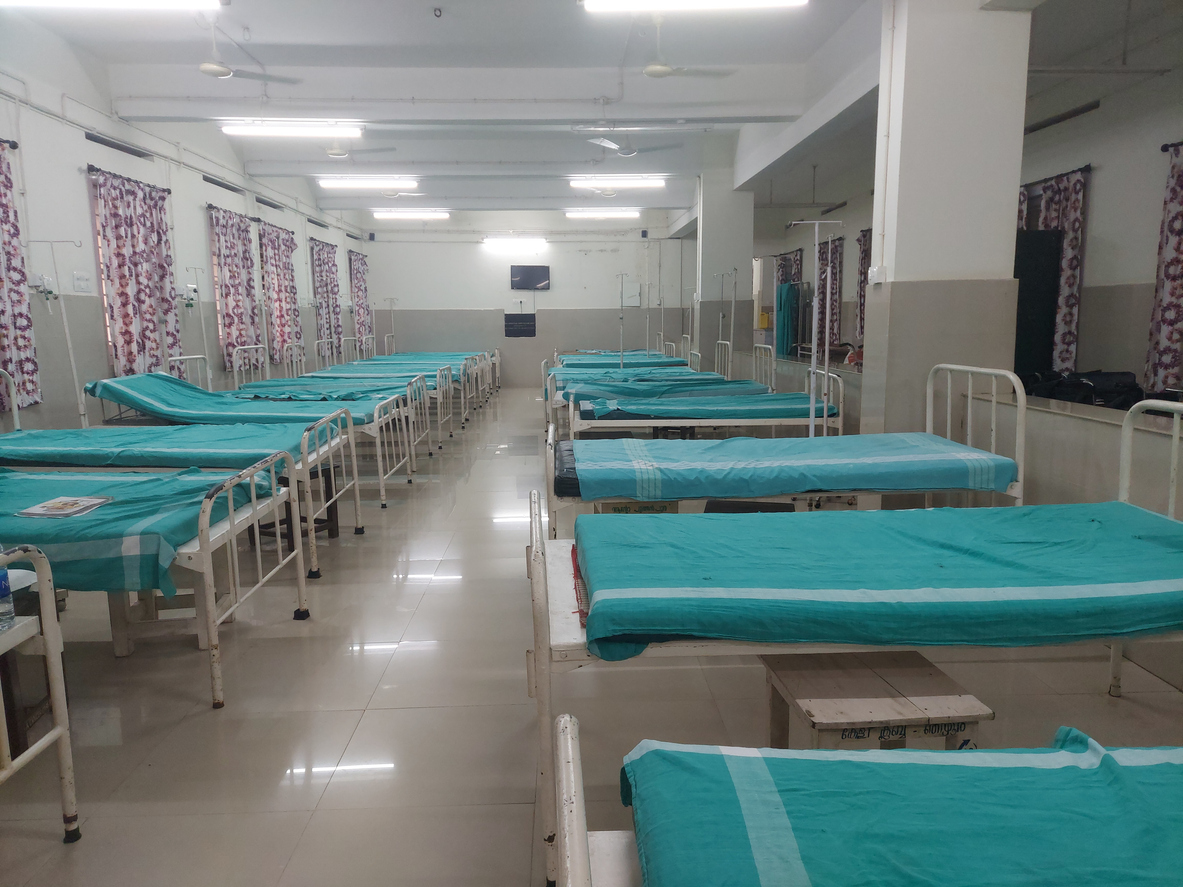
A hospital without a trained, motivated workforce is just a monument. (Representational image/iStock)
Synopsis: For years, experts have argued that health systems are only as strong as the public health workforce behind them. Karnataka has not just heard that call; it has finally acted on it. The work now is to make sure it is not merely a clause in a Budget speech, but the foundation of a transformed public health system.
The Karnataka Budget tabled on Friday, 6 March, stands out as one of the ambitious and thoughtfully structured state health budgets in recent times. It reflects the government’s move beyond mere optics and is genuinely building a modern public health system.
Covering a wide range of topics, from reducing maternal mortality and enhancing digital health infrastructure to scaling up dialysis and providing palliative care, the Budget demonstrates comprehensive planning.
However, among its various provisions, one item in particular should catch every public health professional’s attention: the formal pledge to establish a Public Health Cadre in Karnataka.
Let us examine the evidence before us:
The report of a 24% reduction in the Maternal Mortality Rate (MMR) under the Mission
Zero Preventable Maternal Death Initiative is not a trivial statistic. India’s national MMR stood at 97 per lakh live births, according to the latest Sample Registration System data. Karnataka has historically performed better than the national average, yet the gap between what is achievable and what is being achieved has remained stubbornly wide.
A 24% decline in a single year, if validated through robust civil registration data, would represent one of the most significant short-term improvements any state has recorded. Critically, the mechanism matters as much as the metric.
The expert technical committee reviewing every maternal death is precisely the kind of maternal death surveillance and response (MDSR) system that the World Health Organisation has championed for over a decade. This is not anecdote-driven administration; it is learning-loop governance. The Budget’s commitment to sustaining and expanding this model deserves applause.
Anaemia, especially among girls, is not just a problem for an individual in her lifetime; it causes a continuous cycle of undernutrition and low productivity that affects the entire population. An undernourished adolescent girl is more likely to become an anaemic mother, give birth to a low-birth-weight baby, and face lifelong disadvantages in growth, thinking, and risk of chronic illness.
In this way, adolescent anaemia is more than a nutritional deficiency; it is a predictor of future maternal death, poor birth outcomes, and reduced human potential. The Anaemia Muktha Poushtika Karnataka programme, therefore, is a key intervention at a crucial stage in life.
Screening 5.2 million school and college students makes it one of the largest adolescent anaemia programmes ever conducted by an Indian state. Treating 1.2 million children, with 370,000 already fully recovered, shows clear progress.
However, the programme’s true success will rely on ongoing follow-up to ensure the remaining 800,000 children receive continuous care.
Addressing anaemia in adolescent girls interrupts the self-perpetuating cycle, and the well-timed intervention can serve as a model and a lifelong approach to improving health and development in children and young adults throughout their lives.
The STEMI programme—9.4 lakh ECGs, 13,933 acute myocardial infarctions identified, and 7,668 treated—shows Karnataka is building a true system of cardiac emergency care, not just upgrading individual hospitals.
An urgent challenge is that about 6,265 patients remain untreated, highlighting a last‑mile logistics gap that the health system must fix through dedicated funding for transport, referral coordination, thrombolysis readiness, and time‑to‑treatment accountability.
However, these numbers are the tip of the iceberg; STEMI care must guide the government to treat this as a springboard for prevention, because heart attacks are largely preventable. There is overwhelming evidence that more than 90% of the risk of a first myocardial infarction is explained by
modifiable factors such as hypertension, tobacco use, abdominal obesity, diabetes, diet/physical inactivity, and alcohol-related patterns.
If Karnataka can build a statewide network to diagnose and treat STEMI, it can also build an equally disciplined upstream prevention model at the spoke level.
What is needed is to implement protocol-based hypertension control (where even a 5 mmHg systolic reduction lowers major cardiovascular events by ~10%), systematic tobacco cessation, early obesity prevention/management, and alcohol harm reduction, supported by registries, uninterrupted drug supply, and longitudinal follow-up similar to proven public-sector approaches used for hypertension control in India.
Expanding 50 high-demand dialysis centres to 150 beds and providing 1.35 lakh services annually helps tackle a silent health crisis of Chronic Kidney Disease (CKD).
But expansion is necessary, not sufficient: the Ministry of Health and Family Welfare (MoHFW) reports rapidly rising dialysis utilisation; Global Burden of Disease Study analyses highlight metabolic drivers (diabetes, high BP, high BMI); and CKD reviews implicate heat stress, agrochemicals/pesticides, and water‑quality hazards (E.g., excess fluoride).
Pair dialysis with prevention, targeted eGFR/albuminuria screening, registries, assured consumables, last‑mile transport, and cost-effectiveness tracking.
Providing free insulin pens for children with type 1 diabetes up to age 18 is a major step for child survival and financial protection. WHO emphasises insulin as essential for survival, and our PLOS Global Public Health paper highlights issues like erratic insulin access, high out-of-pocket costs (30–50% of household income), stigma, mental health strain, and gendered harms affecting girls’ education.
Global evidence warns that cost and supply failures cause preventable morbidity and mortality in LMICs; glucose metres and test strips are vital for safe insulin use.
Apart from providing insulin, the government can support blood glucose monitoring and psychosocial support, and public funding can prevent dangerous under-insulinisation and ketoacidosis. Karnataka can adopt these measures, paired with registries, continuous supply, glucometers, trained primary care, outcome monitoring, and equity safeguards.
There is a pattern that recurs in Indian state health budgets with almost clockwork regularity, and Karnataka’s Budget 2026–27, for all its merits, is not entirely immune to it: the conspicuous tilt toward capital expenditure over human resource investment.
This Budget allocates ₹900 crore for health infrastructure, ₹620 crore for the construction of medical colleges, ₹220 crore for equipment, and significant funds for new hospitals, super-speciality centres, and upgraded facilities across the state.
These are not wrong investments; they are necessary ones. A hospital without a trained, motivated workforce is just a monument. A trauma centre without trained paramedics is an expensive room.
A dialysis unit lacking enough nephrologists and technicians cannot fulfil promises.
Across India, reports from the World Bank, WHO, and National Health Accounts show that health infrastructure outpaces investment in the workforce, affecting the poorest, who have no private alternatives when facilities exist but lack skilled staff.
Karnataka must resist this pull with deliberate policy. Filling 2,500 vacant posts is a start, but the real challenge is retention, support, supervision, and ongoing professional development. Rural postings face high attrition: doctors leave after rural service, nurses transfer to cities, and ASHAs and ANMs work under heavy workloads with little support.
To make infrastructure effective, the government must align construction spending with workforce planning, map current shortfalls, offer incentives for tough postings, build mentoring programs, and create feedback systems for frontline workers.
A health system’s effectiveness depends on its people, not just its infrastructure.
The Budget is a beginning, not an end. Here is what must follow: The government must move quickly on the legislative and administrative framework.
The Public Health Cadre is the announcement that stands apart from everything else. A Public Health Cadre provides a career path for trained professionals, pandemic response, and health equity.
Karnataka’s 2026–27 health budget does something rare: it blends ambition with evidence, and vision with systems thinking. Of course, like any public policy blueprint, it is not without its imperfections: the gaps between detection and treatment, the need to balance buildings with people, and the all-too-familiar lag between intent and execution still linger. But the trajectory is unmistakably forward.
Among its most transformative features is the formal introduction of a Public Health Cadre, a quiet structural shift that won’t make front-page news, but will quietly reshape the next two decades of Karnataka’s health system.
For years, experts have argued that health systems are only as strong as the public health workforce behind them. Karnataka has not just heard that call; it has finally acted on it. The work now is to make sure it is not merely a clause in a Budget speech, but the foundation of a transformed public health system.
(Views are personal. Edited by Majnu Babu).


