

Published Dec 29, 2025 | 7:00 AM ⚊ Updated Dec 29, 2025 | 1:49 PM

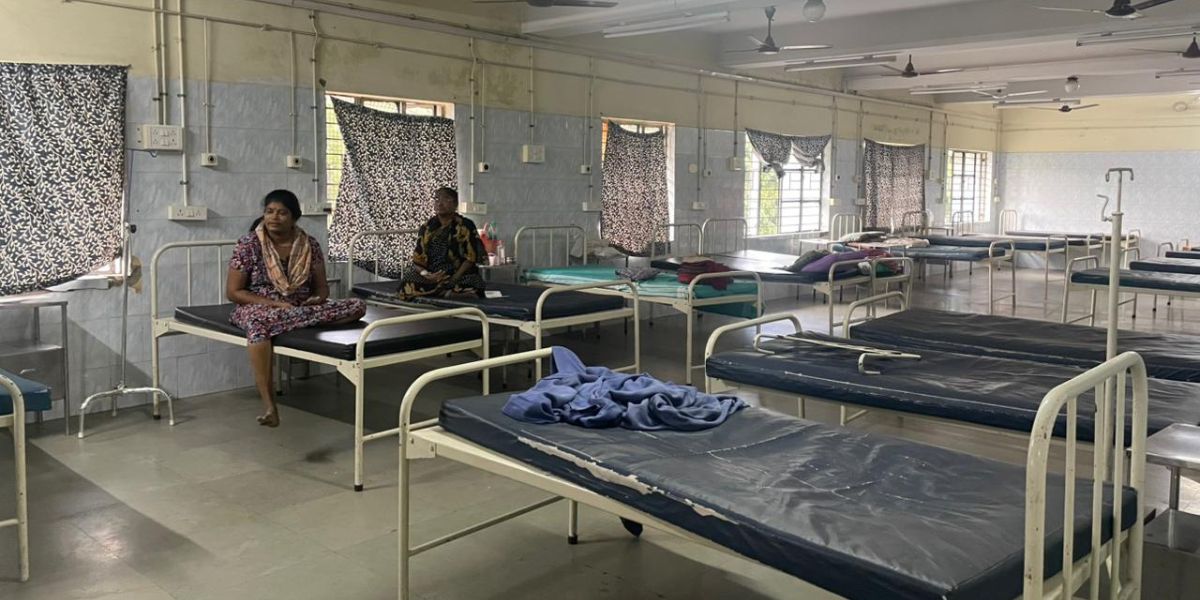
Female General ward, Tondiarpet government peripheral hospital.
Synopsis: Chennai’s Government Peripheral Hospitals function as district-hospital equivalents for its urban population. These facilities are mandated to provide inpatient services, deliveries, diagnostics, basic surgical care and emergency treatment, while also acting as referral centres to tertiary hospitals. However, visits to three such hospitals revealed that these hospitals not only lack infrastructural facilities, but also patient care.
Inside the fever ward of Tondiarpet Government Peripheral Hospital in Chennai, Mary lies on a metal bed. She rests flat on the mattress, recovering after a dog bite. She remains still, waiting, occupying the space quietly.
Meanwhile beds line the female general ward in rows. Some remain empty. Mattresses appear thin and worn. Curtains are hung over barred windows to let daylight pass through. Tube lights illuminate the room, exposing tiled floors, plain walls, and glass partitions that divide the ward, without any privacy.
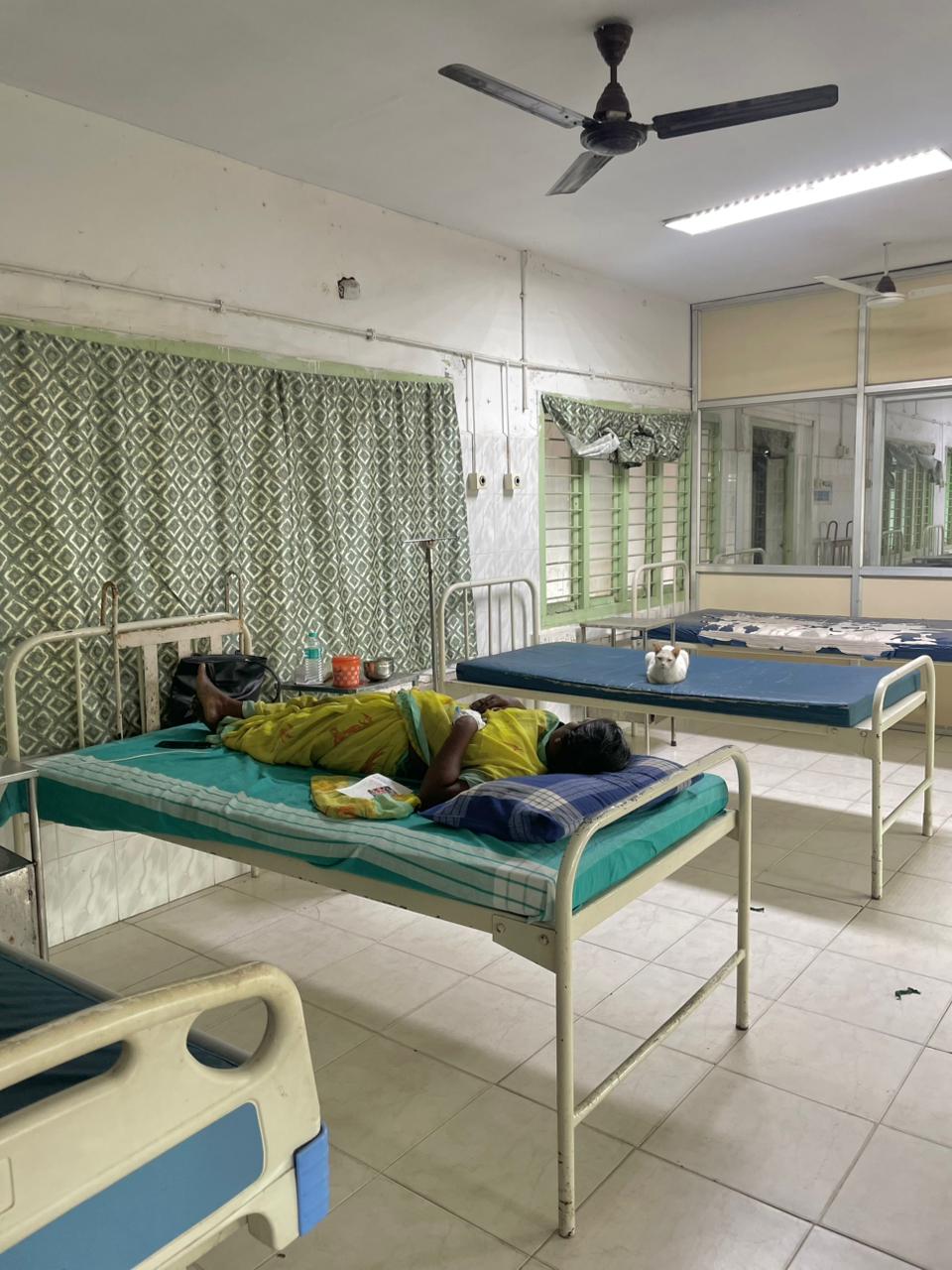
A cat sits on one of the hospital beds near Mary. (Veni EN/ South First)
A cat sits on one of the hospital beds near Mary. It stays inside the ward, sharing the patient space. Animals are not allowed inside hospitals, but a patient who just suffered a dog bite is being taken care of by a cat.
Chennai’s Government Peripheral Hospitals form the backbone of the city’s secondary healthcare system, functioning as district-hospital equivalents for its urban population.
Managed by the Greater Chennai Corporation, these facilities are mandated to provide inpatient services, deliveries, diagnostics, basic surgical care and emergency treatment, while also acting as referral centres to tertiary hospitals.
South First visited three such hospitals — Government Peripheral Hospital, Saidapet; Anna Nagar Government Peripheral Hospital; and Tondiarpet Government Peripheral Hospital — to assess how these secondary-care facilities function on the ground.
The visit revealed that these hospitals not only lack infrastructural facilities, but also patient care.
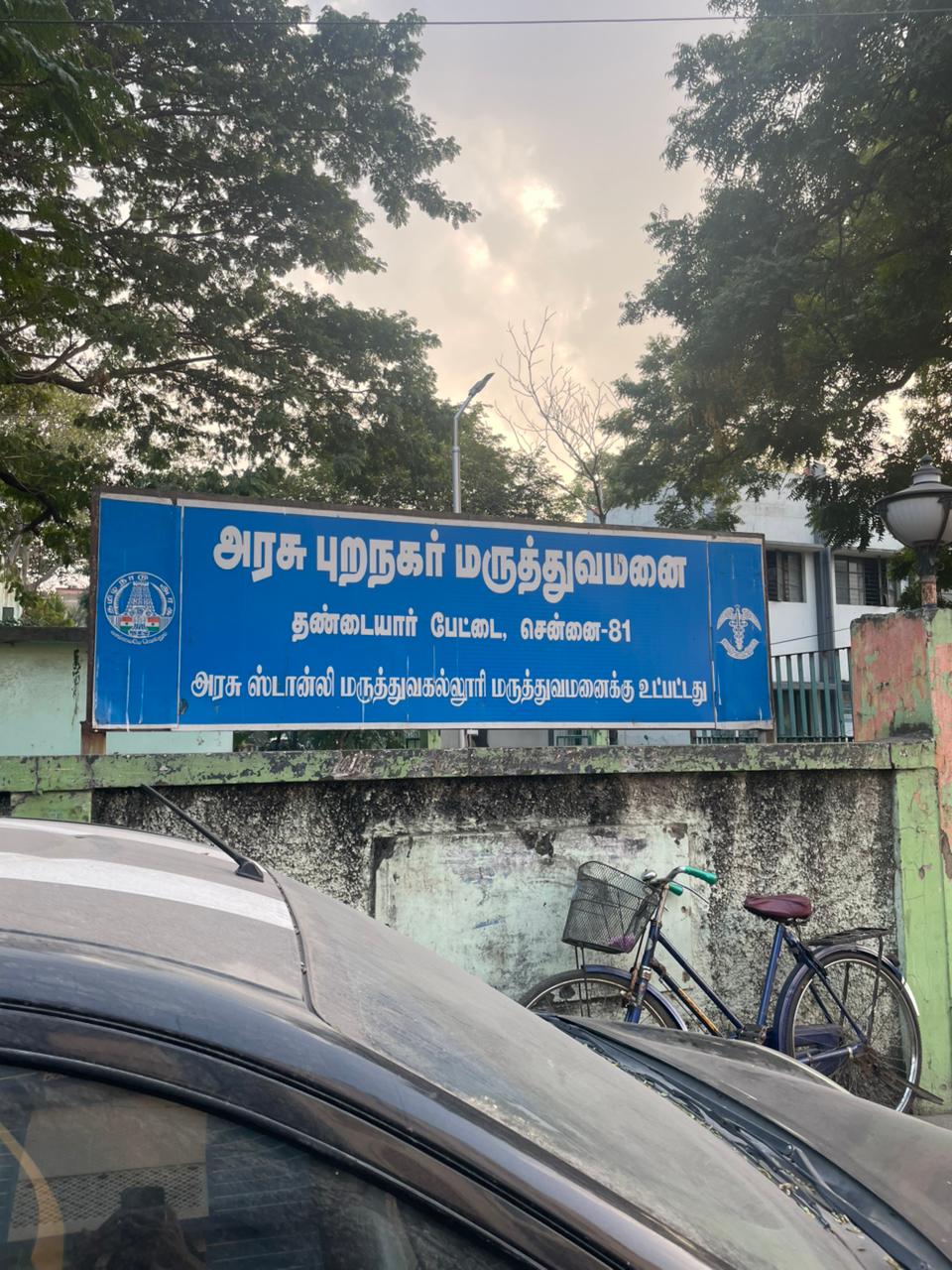
Tondiarpet Government Peripheral Hospital
Mary, a resident of Kasimedu, came to the Tondiarpet Government Peripheral Hospital after suffering a dog bite. When South First met her, she was found lying alone on a single bed in the emergency fever ward, which didn’t have any security.
Exhausted and weak, with visibly swollen hands and watery eyes, she said it was her first visit to the hospital.
She recounted that she arrived around 11.30 am after the dog bit her and was given an injection by a nurse. She repeatedly stated that no doctor attended to her.
“There was no doctor at all,” she told. Mary added that after the injection, no one returned to check on her for several hours. “Nobody cared. Nobody came, it’s almost five hours now,” she said.
Her mother, who had accompanied her earlier, had gone home in the evening as their house was nearby. Mary said she chose the Stanley Medical College-run hospital because it was near her home.
Later, Kavita, a nurse at the hospital, said Mary was admitted at around 11.30 am and would need to remain hospitalised for five more days.
She confirmed that an injection had been administered and said this was the extent of the treatment provided so far. When asked about the delay in further treatment, she did not respond.
Mary’s swollen hands, exhaustion and repeated statements reflected a sense of abandonment. Lying alone in a silent ward without visible medical supervision for hours, her condition underscored the gap between the emergency care she sought and the treatment she received.
According to the Stanley Medical College website, Tondiarpet Government Peripheral Hospital was established in 1979 by former chief minister MG Ramachandran with a bed strength of 100 to serve economically weaker populations in North Chennai. In 2005, it was upgraded to 150 beds during the tenure of former chief minister J Jayalalithaa.
The hospital has a sanctioned staff of one Civil Surgeon Medical Officer, 15 Assistant Surgeons, one Assistant Dental Surgeon, 19 nurses, 17 paramedical staff, 11 ministerial staff and 31 support staff.
It reportedly serves 1,000 to 1,300 outpatients and 70 to 90 inpatients daily, implements the Chief Minister’s Comprehensive Health Insurance Scheme, and conducts routine surgeries in obstetrics, gynaecology, ophthalmology and general medicine.
Speciality services include a chest clinic three days a week and a daily Siddha clinic.
Meanwhile, the ground observations at the hospital tell a different story. Most departments, including the pharmacy, were closed, and the washrooms were inaccessible.
“The hospital is usually not crowded. There is little demand, and only a few patients come,” said Kaasi N, a security guard at the hospital.
The premises appeared largely deserted, with only two nurses visible. The emergency ward was inactive, and there was no doctor on duty. Patient presence across wards was minimal, with only a handful of people admitted in the male and female wards.
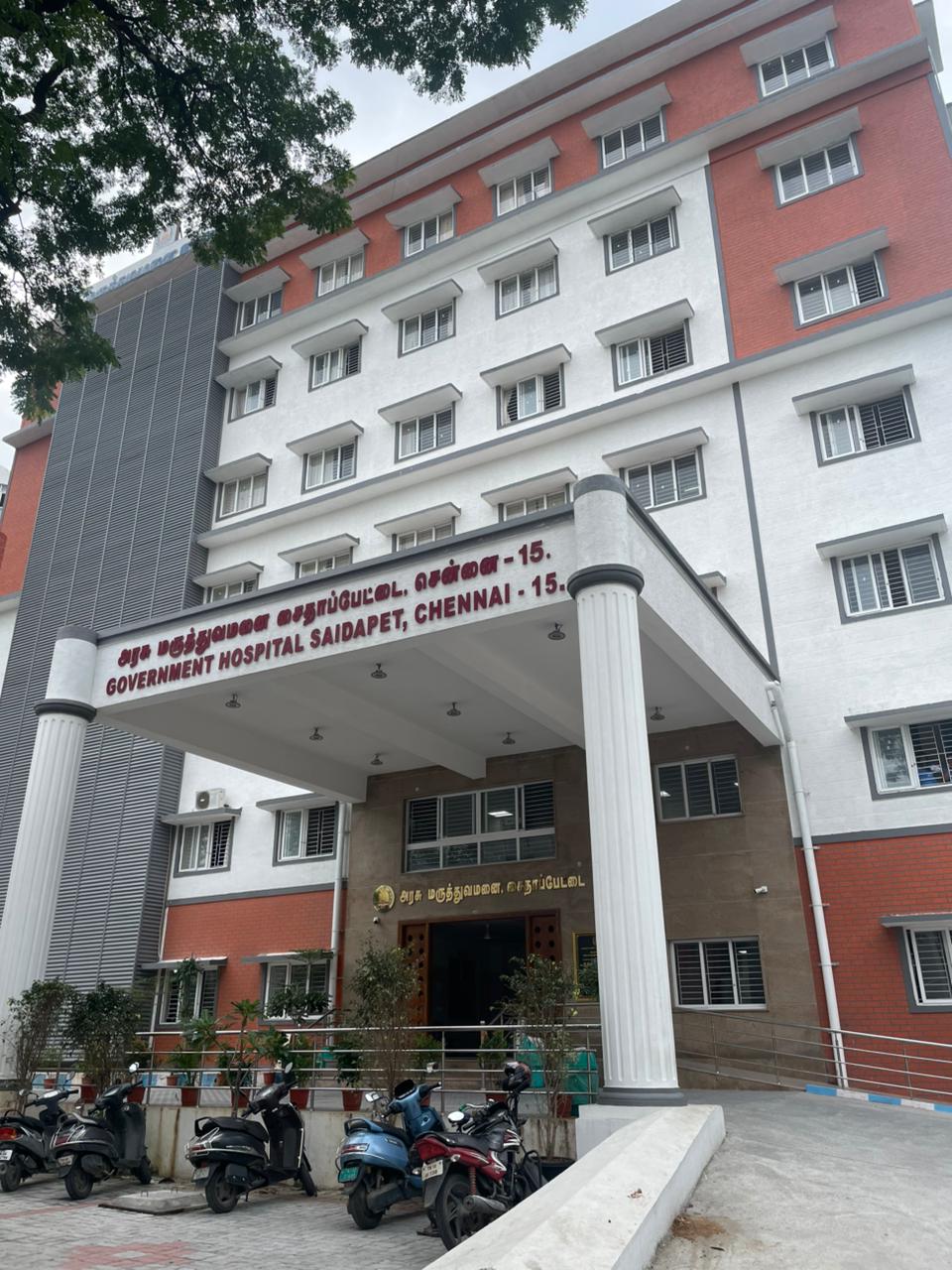
Saidapet government peripheral hospital.
The Saidapet Government Peripheral Hospital presents a mixed picture. The facility itself is clean and well-maintained, with a new building that stands in contrast to many older urban hospitals.
Within the hospital is the Silver Jubilee Clinic, which specialises in treating leprosy and skin infections. The clinic operates in two shifts — from 8 am to 12 noon and from 3 pm to 5 pm.
Vineetha S, the hospital supervisor, explained that general medical services are available only during the morning hours. “The hospital is open for general consultations from 8 am to 12 noon. In the afternoon, we handle only emergency cases and general OP (out patient),” she said, adding that the hospital sees its heaviest rush during the morning.
During the evening hours, the hospital appeared largely deserted, with very few patients present. Several OP departments and washrooms were locked.
Vineetha clarified that emergency services are not routine and depend on the seriousness of cases. According to her, the hospital attends to accident cases, road traffic accidents, death cases and poisoning cases when emergencies arise.
Addressing public confusion around hospital timings, she said all OP departments — general medicine, dermatology, gynaecology and others — function only in the morning, which explains the crowding during those hours.
Anna Nagar Government Peripheral Hospital appeared comparatively organised, with outpatient services running smoothly and orderly. Patient movement in the general OP section and radiology facilities, such as X-ray, was steady and well managed.
A key strength of the hospital is the Department of Digestive Health and Diseases, which functions under Kilpauk Medical College.
The department caters to a high number of patients with gastrointestinal complaints every day and offers both outpatient consultations and diagnostic services.
The inpatient ward showed reasonable occupancy during the visit. While the department experienced crowding, services remained consistent and uninterrupted.
Even where inpatient care appeared to be functioning, it remained basic. In the female general ward at Tondiarpet Government Peripheral Hospital, three women admitted with diabetes told South First that they were receiving consultations, meals and basic amenities, including evening tea.
They said they were satisfied with the arrangements and added that they felt well enough to return home, but had been advised by doctors to stay for a few more days. Their accounts indicated that care in the ward was largely limited to accommodation, food and routine monitoring.
The contrast between official assurances of readiness and the on-ground reality at Chennai’s government peripheral hospitals raises questions about accessibility, utilisation and accountability.
Facilities intended to strengthen neighbourhood healthcare and reduce the burden on tertiary hospitals appear, in several cases, underused or inadequately responsive, leaving patients like Mary waiting in silence.
In response to a Rajya Sabha question, the Union Minister of State for Health and Family Welfare, Prataprao Jadhav, stated that Tamil Nadu’s secondary-care hospitals are fully equipped, adequately staffed and operationally ready, based on information provided by the state government.
According to the reply, these hospitals have diagnostic facilities including haematology, biochemistry, coagulation, arterial blood gas and electrolyte analysers.
ICU and emergency-care systems have reportedly been strengthened, with oxygen-supported and hybrid ICUs established in 25 medical college hospitals and 18 district hospitals.
The minister also said staffing is rationalised according to patient load in line with the Indian Public Health Standards.
He added that the Tamil Nadu Medical Services Corporation ensures uninterrupted availability of 349 essential drugs, 484 specialty drugs and 376 surgical and suture items, supported by an annual budget of ₹1,371.53 crore for 2024–25.
These claims present a picture of a well-equipped and efficiently functioning secondary healthcare system.
South First’s ground-level observations at Chennai’s peripheral hospitals, however, painted a contrasting picture. Across the hospitals visited, inpatient wards had rows of empty beds, outpatient blocks were quiet, and washrooms were found locked in several areas.
These facilities, meant to function as district secondary hospital equivalents and reduce pressure on tertiary hospitals, appeared significantly underutilised.
(Edited by Muhammed Fazil.)


