

Published Oct 18, 2026 | 5:26 PM ⚊ Updated Oct 18, 2026 | 5:26 PM

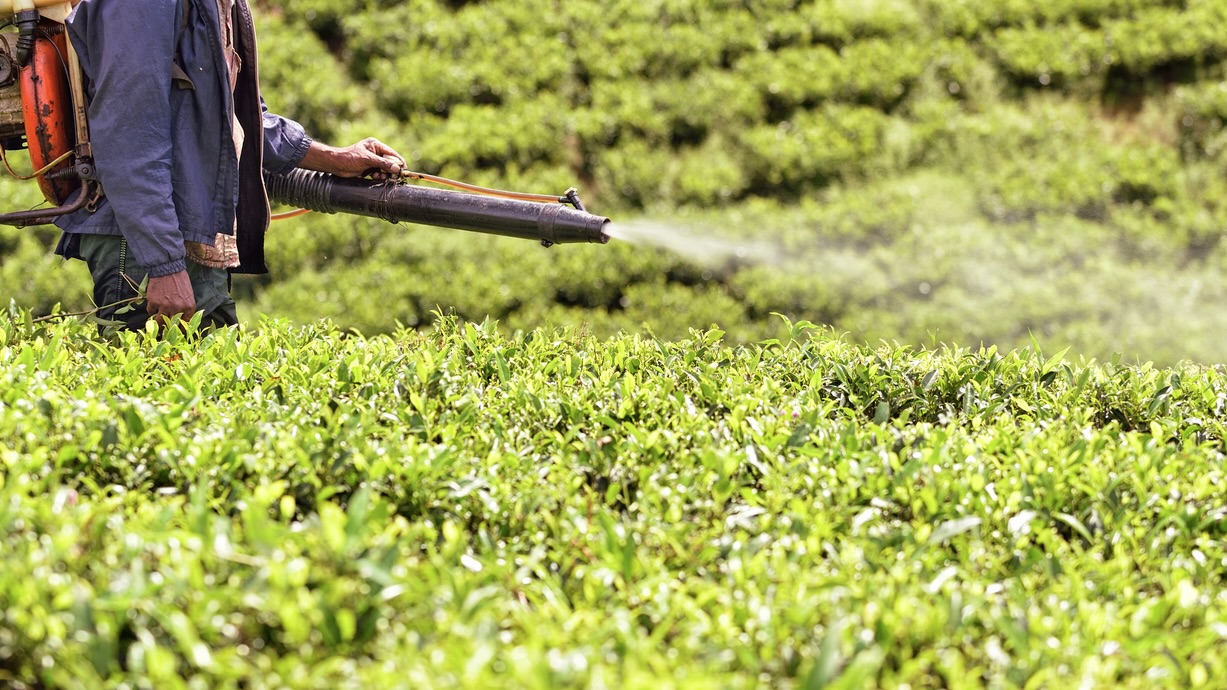
The FSSAI said the proposal is part of a broader review of pesticide residue standards.

Synopsis: The Food Safety and Standards Authority of India has proposed maximum residue limits of 20 parts per million for acetamiprid and 50 parts per million for imidacloprid in tea to standardise monitoring of the pesticides. The FSSAI said the proposal is part of a broader review of pesticide residue standards. FSSAI has invited objections and suggestions within 60 days.
The Food Safety and Standards Authority of India (FSSAI) has proposed maximum residue limits (MRLs) for two pesticides used in tea cultivation—acetamiprid and imidacloprid—in an effort to standardise monitoring of the chemicals.
The draft Food Safety and Standards (Contaminants, Toxins and Residues) Amendment Regulations, 2026, was published in the Gazette of India on 16 October. It sets the proposed limits at 20 parts per million (ppm) for acetamiprid and 50 ppm for imidacloprid in tea.
Acetamiprid and imidacloprid are insecticides that act on insects’ nervous systems. Their application can leave residues on tea leaves. The amount remaining depends on how the pesticides are used, the interval between spraying and harvesting, and how quickly the chemicals break down.
Some residues can transfer into brewed tea, depending on the chemical and the method of preparation. High exposure to either pesticide can affect the human nervous system and cause symptoms such as nausea, vomiting and dizziness.
MRLs specify the highest concentration of a pesticide residue legally permitted in a food product. They provide food safety authorities with a benchmark to test products and determine compliance with regulations.
In a statement, the FSSAI said the proposal was part of its efforts to strengthen food safety standards through scientific assessments and international comparisons.
The FSSAI said the proposal is part of a broader review of pesticide residue standards under the Food Safety and Standards (Contaminants, Toxins and Residues) Regulations, 2011.
The authority said its earlier measures included a review of residue limits through the 2024 amendment and the delisting of 13 pesticides identified as having higher toxicity.
It added that the proposed acetamiprid limit of 20 ppm in tea was lower than the corresponding limits of 30 ppm in Japan and 50 ppm in the United States. The proposed imidacloprid limit of 50 ppm was formulated with reference to international Codex standards.
The FSSAI said maximum residue limits are set through scientific assessments that consider pesticide residue data, dietary exposure and relevant safety considerations.
“Pesticides, when used appropriately and in accordance with prescribed practices, help farmers protect crops against pests, minimise crop losses and maintain agricultural productivity,” it said.
The authority said average pesticide use in India was less than 0.5 kg per hectare, compared with the global average of 2.38 kg per hectare.
The FSSAI has invited objections and suggestions within 60 days from the date on which copies of the Gazette notification are made available to the public. Stakeholders can send their submissions to the Chief Executive Officer, FSSAI, at regulation@fssai.gov.in.
(Edited by Dese Gowda)



