

Published Apr 24, 2026 | 7:45 AM ⚊ Updated Apr 24, 2026 | 7:45 AM

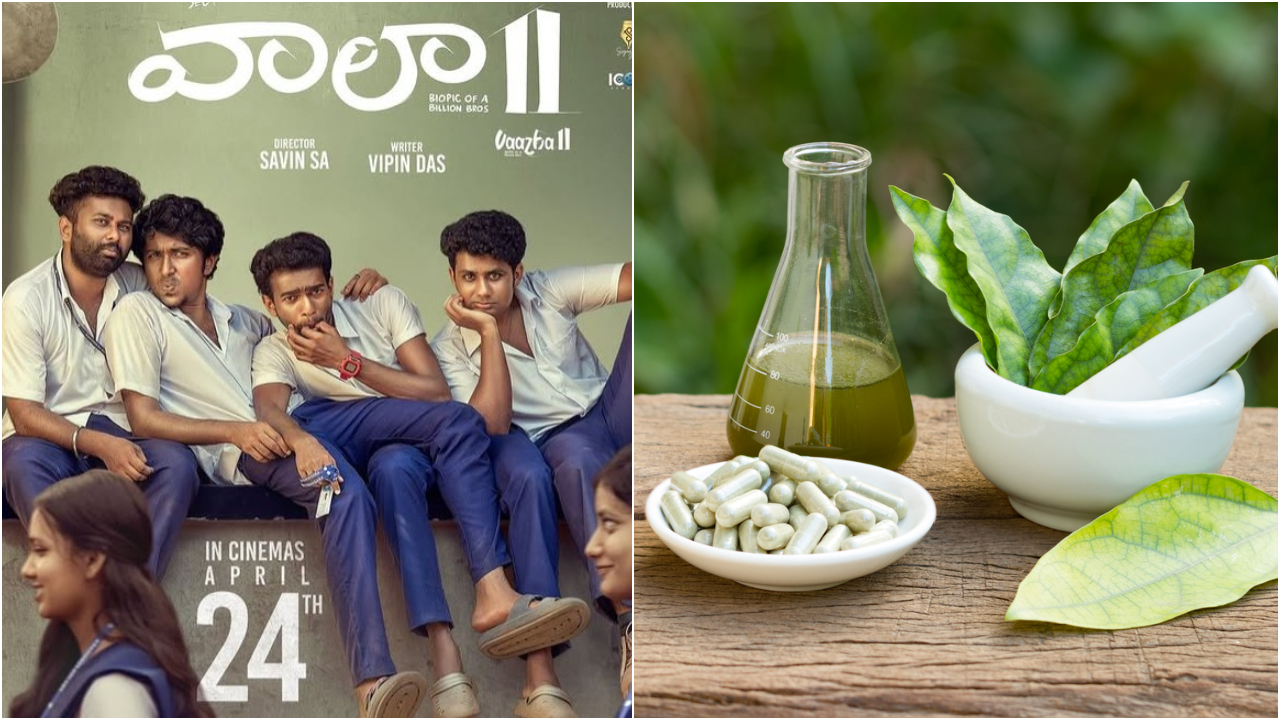
'Vaazha 2' has triggered age-old debate on modern vs traditional medicine. Credit: instagram.com/vaazhamovie, iStock

Synopsis: A scene in the recent Malayalam blockbuster ‘Vaazha 2’ linking overuse of ‘arishtam’ to liver damage sparked controversy and a wider debate on Ayurveda in Kerala. Ayurveda Medical Association of India said they support the film’s warning on misuse but stressed that arishtam is safe when used properly under medical supervision.
The latest Malayalam blockbuster ‘Vaazha 2: Biopic of Billion Bros’, centred on the life and struggles of its protagonist, has sparked controversy, with a brief sequence unexpectedly triggering a wider debate.
The controversy arises from a particular sequence that has drawn criticism for linking a medical condition to the consumption of arishtam, a traditional Ayurvedic fermented herbal decoction made by boiling herbs and fermenting them with jaggery or honey, producing natural alcohol that aids preservation and absorption.
In the film, a character played by actor Biju Kuttan, who is not shown with any prior illness, is suddenly hospitalised with liver cirrhosis, with the narrative suggesting a connection to the overconsumption of the preparation.
While several reports claimed legal action by the Ayurveda Medical Association of India (AMAI) against the movie, the association, when South First reached out to it, denied any such move and said it supports the idea highlighted in the film.
Also Read: Ayurveda–TB clinical study announced: Can traditional medicine help patients recover better?
Dr Abhilash BG, Kozhikode district president of the AMAI, said the association does not oppose the film’s message. “Overconsumption of any medicine is harmful, and that is a valid point shown in the film,” he told South First.
He clarified that the concern is not about the warning itself but how it is interpreted. “We are supporting the idea in the film, but we are against the narrative that Ayurveda as a system is harmful in general,” he added.
Referring to the controversy, he said the issue has been amplified beyond the film’s intent. “There is a tendency to project Ayurveda negatively using such instances, and that is what we are opposing,” he said.
In an official statement, AMAI State President Dr KS Vishnu Namboothiri and General Secretary Dr PK Haridas denied reports of legal action. “The news that AMAI is filing a case against the film is false and untrue,” they said.
They reiterated that such formulations are safe when used correctly. “Arishtam preparations, when taken in proper dosage under medical supervision, do not harm the liver or other internal organs,” the statement said.
The association also raised concerns about broader implications. “There are deliberate attempts to defame Ayurveda based on misinterpretations, and such narratives are objectionable,” the statement added.
A senior physician with years of experience in modern medicine, speaking on condition of anonymity, told South First that public perception often treats traditional medicine as inherently safe, which can be misleading.
“Ayurveda is not harmless, as many people believe. It can be harmful in certain situations, especially if taken without proper guidance,” he said.
He noted that the challenge lies in how people approach such treatments. “We have certain beliefs, and it is very difficult to change them with simple education,” he said, adding that this makes awareness around safe usage critical.
In the broader debate, he pointed to a divide within the medical community. “There is a section that argues there is no research or published data for some traditional practices,” he said, while cautioning against both extremes.
“It is not about rejecting it entirely, but it is also not something that can be considered completely safe,” he added.
Referring to arishtam, he said its composition needs to be understood clearly.
“It is a fermented preparation. Fermentation produces alcohol. The side effects of alcohol on the liver are well known—excess consumption can damage the liver,” he said, stressing that misuse, adulteration and unsupervised intake remain key concerns.
Also Read: AP allows Ayurveda practitioners to perform surgeries, IMA objects
A recent incident in Kerala’s Wayanad has brought renewed attention to a broader issue surrounding the use of arishtam and similar preparations.
While a 38-year-old tribal man’s death has been linked to the alleged consumption of arishtam along with alcohol, the case has highlighted concerns that go beyond a single instance.
The episode points to a pattern of misuse, where such formulations are consumed without medical supervision or in quantities not intended for therapeutic use.
In this case, the product was reportedly sourced from an unauthorised outlet, raising questions about how such preparations are being sold and accessed.
It also brings into focus the blurred line between medicine and misuse. The arishtam consumed in the incident was alleged to be “laced with intoxicants”, with local accounts suggesting that such products are at times used for their intoxicating effect rather than medicinal purpose.
The case has intensified calls for tighter oversight, better awareness, and clearer distinction between prescribed use and unsupervised consumption.
Arishtam is a well-known part of Ayurvedic practice, commonly used for digestion, recovery after illness, and rebuilding strength.
It is a fermented herbal preparation, described in classical texts like the Charaka Samhita and Ashtanga Hridaya, designed to improve how the body absorbs and uses medicinal herbs.
Common examples include Dasamoolarishtam, often used for inflammation and post-illness recovery, and Balarishtam, used to support strength and energy.
These are usually taken in small, measured doses under medical guidance as part of a broader treatment plan.
In Kerala, Ayurveda is deeply integrated into everyday healthcare, and arishtams are widely trusted as “natural” remedies.
However, this also sometimes leads to unsupervised use, highlighting the importance of proper medical guidance even for traditional medicines.



