

Published Nov 29, 2026 | 7:00 AM ⚊ Updated Nov 29, 2026 | 7:00 AM

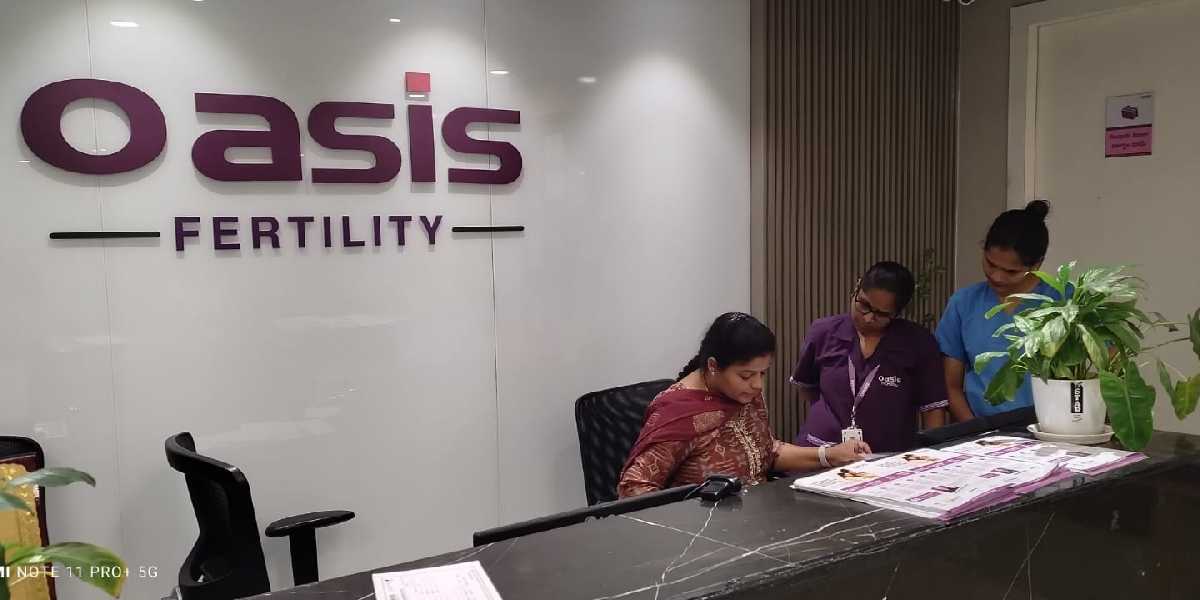
Show-cause notices have been issued to the managements of the seven hospitals where violations were detected. (supplied)

Synopsis: Women from several states were allegedly recruited to Hyderabad with promises of work and financial compensation, then drawn into an egg donation network involving brokers, fertility establishments and questionable medical practices. FIRs, a DMHO complaint, and court observations raise concerns about donor eligibility, informed consent, hormonal treatment, payments, and regulatory oversight.
On 22 October 2026, Sneha Kumari*, 22, arrived in Hyderabad from Mumbai, looking for work. A native of Siwan, Bihar, she worked in Surat for three years before moving to Mumbai, where she joined a chocolate factory.
“My father does not earn. My elder sister is studying, and my younger sister has opened a shop. I was also studying, but financial problems at home increased, so I went to Mumbai for work,” Sneha told South First. “Nobody was earning enough to support the family.”
A friend from Rajasthan, who lived in Hyderabad, had told her about catering jobs and hospital work, where she could earn ₹2,000 to ₹3,000 a day, caring for patients.
“Some girls kept calling me, saying they earned ₹500 a day, while in Hyderabad girls could earn ₹1,000, ₹2,000 or even ₹3,000 a day. I went because the money attracted me,” she said.
Sneha travelled alone. She said she learnt about egg donation on 24 October, two days after her arrival.
“Nobody told me anything when I came from Mumbai to Hyderabad. Everyone said that I would have to do catering work,” she said.
By the time she understood the work, they had promised her ₹35,000.
Also Read: How an alleged egg-donation racket lured women to Hyderabad
More than 2,000 kilometres north-east, in Cooch Behar district of West Bengal, a tailor named Dharmvir Mandal* took South First‘s call. A sewing machine whirred in the background. He worked at someone else’s shop.
His wife, Kamala*, 28, had travelled to Hyderabad. He believed she had gone for a job. The couple have a child, and money was short.
“People keep going out for work. We also thought it would be okay,” he said. “We are from a poor family, so we thought that if some money came in, things would become a little better.”
Nobody told him what the work involved.
“They just told us that there would be some work. I don’t know what the work would involve or what would happen. I only know this much. I don’t know anything beyond that.”
Kamala called once. “She said that she is in the police home,” he said. “I don’t know when she is going to come back.”
Zubaida Parveen* made her own journey from Asansol, West Bengal, and reached Hyderabad on 10 October.
A friend from Kolkata gave her a contact. The offer was ₹70,000 for about 15 days.
Her husband was struggling to repay a group loan of ₹1 lakh. He worried about sending her away. The friend had already made the trip, and he spoke to her before he agreed.
“Nothing had happened to her, so I thought nothing would happen to me either,” Zubaida said.
She was to meet a woman, Nikhat Parveen, in Hyderabad. She had not met Nikhat before she arrived or spoken to her by phone.
Zubaida said the medical process began soon after she arrived. She told the hospital about her thyroid condition and gave blood. Nikhat, she said, told her the thyroid levels had to be low for the procedure to go ahead. When the report came back, they began the injections.
“They started giving me injections that very day,” she said.
Nobody explained the procedure, she said, and nobody asked her to sign. Staff asked whether she had a child. She said she had a son and could produce his birth certificate. They photographed her Aadhaar card from her phone.
“I did not sign anywhere on any document,” she said.
Her account raises questions. What had she agreed to? Who explained the risks? What consent did anyone record?
The ₹70,000 never reached her. Nor did her travel costs.
“We were promised money, but we did not receive even a rupee,” she said.
Her experience does not represent every woman brought to Hyderabad. Sneha says she received no hormonal injections and underwent no egg retrieval.
Also Read: Telangana finds 13 regulatory violations in seven IVF hospitals
On 30 October, police and health officials raided two hostels. At the Ami Nita Girls Hostel in Begumpet, they found about 12 women. At the Shetty Working Women’s Hostel in Saroornagar, they found another 17.
Police and health department records showed that the women came from West Bengal, Uttar Pradesh, Bihar, Maharashtra, Chhattisgarh, Delhi, Assam, Jharkhand and Odisha.
Many had never met before. “I met all of them for the first time there,” Zubaida said.
According to the FIRs, women at Begumpet told investigators that a man named Amith Sharma approached them in their home states and offered about ₹50,000 for each donation cycle. At Saroornagar, some women said the hostel manager, Emirishetty Durga Prasad, offered ₹20,000 to ₹30,000.
Begumpet Inspector P Saidulu told South First that the accused targeted women facing unemployment and poverty. They first offered jobs in Hyderabad.
“Women were brought from states such as Jharkhand, Uttar Pradesh and West Bengal,” he said.
Repeated counselling sessions followed, he said. The women were allegedly told that egg donation carried no risk and no hard work, and that they would earn money for eggs that the body releases naturally during menstruation.
Police also alleged that recipients preferred specific castes, religions and complexions.
“Those seeking eggs specified their requirements, and donors were selected accordingly,” Saidulu said.
The three FIRs named 29 women. Police records listed 12 as Scheduled Castes, two as Yadav, two as Brahmin and one as Gupta. The caste of three is not specified. Separately, the records identified nine as Muslim.
At Begumpet, officials seized syringes, needles, tablets and injections, including four vials of Humog HP 150 IU, a menotrophin injection used in fertility treatment.
Inspection records stated that officials found no qualified medical practitioner and no sign of authorised medical supervision. The District Medical and Health Officer (DMHO) complaint added that someone had discarded used strips and vials without apparent compliance with biomedical waste rules.
Also Read: Rs 65,000 per donor, nine facilitators across four states
The DMHO complaint centres on Sadguru Healthcare Services Private Limited, an assisted reproductive technology (ART) bank and fertility clinic operating under the Oasis and Sadguru names. The department named Dr Gedela Durga Rao, who appeared as director on the registration certificates of the bank and five ART clinics.
According to the complaint, the bank signed memorandums of understanding (MoUs) with nine facilitators to procure egg donors. Five of them lived outside Telangana. Three were in Maharashtra, one in Madhya Pradesh and one in West Bengal.
Amith Sharma and Nikhat were among them. The DMHO said the two managed the Begumpet hostel. The complaint spelt her name Parvin, and the FIR recorded her as Nikhat Sharma. The complaint noted that police must still confirm her identity.
The other seven names are Vaishali Ajabarao Gawai, Mehek Shaibaz Shaikh, Lakshmi Durga, Durga Prasad, Parveen Mohammed Shaikh, Kranthi Kumar and Navya Shree. Durga Prasad is the Saroornagar hostel manager, Emirishetty Durga Prasad.
The department also found a tenth name, Deepika, on the donor list. The bank produced no MoU with her. The DMHO asked police to establish each person’s role.
The MoU with Amith Sharma, dated 6 October 2025, set out his duties. He had to verify donors’ backgrounds and identity documents, arrange their travel and accommodation, feed them during stimulation and donation, and reimburse them.
Then it set his pay. The bank would pay him up to ₹65,000 per donor, subject to tax deduction. If doctors retrieved fewer than seven oocytes, or if the oocytes failed quality checks, his pay halved. If stimulation stopped before the sixth day, he received nothing.
The facilitator’s pay therefore tracked the number and quality of eggs retrieved from each woman.
The DMHO flagged the structure. The payment tied to egg count and quality, not to the cost of bringing a donor to Hyderabad. The department argued that this gave facilitators a financial reason to recruit women for procedures that yielded more eggs.
The threshold also touched the law. Section 27(4) of the Assisted Reproductive Technology (Regulation) Act, 2021, allows a woman to donate oocytes once in her lifetime and allows retrieval of up to seven. The full fee sat at that legal ceiling.
These are the department’s allegations about an incentive structure. The complaint did not claim that every woman underwent stimulation, or that seven eggs came from each.
Police have named other intermediaries. They described Reshma Khatoon as an alleged IVF agent or sub-agent. They suspected Meghavath Srinivas of facilitating and coordinating medical care. They said Vijay Bhagwah Rao Salunke, linked to documentation at Butterfly Bio & ART Bank, allegedly took part in ART-related facilitation. Their roles remain under investigation.
Sneha described the same money flow.
Did people who brought women receive commissions? “Yes. If someone brought a woman here or referred her to the people arranging the work, they were also paid.”
Did several people split the money? “Yes. They would decide how much to give each person.”
Zubaida said she cannot name the organiser. “Everyone seems to find out about it through someone else. I do not know who the main organiser,” she said.
Also Read: Hyderabad police probe IVF centres allegedly catering to specific preferences
The bank’s records showed 66 donor cases between January and October 2026. At inspection, it produced files for 47. It did not produce the records of the other 19.
The DMHO also alleged that the bank failed to furnish correct reports on donor oocytes. It asked police to seize donor files, facilitator agreements, donor-wise records of which facilitator brought which woman, and records of where the eggs went.
The case noted the names of 66 women on the bank’s books. It did not count victims, and it did not show that all 66 women underwent illegal procedures.
The routing raised further doubts. According to the complaint, the bank assigned donors to clinics in Tolichowki, Gachibowli, Uppal and Malakpet. It produced tie-up records only for Miyapur, Banjara Hills and Secunderabad. The registration records available to the department showed no ART clinics of the company at Gachibowli or Uppal.
The department also noted that the bank and the Madinaguda clinic operated from the same premises. It alleged that donors and their eggs moved from the bank to clinics run by the same company.
A missing tie-up did not prove that a facility operated illegally. It did not mean the regulator could not trace the full path from a woman in Bihar or Bengal to a laboratory in Hyderabad.
The Act relies on traceability. It lets a woman donate once, and it can enforce that limit only if someone can reliably identify her.
Also Read: How AI is improving the odds in IVF gamble
The High Court order named a woman called Saritha Paswan*.
According to the prosecution’s account, she donated eggs at Padmaja Fertility Hospital in Habsiguda in 2024. An agent, Reshma Khatoon, arranged it, and Paswan received ₹60,000.
Later, she alleged, Khatoon offered her another ₹60,000 and promised to change her personal details to make her eligible to donate again. Dr Padmaja Pala, who runs the hospital, denied any role. Her defence said Khatoon made the offer and that she had no involvement or knowledge.
Police alleged a wider practice. They said the accused tampered with donors’ Aadhaar numbers and altered their ages before extracting oocytes. Sources told South First that operators extracted multiple eggs from each woman. The ART Act allows one donation in a lifetime.
Malkajgiri Commissioner of Police B Sumathi said Parveen, another accused, forged 120 Aadhaar cards for use at ART and fertility centres. Police arrested Praveen, 40, who allegedly made the cards and supplied them to the centres.
Also Read: When AI gives you ‘frog’
Identity questions run through Sneha’s case too.
She told South First she is 22 and that her Aadhaar card shows her correct age. “I am only 22,” she said.
The High Court order mentioned a Sneha Kumari aged 21. The FIR listed a Sneha Kumari from Siwan aged 26.
The records gave three ages: 21, 22 and 26. They did not yet show whether all three were the same woman.
Section 27(2)(b) of the Act allows ART banks to obtain oocytes only from women aged 23 to 35.
“They just took my Aadhaar and said the age is fine,” Sneha said.
The order also recorded an allegation that people involved in the arrangement prepared a false marriage certificate, a birth certificate and other documents in her name. They allegedly told her to say she was married and had children.
Sneha said she handed over her documents, including her Aadhaar card. She said others fabricated papers for other women.
“Some people’s documents were fabricated,” she said.
At the hostel in Saroornagar, police also found women who said they travelled to Hyderabad to become surrogate mothers.
One woman disputed her place among the alleged egg donors in the Saroornagar police FIR as a victim.
She told South First she had completed the legal formalities for surrogacy and was waiting for an embryo transfer.
“First of all, we are not egg donors. We are surrogate mothers,” she said.
A friend in Kolkata connected her with a couple who could not have a child. She agreed to help them and travelled to Hyderabad. She said she underwent medical tests, appeared before a court and gave a statement. She also appeared before the State Committee, which verified her details.
“I explained everything. I told them that I already have a son and gave them all the details about myself,” she said.
She said she was waiting for her menstrual cycle before the transfer. She asked why her name sat on an egg-donor list. She named several other women who, she said, were surrogates with complete paperwork.
She alleged that officials took some of them to shelter homes after they completed the formalities, and promised to release them within three days.
Egg donation and surrogacy fall under separate legal frameworks and involve different procedures. A surrogate carries an embryo. She does not supply the egg.
B Sumathi clarified to South First that surrogacy cases were not being probed.
On 23 November, Justice Nandikonda Narsing Rao dismissed all anticipatory bail petitions before him. They included eight petitions filed by Dr Gedela Durga Rao, covering cases at Malakpet, Jubilee Hills, Miyapur, Begumpet, Mahankali, Film Nagar and Saroornagar, with two of the eight at Saroornagar. The court also dismissed the petitions of Dr Padmaja Pala and of other Sadguru executives and directors.
The court rejected the petitions on one question: should the doctors and executives be protected from arrest while police investigate? It said no.
The clinics said donors signed consent forms and heard about side effects. The court found nothing to show that anyone had explained the procedure and its health risks in the women’s own languages. Many women came from remote areas and did not speak English.
“The mere execution of consent forms cannot, by itself, establish that the entire process was voluntary, informed and free from exploitation,” the order said.
Zubaida said she signed nothing.
The doctors also said recruitment was the agents’ business and that they knew nothing of any exploitation. The court pointed to the agreements between the ART bank and the facilitators. Those agreements told facilitators to check the women’s backgrounds and collect their original identity and address proofs. That, the court said, made it hard to claim ignorance.
“Once the petitioner admittedly receives and collects oocytes from such women, she cannot completely disassociate herself from the circumstances under which those women were procured and brought to their clinics,” the order said.
The court said it could not rule out that the clinics were answerable for their agents’ actions done on their behalf.
It also said the ART Act did not allow clinics to bring women from other states through agents for a fixed sum. Calling the payment for food, stay, or medical costs does not change the Act. An agreement, it said, cannot make lawful what the prosecution calls illegal.
The prosecution alleged that women received hormone injections without proper medical supervision. The order said such drugs “may also result in adverse effects, including nausea, headaches and other health complications.”
At the hearing on 20 November, the judge asked whether injecting women to produce more eggs was like injecting buffaloes to produce more milk. The hearing took on record this as a question, not a direct quote.
The court then looked at the whole picture: women brought from other states, housed in hostels, paid set amounts, and allegedly injected without supervision. Together, it said, these facts prima facie point to “an element of human trafficking.” The court made that observation at the bail stage. It is not a finding.
The prosecution told the court it has call records, messages between doctors and agents, bank transactions and PhonePe records. It argued that if the accused went free, they could pressure witnesses or destroy evidence.
The court also held that the ART Act did not stop police from using the general criminal law, the Bharatiya Nyaya Sanhita, against the accused.
“The experience and reputation of the petitioner as well-known doctors cannot absolve them of their responsibility to ensure that the activities undertaken behind the scenes… are carried out strictly in accordance with law,” it said.
One sentence in the order took a broader view: “The pursuit of bringing happiness to commissioning couples cannot be permitted to become a means of exploiting gullible women under the guise of voluntary oocyte donation.”
Zubaida spent about 15 days in a police home. When she spoke to South First, she had been back for four or five days. Five of the 13 women she stayed with had gone home, she said. Eight remained.
Her son kept asking why his mother had stopped making video calls.
“My husband had to tell him that I was unwell and admitted to hospital. He had to lie to our child,” she said.
The women gave their statements “once, twice, five times or even ten times,” she said. She did not complain about the food or facilities. Separation from families and uncertainty about release hurt her most.
“Human beings need affection and emotional support. We have feelings,” she said.
She said her Aadhaar, ATM cards and house keys were not returned. She borrowed again for medicines and the journey home.
“I went there hoping to resolve my financial problems. Instead, the situation has created even more financial and emotional difficulties for me,” she said.
Sneha’s mother came to Hyderabad after she learnt that police had detained her daughter. She stayed almost a month and paid ₹200 a day for her accommodation while she tried to find out what had happened.
When Sneha returned home, her mother scolded and hit her. “My family was very upset and frightened,” Sneha said.
Police had asked the women about their parents and whether anyone at home earned enough.
“If someone at home had been earning, why would we have left and travelled elsewhere to work?” Sheha asked.
On 27 November, Malkajgiri police searched the corporate office of Oasis Hospitals at Centre Point on Sardar Patel Road in Begumpet. According to a statement from the Malkajgiri Commissionerate, they seized laptops and other digital devices, records of ART banks and fertility services, documents on donor recruitment and screening, and financial records.
Investigators traced the flow of funds from intermediaries to banks to clinics, and the sums offered to women. They checked donor records, referral details, consent documents and registrations against the ART Act.
Police arrested Emirishetty Durga Prasad, listed as A-9, who allegedly arranged and referred women to ART banks and fertility centres. They took him into custody and secured more after further leads.
The DMHO asked police to examine the company’s accounts and those of its facilitators, map payments donor by donor, and establish where the eggs went.
Police identified 23 IVF centres for further scrutiny. That did not mean all 23 are implicated. Records, statements and other evidence must establish any role.
South First tried to reach Oasis (Sadguru) for comment but received no response.
(*Names changed. Edited by Majnu Babu).



