


Published Jul 20, 2026 | 11:58 AM ⚊ Updated Jul 20, 2026 | 12:03 PM

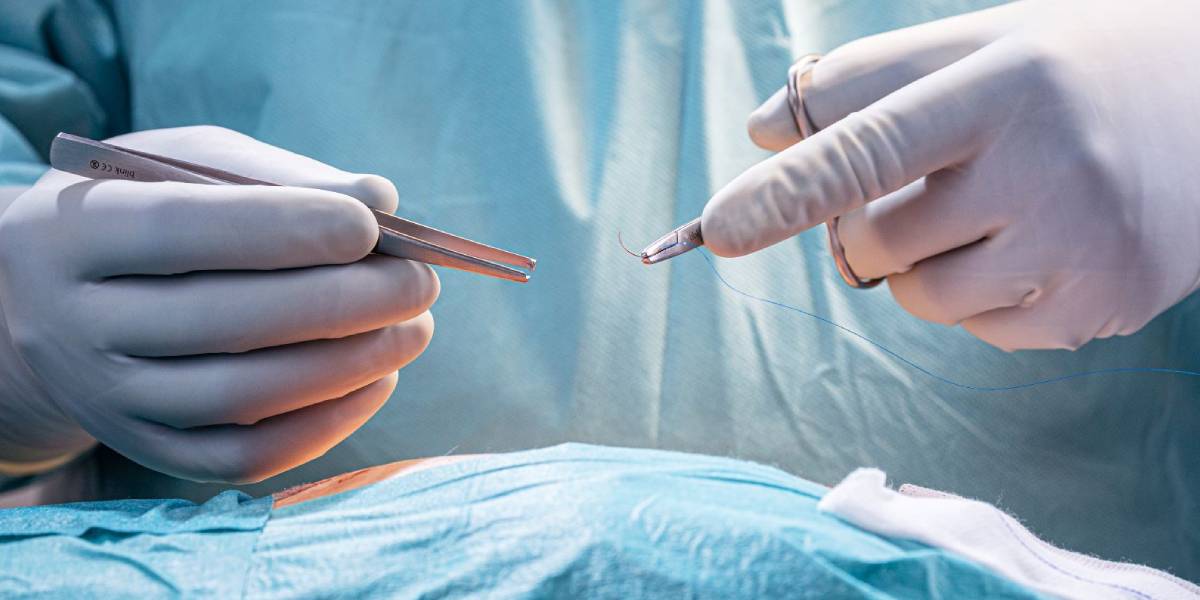
Banswada Mother and Child Hospital conducted 10 caesarean sections over two days.

Synopsis: Five women developed serious complications after undergoing caesarean sections at the Government Mother and Child Hospital in Banswada, Telangana, prompting an official inquiry. Three were shifted to NIMS. Surgeries have been suspended, and medicines are being tested, while doctors investigate the cause and families recount the ordeal.
Five women who underwent caesarean sections at the Government Mother and Child Hospital (MCH) in Banswada, Kamareddy district, developed serious medical complications, prompting an official inquiry, suspension of C-sections at the hospital, and laboratory testing of medicines and consumables used during the surgeries.
Three of the women were shifted to the Nizam’s Institute of Medical Sciences (NIMS) in Hyderabad after their condition worsened. The remaining patients were initially treated at the Government General Hospital (GGS) in Nizamabad.
Hospital authorities maintained that the exact cause of the complications remains unknown and cautioned against drawing conclusions until the inquiry is completed.
Speaking to South First, Dr M. Vijay Bhaskar, Superintendent of the Banswada Mother and Child Hospital, said 12 surgeries, including 10 caesarean sections and two appendectomies, were performed over two days.
“On the 10th and 11th July, we operated on 12 cases. On the 10th, around midnight, one case developed a medical complication and had to be referred to Nizamabad. Subsequently, over the next two days, on Sunday, three more cases were shifted because of low urine output. As a first referral centre, we referred them to GGS Nizamabad,” he said.
The superintendent said two women who underwent C-sections on Friday developed complications, followed by three more women who had surgeries on Saturday.
“Out of the 12 surgeries, we performed two appendectomies on two subsequent days and 10 caesarean sections, five each on Friday and Saturday. Of the five surgeries done on Friday, two cases developed complications. Of the five surgeries done on Saturday, three cases developed complications. The main reason was that the urine output was coming down,” Dr Bhaskar said.
The affected women later developed low platelet counts along with urinary and kidney-related complications.
Also Read: Natural birth vs C-section? It’s not always a choice
Dr Bhaskar said he reviewed the patients after they were referred to Nizamabad and decided they required higher-level care.
“On Monday morning, I visited GGS Nizamabad. I saw the condition of the patients, and the urine output was not increasing. One patient was simultaneously admitted to a private hospital because they did not want to go to GGS. I went to the private hospital as well. She was also not in a comfortable state. As the next step, I decided to shift them to Hyderabad,” he said.
The three most critical patients were subsequently shifted to NIMS, where they continue to receive specialised treatment.
Following the incident, the hospital suspended caesarean sections until laboratory investigations are completed.
Earlier, Dr Bhaskar had said that medicines and materials used during the surgeries had been sent for testing.
He said the operating theatre and intravenous fluids had already undergone preliminary checks.
“I checked the operating theatre and the swabs regarding the sterility of the OT. All the swabs were negative. Whatever IV fluids were infused, I sent them for culture and sensitivity. They are also sterile,” he said.
He added that the inquiry had widened beyond the hospital itself.
“Two gynaecologists have come from the government for an inquiry. They have taken all the case sheets. Yesterday, a TSMSIDC engineer also came and inspected the labour room and the operating theatre. Probably the inquiry committee is looking into the reasons,” Bhaskar said.
He also said he had requested the Drug Inspector to collect medicine samples.
“We just don’t want any further patients to undergo the same complication. As the head of the organisation, I requested the Drug Inspector to visit the hospital and take samples of all the medicines used in the operating theatre and the postoperative ward for analysis,” he said.
Dr Bhaskar further said that doctors at NIMS had raised concerns over medicines, while stressing that the official inquiry would determine the actual cause.
“NIMS doctors are strongly suspecting the drugs,” he said, adding that the inquiry committee would determine the exact reason behind the complications.
Dr Bhaskar said the condition of the affected women has improved considerably over the past few days.
“When the cases were not improving on the second day, I immediately requested the gynaecologist to shift all the cases to a higher antibiotic. The same antibiotic is being continued at NIMS.”
“As of today, out of the 10 cases, the five patients who were being treated at Banswada have been discharged. Two patients at NIMS have also been discharged, and the remaining patients are also being planned for discharge. Out of the three patients who were in the MICU, one is being shifted to the ward today. Two patients will remain in the ICU, and they are also improving. They are far better than before,” he added.
Also Read: Karnataka forms panel to check C-section deliveries in district hospitals
Among those affected is Lakshmi Priya, whose husband, Veerabrahma Chary, described a harrowing week following the birth of their son.
Speaking to South First, Chary said his wife underwent a C-section at the Banswada hospital on 10 July, and her condition suddenly deteriorated.
“My wife delivered a baby boy through a C-section at the Banswada Mother and Child Hospital on Friday, 10 July. After the surgery, she developed difficulty breathing. The doctors advised us to shift her to the Government General Hospital in Nizamabad, and we agreed.”
Unsatisfied with the facilities there, Chary shifted his wife to a private hospital, where doctors suspected liver involvement and thrombocytopenia.
“The doctors there told us she might have a liver infection and that her platelet count was low. We spent around ₹55,000 to ₹60,000 on her treatment over one-and-a-half days.”
Chary said the district health officials later contacted the family and advised them to move her to NIMS after similar complications emerged among other women who had undergone C-sections at the hospital.
“She remained under observation at NIMS for 48 hours and has now been shifted to the general ward. The doctors told us there was excess fluid in her lungs, but they said her condition is now stable.”
The newborn remains healthy but has not yet been breastfed.
“Our relatives in Hyderabad are taking care of our newborn son. We got him examined at a private hospital, and he is healthy. He has not been fed his mother’s milk so far, following the advice of multiple doctors and healthcare staff,” Chary said.
He also claimed that several women from the same hospital remain admitted at NIMS.
“As far as I know, at least six women who underwent C-sections at the Banswada Mother and Child Hospital are admitted to NIMS. I have heard that some are undergoing dialysis and one patient is being treated for jaundice, though I do not know the complete details.”
Also Read: Infant dies after family uses Vicks-camphor mix to treat cold
The incident has drawn attention because the Banswada Mother and Child Hospital has previously been recognised for the quality of its maternal care.
In 2023, the hospital became the first government hospital in India to receive the Breastfeeding Friendly Hospital Initiative (BFHI) accreditation after successfully implementing the World Health Organisation’s 10-step breastfeeding guidelines alongside the Government of India’s Mother’s Absolute Affection (MAA) programme.
The accreditation was awarded jointly by UNICEF, the Breastfeeding Promotion Network of India (BPNI), the Association of Health Providers India (AHPI), and the BFHI initiative after the hospital cleared two rounds of inspections. At the time, it was among only four hospitals in the country to hold the accreditation.
The hospital conducts nearly 350 deliveries every month, of which around 150 are caesarean sections.
“MCH Banswada has a very big load of surgeries and delivery cases. We do nearly 350 deliveries every month, out of which nearly 150 are C-sections. But this has never happened before. This hospital is famous for normal deliveries. We follow the government norm, where about 60% are normal deliveries, and 35% to 40% are C-sections,” Dr Bhaskar said.
The inquiry committee is expected to submit its findings after laboratory analysis of medicines, consumables and other materials used during the surgeries is completed.
(Edited by Majnu Babu).



