

Published Sep 04, 2026 | 7:00 AM ⚊ Updated Sep 04, 2026 | 7:00 AM

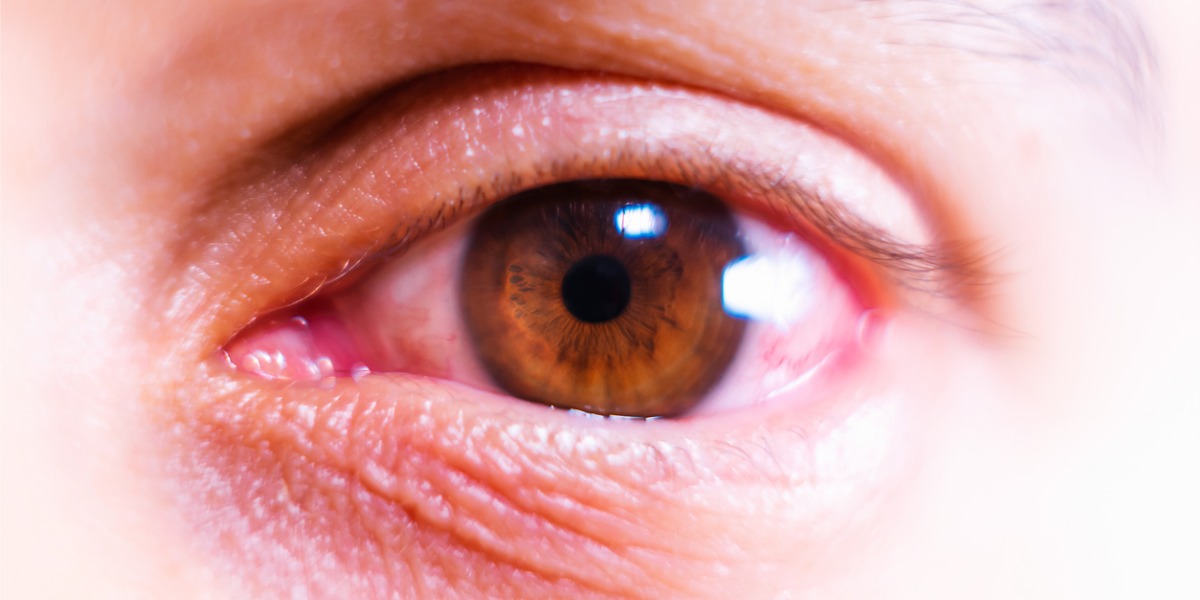
Around two to five lakh people may be bilaterally blind and require treatment.

Synopsis: India faces a widening corneal transplant gap, with experts pointing to low donation, family consent, uneven tissue distribution and limited infrastructure. Despite stronger hospital retrieval programmes and advances that allow one donor cornea to benefit multiple recipients, patients can still wait months or years for sight-restoring surgery.
A person can pledge their eyes years before death. But that pledge does not settle the matter on its own. After death, the decision can still come down to the family, at a moment when relatives are already dealing with grief.
“First-person consent is not yet sufficient,” said Dr Radhika Tondon, Chief of the Dr RP Centre of Ophthalmological Sciences at AIIMS, New Delhi. “We still have to take the consent of the family.”
That requirement, however, sits inside a much larger shortfall. Dr Jeevan Titiyal, Regional Head of Clinical Services at Dr Agarwal’s Eye Hospital in Delhi and President of the All India Ophthalmological Society, estimates that India adds 40,000 to 50,000 new patients to its corneal transplant backlog every year. He puts the number of surgeries needed annually to bring that backlog down at around one lakh.
“Our estimates suggest that around two to five lakh people may be bilaterally blind and require treatment, while there could be around 10 to 15 lakh people who have one good eye and require transplantation in the other eye,” he said, adding that AIIMS has begun a national survey to establish a firmer figure.
Mr Rajiv of Dr Agarwal’s Eye Bank cited a separate estimate from the RP Centre. “As per the RP Centre’s 2020 figures, around 12 lakh registered patients were on the waiting list who required corneal transplantation,” he said. “And even that is a very small number when you consider the actual requirement.”
The figures come from different estimates and different years, but the experts agree on the direction of the problem: demand continues to outpace the system’s ability to provide transplants.
One gap Titiyal identified is the absence of a central registry for people who have pledged their eyes. He has raised this with NOTTO, the national body that governs organ transplantation.
“We do not currently have a similar central registry for people who have pledged their eyes,” he said. “Different eye banks and their representatives maintain their own records, but we do not have one central registry.”
He believes a shared database could reach donors directly. “I understand that around one crore people may have already pledged their eyes,” he said. “If those people are registered centrally, a message could potentially be sent to all of them at the same time.”
He also wants something families and hospitals could act on immediately, pointing to a practice he has seen in the United States. “In one US state, if you pledge your organs, that information is recorded on your driving licence,” he said. “We would also like something similar in India.”
While Tondon said the existing legal framework does not itself prevent corneal donation, Titiyal argued that tissue donation needs to be considered separately, because applying organ-donation requirements to tissue creates confusion.
“Since the cornea is recognised as a tissue, there is no specific hindrance to corneal donation because of the Act,” Tondon said. “Sometimes people misinterpret the regulations, and when inspections are carried out, there can be a misinterpretation of the findings.”
Titiyal, who said the ophthalmological society he leads plans to raise the issue formally, sees it differently. “We are calling a meeting this year where we want to discuss whether the Tissue Donation Act should be separated from the framework governing organ donation,” he said. “When the two are treated together, it creates a lot of confusion because the requirements applicable to organ donation cannot necessarily be applied in the same way to tissue donation.”
He also points to a shortage of trained corneal surgeons and eye-bank technicians, and said grief counsellors matter most of all. “We also need grief counsellors, who are perhaps one of the most important links in the entire process,” he said. “When a death occurs, counsellors have to go to the family at that difficult moment and explain the importance of donating the eyes of their loved one. That requires expertise and sensitivity.”
Also Read: In Tamil Nadu’s Kothagiri Hills tea estates, gum disease is widespread – toothbrush a rarity
A pledge that survives the family conversation still has to clear a medical hurdle. Not every donated eye becomes a usable cornea.
“If there is an infection such as HIV, rabies or septicaemia, or if the person has died due to poisoning, the tissue may not be suitable for transplantation,” Titiyal said. “If the donation takes place 10 to 12 hours after death, or if the donor is of a very advanced age and the cornea has deteriorated, the tissue may not be suitable.”
Full utilisation, he said, is not a realistic target anywhere. “Unfortunately, you may have heard and read that around 50% of donated tissue is utilised. Hundred per cent utilisation is not possible in organ or tissue donation,” he said. “Even if you look at countries around the world, including the US, utilisation rates above 50% are difficult to achieve.”
Around 2010, Titiyal said, the system shifted its focus towards identifying deaths inside hospitals, rather than relying only on voluntary pledges made in advance. “The advantage is that when a death occurs in a hospital, the system can respond immediately,” he said. “If the tissue is retrieved within six hours, its quality is much better.”
That shift shows up in the National Eye Bank’s own figures. Dr Namrata Sharma, its Chairperson, reported that the centre collected 2,167 corneas in 2025 and carried out 1,775 transplants, a utilisation rate of 82%, against a national rate that Titiyal and Tondon both put at roughly 50%.
Of those 2,167 corneas, 1,863 came through hospital corneal retrieval programmes rather than voluntary donation drives. Only 69 could not be used for transplantation, and Sharma said even those were not wasted. “Even these tissues do not go to waste,” she said. “They are used for medical research and training purposes.”
Rajiv described how a hospital-based retrieval network functions in the south. “We currently have around 40 hospital corneal retrieval programme centres across South India,” he said. Through this network, the group collects 6,000 to 7,000 eyes a year and carries out around 3,500 transplants, supplying tissue beyond its own hospitals to government centres in states such as Bihar and Uttar Pradesh.
South India’s stronger eye-bank networks offer a glimpse of what better retrieval and distribution can do.
“Tamil Nadu, Kerala, Telangana and Andhra Pradesh have relatively good eye collection systems and the waiting time for patients is much lower,” Titiyal said. “In fact, some of these regions are able to supply tissues to other parts of the country.”
He linked this partly to how health policy sits with individual states rather than the centre. “There is a central policy, but states implement and administer healthcare in their own way,” he said. Titiyal said state-level rules can sometimes make it difficult to move donor tissue across borders, citing his own experience in Maharashtra and West Bengal.
He wants a national mechanism that moves tissue to patients rather than leaving it wherever it happens to be collected. “There is a need for the government to consider a centralised framework for tissue distribution so that we can have equitable distribution,” he said. “If a patient is waiting in one place, the tissue should be able to reach that patient.”
Rajiv’s figures illustrate what a functioning network can do. “We can get a response within an hour saying that the tissue is available and the surgery can be performed the next day,” he said, describing corneal transplantation in parts of South India as approaching the speed of scheduling cataract surgery. In states with a thinner network, he said, “a patient may have to wait six months or even a year for a corneal transplant because the availability of donor tissue is not the same.”
That unevenness can sharply shape how long individual patients wait, even within a national system facing an overall shortage.
Also Read: Elderly patient’s death after fall from cot without side rails in Keralam sparks safety debate
Where the family conversation stalls, fear of disfigurement remains the most common reason, according to Tondon. “One of the largest hesitations is the worry about disfigurement of the face,” she said. “Only the central cornea, which is a small, transparent tissue, is taken. A cap is then put in place, which restores the normal appearance of the eye.”
Belief that donating an eye affects rebirth comes up less often than assumed, based on an informal survey Titiyal ran during a public lecture. “I asked people to raise their hands if they believed that donating their eyes would result in them being born blind in their next life,” he said. “Only around 10% of the people raised their hands. So I don’t think this is a major reason why people are not donating their eyes today.”
The bigger obstacle, he said, sits with the family rather than with belief. “The issue is less about the myth and more about whether the family is prepared to honour the person’s wishes. That is why awareness has to reach the entire family, not just the individual who makes the pledge.”
Corneal specialist Dr Bhavatarini, who works alongside Titiyal at Dr Agarwal’s Eye Hospital, explained that transplants no longer need to replace the whole cornea in every case.
“The cornea has six layers, but with advances in corneal transplantation, we can now perform layer-by-layer transplantation, where only the diseased layer of the cornea is replaced,” she said. “One of the advantages of layer-by-layer transplantation is that, in selected cases, a single donated cornea can be used for more than one patient.”
Titiyal cited the work his own team carried out at AIIMS and said that this approach changed how surgeons thought about the tissue in front of them.
“We were among the first to work on the concept of using one donor for three recipients,” he said. “That work really changed the mindset. We realised that we do not necessarily have to replace the entire cornea.”
Titiyal said replacing only the affected layer, rather than the full cornea, reduces the exposure to donor tissue and lowers the chance of rejection. “If we look at full-thickness grafts, the chance of rejection in the first year can be around 20%. If we perform a one-layer transplant, it can come down to less than 1%,” he said, describing his own team’s outcomes rather than a universal clinical rate.
In selected cases, newer techniques can allow tissue from one donor cornea to benefit multiple recipients. Sharma described what this can mean at scale. “With one donor cornea, we can potentially give sight to six people,” she said. “We are not just giving sight to six individuals. We are bringing light into the lives of six people and their families.”
At AIIMS, the wait still varies sharply by urgency. Emergency patients can receive a cornea on the same day or within two to three days, Tondon said. Children typically wait three to six months, sometimes up to nine. Patients who are blind in both eyes may wait six months to a year, while those with useful vision in one eye can wait one to two years.
“We are trying to reduce this,” Tondon said.
Among those waiting is a patient checking their phone for the call that tells them a cornea has arrived. Whether that call comes in time depends not simply on how many people pledge their eyes, but on what happens to that pledge after they are gone.
(Edited by Fayisa CA)



