

Published Aug 08, 2026 | 7:00 AM ⚊ Updated Aug 08, 2026 | 7:00 AM

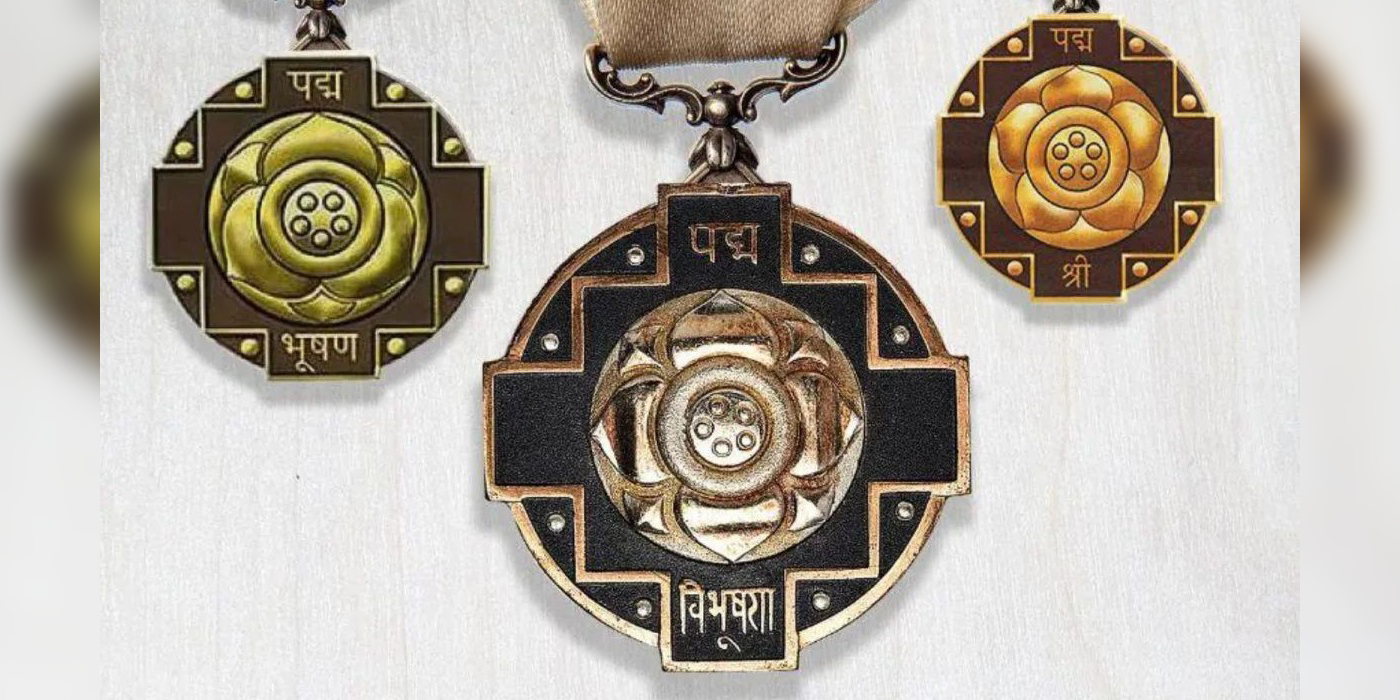
The Padma awards

Synopsis: A decade of Padma awards in medicine reveals patterns that annual announcements often obscure. By examining every medicine honour conferred between 2017 and 2026, this analysis explores which doctors, institutions, specialities, diseases and regions received national recognition, and which remained largely absent. From the rise of private hospitals and recurring recognition of grassroots service to the limited visibility of mental health and state-run institutions, the awards offer an unexpected portrait of India’s healthcare priorities.
Every Republic Day eve, the Padma awards arrive with familiar fanfare. A handful of names make headlines. Dozens more quietly slip into the archives.
A decade later, those annual lists begin to look different.
Read together, the doctors honoured between 2017 and 2026 reveal patterns that no single year’s awards can show. Certain institutions appear again and again. Some specialities become recurring favourites. Entire sections of India’s health system barely surface. What begins as a collection of individual achievements gradually becomes something else: a portrait of who the Indian state has consistently chosen to honour in medicine.
Over those ten years, 102 Padma awards in medicine recognised 104 individuals. Three received the Padma Vibhushan, nine the Padma Bhushan and 90 the Padma Shri. Yet the numbers tell only part of the story.
Not a single woman reached the Bhushan or Vibhushan tier–the second and third highest civilian award in the country.
No practitioner of Ayurveda, Siddha, Unani, homeopathy or other non-allopathic systems rose above the Padma Shri.
Mental health, despite becoming one of India’s fastest-growing public health concerns, produced just two recipients across the decade, neither recognised beyond the entry-level honour, i.e beyond Padma Shri.
Gastroenterology emerged as the only specialty represented across all three Padma tiers, while central government institutions produced roughly twice as many recipients as state medical colleges.
Those patterns did not emerge from one award list, they accumulated quietly, one Republic Day at a time.
One rule shapes the medicine list more than many readers realise. Government servants are generally not eligible to receive Padma awards while in service. But, doctors are among the very few exceptions.
That single provision creates an unusually broad field of contenders. Serving government physicians, retired specialists, corporate hospital consultants, mission hospital doctors and independent practitioners can all appear on the same honours list.
The official Padma citations, however, reveal remarkably little. They identify a recipient’s name, field and state, but rarely explain where the doctor worked, what institution shaped a career or why that individual was chosen.
Tracing those affiliations tells a much richer story.
The largest identifiable source of medicine Padma recipients over the past decade is India’s network of premier central institutions run by the Union Government, including AIIMS, PGIMER, NIMHANS, SGPGIMS, KGMU and their counterparts. Together, they account for roughly 17 recipients, making them the single largest institutional bloc.
The next largest source is far less expected.
Doctors associated with independent NGOs and grassroots organisations, including Lifeline Foundation, Pallium India, the Bairagarh Tribal Health Project, Sankara Eye Foundation, SNEHA and Trust for Health in Bastar, collectively outnumber recipients from all state government medical colleges combined.
That contrast is striking.
State medical colleges and district hospitals treat the overwhelming majority of India’s patients. Yet over ten years they produced fewer Padma recipients than either the country’s premier central institutions or corporate private hospitals.
The balance also shifted over time.
Before 2022, government and central public institutions accounted for about 60 per cent of Padma Shri recipients in medicine each year. After 2022, that share fell to around 38 per cent, while recognition of doctors associated with private institutions steadily increased.
The trend was gradual, but it moved in only one direction.
“Before the COVID-19 pandemic, government doctors formed the largest share of Padma recipients in medicine,” says a professor at Osmania Medical College, Hyderabad, to South First who requested anonymity. “Government-affiliated doctors accounted for well over 60 per cent of recipients. After the pandemic, that balance appears to have shifted towards the private sector. That is an interesting trend which deserves closer examination.”
The timing makes the shift difficult to ignore.
India’s response to COVID-19 was delivered overwhelmingly through the public health system. Yet the years immediately after the pandemic saw private-sector doctors become increasingly prominent among Padma recipients.
“One aspect that surprised me,” the professor says, “was the limited recognition of doctors who worked on the frontlines during COVID-19, particularly those in government hospitals.”
He points to a doctor in Telangana who became one of the most visible public faces of the state’s pandemic response but never appeared on the Padma honours list.
One of the decade’s quieter patterns lies outside modern allopathic medicine. Of the 102 Padma awards in medicine conferred between 2017 and 2026, 14 went to practitioners of non-allopathic systems.
They included five Ayurveda practitioners, two Sowa-Rigpa practitioners, three traditional tribal healers, two homeopaths, one Siddha practitioner, and one Unani physician.
The distinction is important because medical scientists were recognised elsewhere. For instance, Dr Raman Gangakhedkar, who played a pivotal role in India’s infectious disease surveillance through the Indian Council of Medical Research (ICMR), received the Padma Shri in 2020 under the Science and Engineering category, not Medicine. The decade therefore shows that while non-allopathic systems found representation within the medicine category, medical research itself was, at times, recognised outside it.
The Padma list does not simply recognise doctors. Over time, it also reveals the illnesses that repeatedly capture national attention, and those that seldom do.
Some of the most consistently recognised conditions are not India’s biggest health challenges. Instead, they are diseases that have long afflicted tribal, rural and underserved communities, where a single doctor’s work can transform an entire region.
Kala-azar stands out most clearly.
Two years in succession, the disease earned recognition at two different levels of the Padma awards. Chandreshwar Prasad Thakur commonly known as Dr CP Thakur, whose work led to the first oral drug for kala-azar, received the Padma Bhushan in 2024. A year later, Shyam Sundar received the Padma Shri for developing a WHO-adopted treatment regimen that helped reshape kala-azar management across endemic regions.
It should be noted that Dr CP Thakur was a BJP politician and Union Health Minister in Atal Bihari Vajpayee government.
Both doctors spent their careers in the Gangetic belt, where the disease has remained an endemic for decades. Their recognition suggests that the awards sometimes follow not only individual achievement, but also the geography of disease itself.
Kala-azar is not an isolated example.
Across the decade, sickle cell anaemia produced two Padma recipients. Haemophilia appeared twice, in 2023 and again in 2026. Individual honours also recognised work on rabies, filariasis, leprosy, scorpion envenomation, HIV/AIDS and healthcare for the Jarawa tribal community in the Andaman Islands.
Most of these conditions share something in common. They are concentrated among populations that receive relatively little public attention and attract limited commercial interest. Their specialists rarely become household names or headline speakers at medical conferences. Yet, viewed together, they appear on the Padma list with surprising consistency.
Mental health pr,esents an entirely different picture.
Only two recipients across ten years were recognised primarily for their work in psychiatry and mental healthcare: Bangalore Gangadhar, former Director of NIMHANS and former chairman of NMC, who received the Padma Shri in 2020, and Chandrashekar Channapatna Rajannachar, a community psychiatrist who spent four decades providing free mental healthcare in Karnataka and was honoured in 2024.
Neither progressed beyond the Padma Shri.
That limited representation contrasts sharply with India’s growing mental health burden.
“Nearly 75 per cent of India’s disease burden today comes from non-communicable diseases,” says the professor from Osmania Medical College. “Yet very few Padma awards over the past decade have recognised doctors primarily for their work in this area.”
Dr Kiran Madala, professor and HOD of Critical Care Medicine at Gandhi Medical College in Hyderabad sees a similar imbalance.
“Gastroenterology and ophthalmology appear far more prominently among recipients,” he says to South First. “Preventive medicine and public health continue to receive relatively less recognition.”
No specialty illustrates that better than ophthalmology.
Five trained ophthalmologists received Padma awards during the decade, including an extraordinary concentration in 2019, when Pratap Singh Hardia, R V Ramani and Jagat Ram were all honoured in the same year. A sixth recipient, Ayurvedic physician Manohar Krishana Dole, was recognised for organising large-scale free eye-care camps through a charitable trust.
The pattern is hardly accidental.
For decades, cataract surgery has been India’s most visible model of high-volume, low-cost healthcare delivery, shaped largely by institutions such as the Aravind Eye Care System. The Padma awards have mirrored that history, repeatedly recognising doctors who expanded affordable eye care at scale.
Gastroenterology tells a different story.
It is the only specialty represented across all three Padma tiers during the decade. Duvvur Nageshwar Reddy received the Padma Vibhushan in 2025, Kallipatti Ramasamy Palaniswamy the Padma Bhushan in 2026, while Guduru Venkat Rao and Prateek Sharma both received the Padma Shri the same year.
Geography tells another story.
Maharashtra produced more medicine Padma recipients than any other state during the decade, with awardees appearing across all three tiers and in almost every year. The state’s recipients ranged from laparoscopic surgery pioneer Tehemton Udwadia to clinical toxicologist Himmatrao Bawaskar, neurologist Bhimsen Singhal, psychiatrist Chandrashekhar Mahadeorao Meshram, sickle cell advocate Sudam Kate, homeopath Vilas Dangre, and posthumously honoured Ayurveda practitioner Balaji Tambe.
Tamil Nadu followed with an equally diverse spread of contributions. Its recipients included HIV researcher Suniti Solomon, diabetologist Veeraswamy Seshiah, gastroenterologist Kallipatti Ramasamy Palaniswamy, ophthalmologist G. Nachiyar, veteran physician and former health minister H. V. Hande, Siddha practitioner Gopalsamy Veluchamy, and physician Thiruvengadam Veeraraghavan, who received the Padma Shri posthumously.
Uttar Pradesh’s representation was anchored largely in its government medical institutions. Its awardees included endocrinologist Madan Madhav Godbole, maxillofacial surgeon Shadab Mohammad, hepatologist Radha Krishan Dhiman, physician Kamlakar Tripathi, pulmonologist Rajendra Prasad, community medicine specialist Chandrakant Sambhaji Pandav, and kala-azar expert Shyam Sundar.
Yet the picture becomes more nuanced when viewed through a regional lens.
“If you set Maharashtra aside, the southern states account for a relatively small share of Padma awardees in medicine overall,” says Dr Kiran Madala. “Doctors from Telangana and the Telugu states have received very few Padma awards over the past several decades.”
The data partly supports that observation, but also reveals an interesting contradiction.
While the South contributes fewer Padma Shri recipients than its healthcare footprint might suggest, it dominates some of the country’s highest-profile specialties. Three of the four gastroenterologists recognised at the Padma Bhushan or Padma Vibhushan level came from the region: Duvvur Nageshwar Reddy of Telangana received the Padma Vibhushan in 2025, while Kallipatti Ramasamy Palaniswamy of Tamil Nadu received the Padma Bhushan in 2026.
At the Padma Shri level, Guduru Venkat Rao, also from Telangana, was recognised in 2026. Together, they gave southern India a disproportionate presence in one of the decade’s most visible medical specialties.
The Gangetic belt forms another distinct cluster.
Stretching from Bihar through eastern Uttar Pradesh to Varanasi, the region repeatedly appears in awards linked to disease-specific work. Kala-azar specialists Chandreshwar Prasad Thakur and Shyam Sundar, filariasis expert Hemant Kumar, pulmonologist Rajendra Prasad, and physician Kamlakar Tripathi all built their careers in institutions across this corridor.
Within that landscape, Banaras Hindu University stands out. The university produced four medicine Padma recipients during the decade: Kamlakar Tripathi in 2022, Manoranjan Sahu in 2023, and Kewal Krishan Thakral and Shyam Sundar in 2026. Outside AIIMS, no institution produced a more concentrated cluster of medicine awardees.
The North-East, by contrast, appears only occasionally.
Assam contributed the largest number of medicine recipients from the region through surgeon Illias Ali and surgical oncologist Ravi Kannan R., both recognised for work carried out in the state. Nagaland, Meghalaya and Mizoram, meanwhile, did not produce a single medicine Padma recipient during the decade.
Ladakh is the notable exception.
Sonam Norboo Memorial Hospital in Leh produced recipients at two different Padma tiers in successive years. Surgeon Tsering Norboo received the Padma Shri in 2019, followed by obstetrician and gynaecologist Tsering Landol, who received the Padma Bhushan in 2020. Outside India’s major metropolitan centres, no other institution matched that distinction.
Hidden among celebrated surgeons, pioneering researchers and hospital founders is another figure who appears with remarkable regularity: the doctor who charges almost nothing.
Every few years, the Padma list returns to this archetype.
Bhakti Yadav of Indore spent nearly seven decades treating patients without charging a consultation fee. She was 91 when the Padma Shri was announced in 2017 and died four months later. In rural West Bengal, Sushovan Banerjee became known as the “Re 1 doctor.”
Thiruvengadam Veeraraghavan in North Chennai charged Rs 2 per consultation for decades before receiving a posthumous Padma Shri in 2021. In Ranchi, Shyama Prasad Mukherjee continued seeing patients for Rs 5 long after retirement.
Across ten years, this pattern appears in six different award lists, spanning nine states and almost every region of the country. No other recurring profile is as geographically widespread or as consistent.
For Dr Kiran Madala, the repeated recognition of such doctors reflects an admirable tradition of service, but also raises larger questions about what the awards are celebrating.
“The doctors who charge nominal consultation fees deserve recognition for their commitment to society,” he says. “But national honours should ultimately recognise the quality, impact and scale of a doctor’s contribution. Charging a reasonable fee after years of training and service should never become a disadvantage.”
The Osmania Medical College professor makes a similar distinction.
“Service to the poor should certainly be recognised,” he says. “At the same time, strengthening public healthcare requires recognising doctors who deliver high-quality care every day within the government system.”
Also Read: DENV-2 dominates South India as nationwide study finds multiple dengue strains circulating
The Padma citations tell readers who was honoured. They reveal far less about where those careers unfolded.
Looking beyond the official notifications uncovers a quiet pattern that repeats across several recipients: many of India’s most decorated doctors spent much of their careers in government institutions before moving to private hospitals later in life.
Sandeep Guleria, who led the Department of Surgery at AIIMS New Delhi and performed several landmark renal transplants during his tenure there, later joined Apollo Hospitals after receiving the Padma Shri in 2019.
Mukut Minz, a pioneering renal transplant surgeon, spent 36 years at PGIMER Chandigarh before joining Fortis Hospital in Mohali. Digambar Behera, another distinguished physician from PGIMER, followed a similar path after leading the institute’s Department of Pulmonary Medicine. Kallipatti Ramasamy Palaniswamy established the Department of Gastroenterology at Stanley Medical College before moving to Apollo Hospitals, Chennai, where he spent more than two decades before receiving the Padma Bhushan in 2026.
The awards do not explain these transitions, nor do they imply that private institutions deserve less recognition.
They do, however, reveal a broader reality within Indian medicine.
By the time many doctors receive the country’s highest civilian honours, they are often associated with institutions different from those where much of their pioneering work was undertaken. The Padma citation recognises the individual, but public memory often associates that recognition with the institution they represent at the time.
Another pattern emerges only after looking beyond the names.
Several recipients spent their careers in hospitals or missions established by religious organisations, institutions that rarely feature in discussions on India’s healthcare system but continue to deliver care in some of the country’s most underserved regions.
Ashok Laxmanrao Kukade, who received the Padma Bhushan in 2019, built his career at Vivekanand Hospital in Latur, a Hindu charitable institution. Jose Chacko Periappuram, honoured with the Padma Bhushan in 2025, serves at Lisie Hospital in Kochi, founded by a Roman Catholic religious order. Dhananjay Sagdeo worked through the Swami Vivekananda Medical Mission in Wayanad, while Ramchandra and Suneeta Godbole spent 37 years providing healthcare in conflict-affected Bastar through Vanvasi Kalyan Ashram.
Their institutions differ in philosophy and religious tradition, but they share a common characteristic: long-term service in places where formal healthcare systems remain weak.
Two of the four recipients from faith-based institutions received the Padma Bhushan, suggesting that these organisations have quietly contributed some of the country’s most influential medical work despite receiving relatively little attention in mainstream health policy discussions.
The Padma awards also tell a story about timing.
Many recipients receive national recognition only after decades of service, often in the final years of their professional lives.
Six practitioners in the dataset were at least 85 years old when their awards were announced. Three of them appeared in the same year. In 2024, Radhe Shyam Pareek was 90, Manohar Krishana Dole 95 and Dayal Mavjibhai Parmar 88. Yeshi Dhonden was 91 when he received the Padma Shri in 2018 and died the following year. Bhakti Yadav was also 91 when she was honoured. H. V. Hande, physician, former Tamil Nadu health minister and one of the country’s oldest practising doctors, was 99 when he received the Padma Shri in 2026.
For many of them, the Padma functions less as recognition of a recent achievement than as acknowledgement of an entire lifetime devoted to medicine.
The posthumous awards carry an even greater sense of delayed recognition.
Six medicine Padma awards during the decade were conferred after the recipient’s death: Suniti Solomon (2017), J. N. Pande (2021), Thiruvengadam Veeraraghavan (2021), Narendra Prasad Misra (2022), Balaji Tambe (2022) and Dilip Mahalanabis (2023).
Each tells a different story.
Suniti Solomon documented India’s first HIV cases in 1986, yet national recognition came 31 years later. Dilip Mahalanabis transformed the treatment of diarrhoeal disease through oral rehydration therapy, an innovation credited with saving millions of lives worldwide. His Padma Vibhushan was also awarded posthumously.
Notably, all six posthumous medicine awards were announced between 2017 and 2023. None appeared in the 2024, 2025 or 2026 lists, marking a clear shift away from retrospective recognition.
Also Read: South India powers India’s organ transplants, but demand still far outstrips supply: Lancet study
By this point, a pattern begins to emerge.
The awards repeatedly recognise three kinds of doctors. There are pioneers who reshape an entire specialty. There are physicians who dedicate their lives to serving remote and underserved communities. And there are innovators whose work changes the way medicine is practised.
But another group, both experts argue, rarely enters the national conversation.
They call it the “missing middle.”
It is not an official category. Nor is it something the Padma awards were designed to measure. It is the conclusion both experts reached independently after reflecting on the names that appear, and those that do not.
“Recognition often goes either to doctors known for extraordinary charitable service or to eminent specialists associated with institutions like AIIMS, PGIMER and large corporate hospitals,” says Dr Kiran Madala. “The missing middle is largely invisible.”
He is referring to the doctors who keep India’s health system functioning every day. The surgeon performing complex procedures in a state medical college with limited infrastructure. The physician in a district hospital managing an overwhelming patient load. The specialist in a modest nursing home who delivers ethical, high-quality care without the visibility that comes from a major institution or a nationally recognised programme.
Their work is neither dramatic enough to become a public story nor prominent enough to attract sustained national attention.
The numbers appear to support that impression.
Central government institutions produced roughly twice as many Padma recipients in medicine as state medical colleges, even though state-run colleges are far more numerous and collectively treat many more patients.
The professor from Osmania Medical College believes that imbalance deserves closer attention.
“I cannot recall a doctor serving in a state government hospital in the Telugu states who has received a Padma award while in service,” he says.
For him, the issue is not simply one of recognition. It is also about how excellence is defined.
He points to Osmania General Hospital, one of India’s oldest medical colleges, where complex procedures continue to be performed despite limited resources.
“Osmania General Hospital publishes thousands of research papers every year, often exceeding the output of many private hospitals,” he says. “Yet doctors from such institutions rarely receive comparable national recognition.”
He recalls a recent example.
A multidisciplinary team at Osmania completed a 36-hour surgery involving five organ transplants in a single sitting, an operation that drew admiration within the medical community.
“Such work deserves to be celebrated,” he says. “I would question whether it receives the attention it deserves.”
Dr Madala approaches the question from another direction.
Private hospitals, he says, have greater visibility by virtue of the people they serve and the networks they operate within.
“Doctors in private practice often interact with influential sections of society,” he says. “Government doctors spend most of their careers serving ordinary patients. Many of their contributions remain largely unrecognised.”
He also challenges one of the most common explanations for the growing prominence of private-sector recipients.
Research and innovation are frequently cited as reasons why private hospitals receive greater national recognition. But, he argues, government institutions contribute just as significantly to academic medicine.
“Private hospitals often claim that their investment in research and innovation justifies greater recognition,” Dr Madala says. “But government medical colleges also contribute substantially. Institutions like Osmania Medical College publish thousands of research papers every year, often exceeding the output of many private hospitals. If research and academic contribution are among the factors considered for national honours, then government medical institutions deserve much greater recognition than they currently receive.”
The experts don’t argue that private-sector doctors are undeserving of recognition. Rather, they question whether the awards fully reflect the breadth of work taking place across India’s public health system.
“If India is serious about achieving universal health coverage,” the Osmania professor said, “government hospitals have to remain at the centre of healthcare delivery because the majority of patients depend on them. Yet comparatively fewer government doctors, especially those working in state-run hospitals, appear to receive national recognition.”
Their observations remain interpretations, not conclusions drawn directly from the data.
But after ten years of awards, the numbers consistently point in the same direction. Recognition appears concentrated at either end of the system, among nationally visible institutions and extraordinary humanitarian service, while the doctors occupying the vast middle of India’s healthcare landscape receive comparatively little attention.



