


Published Mar 05, 2026 | 7:00 AM ⚊ Updated Mar 05, 2026 | 7:00 AM

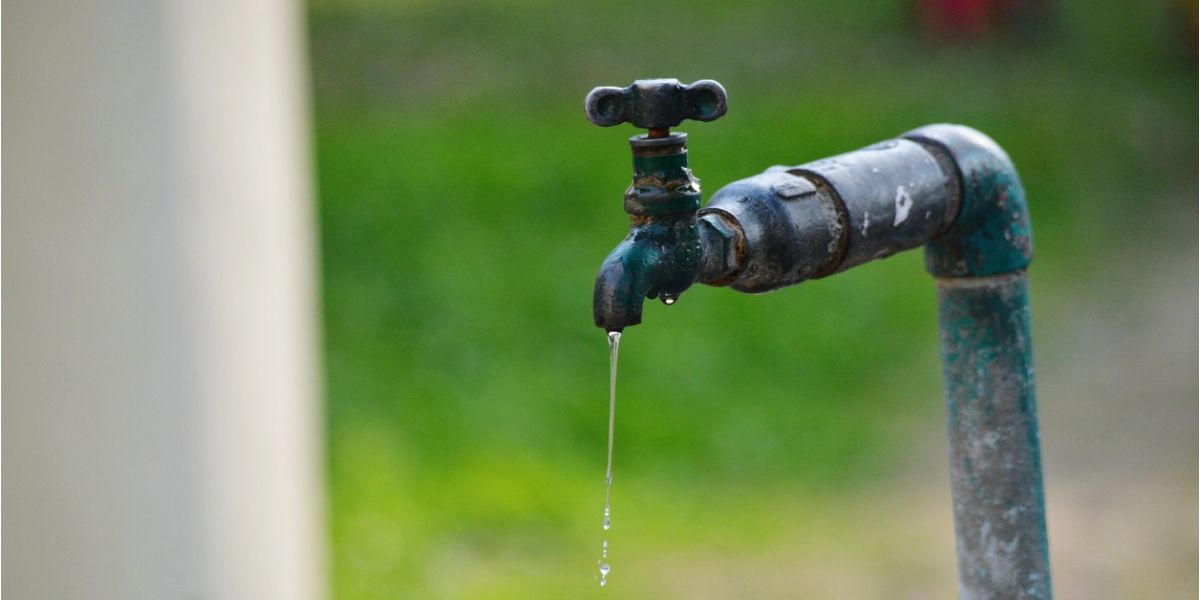
Representative Image. (iStock)
Synopsis: A large US study of more than 1.2 million people has found that those who drank “newer” groundwater faced a higher risk of developing Parkinson’s disease, compared with those using older, deeper water sources. Researchers say recently recharged groundwater is more likely to carry pollutants, though the study shows only an association and does not prove that drinking water causes the disease.
Every morning, across millions of Indian homes, someone fills a glass from a tap, a borewell, or a pot of water the family has trusted for years. The water looks clear. It has no smell. Nobody questions it. It is just water.
But a study released this week asks a question that science has circled for decades without a firm answer: what if the water we drink every day carries the seeds of a disease that slowly dismantles the brain?
Parkinson’s disease does not arrive loudly. It begins with a tremor in one hand. Then the body stiffens. Then every step slows down. More than ten million people live with it across the world. Scientists have spent years hunting its cause. Genes explain roughly 10 to 20 percent of cases. The remaining 80 to 90 percent have no clearly defined origin.
That gap now points, at least in part, toward the ground beneath our feet.
A team led by Dr Brittany Krzyzanowski of Atria Research Institute in New York examined over 1.2 million people across 21 major underground water systems in the United States. Among them, 12,370 had Parkinson’s disease. The researchers mapped where each person’s drinking water came from and, crucially, how old that water was.
The results carried weight.
People who drew their drinking water from newer groundwater, water that fell as rain within the last 70 to 75 years, carried a measurably higher risk of developing Parkinson’s disease. Those who drank from carbonate aquifers, underground limestone reservoirs that allow water to travel fast through cracks and fractures, faced a 24 percent higher risk compared to people drawing from other water systems. Against those drinking from glacial aquifers, the risk stood 62 percent higher.
The glacial aquifer group told the most striking part of the story. Their water formed during the Ice Age, more than 12,000 years ago. It travelled deep underground, filtered through layers of sand and gravel across millennia. Those who drank it showed the lowest Parkinson’s risk in the entire study.
“Newer groundwater, created by precipitation that has fallen within the past 70 to 75 years, has been exposed to more pollutants,” said Dr Krzyzanowski. “Older groundwater typically contains fewer contaminants because it is generally deeper and better shielded from surface contaminants. Our study found that groundwater age and location is a potential environmental risk factor of Parkinson’s disease.”
The study does not prove that drinking water causes Parkinson’s. It shows an association. But the pattern does not appear random.
Picture water as a traveller.
Rain falls on a field. Some evaporates. Some runs off into rivers. Some soaks into the ground and begins a slow descent through layers of rock and soil. How deep it travels, what it passes through, and how long the journey takes determines how clean it arrives when someone eventually draws it from a well or a tap.
Some underground systems allow water to move fast through cracks in limestone, carrying whatever it picked up on the surface: pesticide residue from fields, industrial solvents from nearby factories, runoff from roads. It does not spend enough time underground to filter out.
Other systems slow water down. It moves through sand and gravel over thousands of years. The earth itself filters it. By the time it surfaces, it has shed much of what it gathered.
“In aquifers where water moves quickly, newly recharged groundwater is more vulnerable to surface contamination,” said Dr Krzyzanowski. “Older groundwater can remain cleaner if it is separated from recent inputs by a confining layer.”
The study measured American water. But the question it raises travels easily.
Dr Sudhir Kumar, a senior neurologist at Apollo Hospitals in Hyderabad, considers the findings significant, though he approaches them with the caution of a clinician.
“One of the long-standing hypotheses involves environmental pollutants,” he told South First. “These may be groundwater pollutants, water contaminants, or even air pollutants. Conceptually, the model is sound.”
The biological logic is direct. Pollutants enter the human body in two ways: through the air we breathe or through the water and food we consume. If shallow groundwater carries neurotoxic chemicals into drinking taps, the brain absorbs a slow, years-long exposure that no single test captures at the time.
The chemicals already under suspicion include paraquat and rotenone, both pesticides in wide agricultural use. Trichloroethylene, an industrial solvent, appears regularly in contaminated groundwater near factories. Heavy metals such as manganese, lead, and copper have drawn attention in neurological research for years.
“We already know from previous studies that certain pesticides and herbicides used in agriculture increase the risk of Parkinson’s disease,” said Dr Kumar. “If these chemicals percolate into groundwater and contaminate drinking water, they could potentially contribute to risk.”
In India, most households depend on one of two sources. Borewells draw groundwater from depths of roughly 300 to 500 metres. Government pipelines carry water treated from rivers. Both carry vulnerability.
“Most borewells probably access water at depths of around 300 to 500 metres. That still makes it relatively superficial compared to very old, deep aquifer systems,” said Dr Kumar. “So households with independent borewells are largely using comparatively shallow groundwater.”
River water arrives at the tap after treatment. But treatment, Dr Kumar explained, does not guarantee safety from chemical contamination.
“Chlorination is commonly used and is effective in killing germs, but that does not necessarily remove chemical contaminants,” he said. “Filtration processes can remove certain heavy metals such as manganese, lead and copper, depending on the method used. It is less clear how effectively other pollutants are filtered out.”
In Telangana, drinking water flows primarily from the Godavari and Krishna rivers. Unlike the Ganga, which originates in glaciers, these rivers rise from the Deccan Plateau. They start clean at the source. But they travel far, passing through cities, industrial belts, and farmland before any treatment plant receives them.
“Agricultural activity along riverbanks is a concern. Farmers use herbicides and pesticides, and during rainfall these chemicals can wash into the river system,” said Dr Kumar. “All this suggests the need for proper data and systematic analysis. We cannot make definitive claims without evidence.”
Dr Kumar raised a point that journalists and readers both need to hold in mind. This research has not yet passed through peer review. It received acceptance for presentation at the American Academy of Neurology’s Annual Meeting in April 2026, one of the largest neurology gatherings in the world. The formal scrutiny by independent reviewers still lies ahead.
“This is essentially a conference paper,” he said. “It receives wide visibility and often gets covered in media. That is the current status of this research.”
He also identified the study’s most significant gap. The researchers never actually tested the water.
“The study did not test for specific chemicals or pollutants. It only shows an association. It does not prove cause and effect,” said Dr Kumar. “To strengthen their findings, the researchers could have tested the water samples for known pollutants. That would have made the conclusions more robust.”
Dr Krzyzanowski pointed toward something practical. Most people can find out where their drinking water originates by contacting their local water utility. For those on private wells, government groundwater resources hold that information.
Dr Kumar turned the question toward those responsible for supply.
“We need to understand exactly what treatment steps are being followed before water reaches households,” he said. “What is required is careful testing of water quality and transparency about what treatment measures the government is implementing before supplying drinking water to the public.”
That transparency, in most Indian cities and towns, does not yet exist in any form a resident can access easily.


