

Published Sep 03, 2026 | 7:30 AM ⚊ Updated Sep 03, 2026 | 7:30 AM

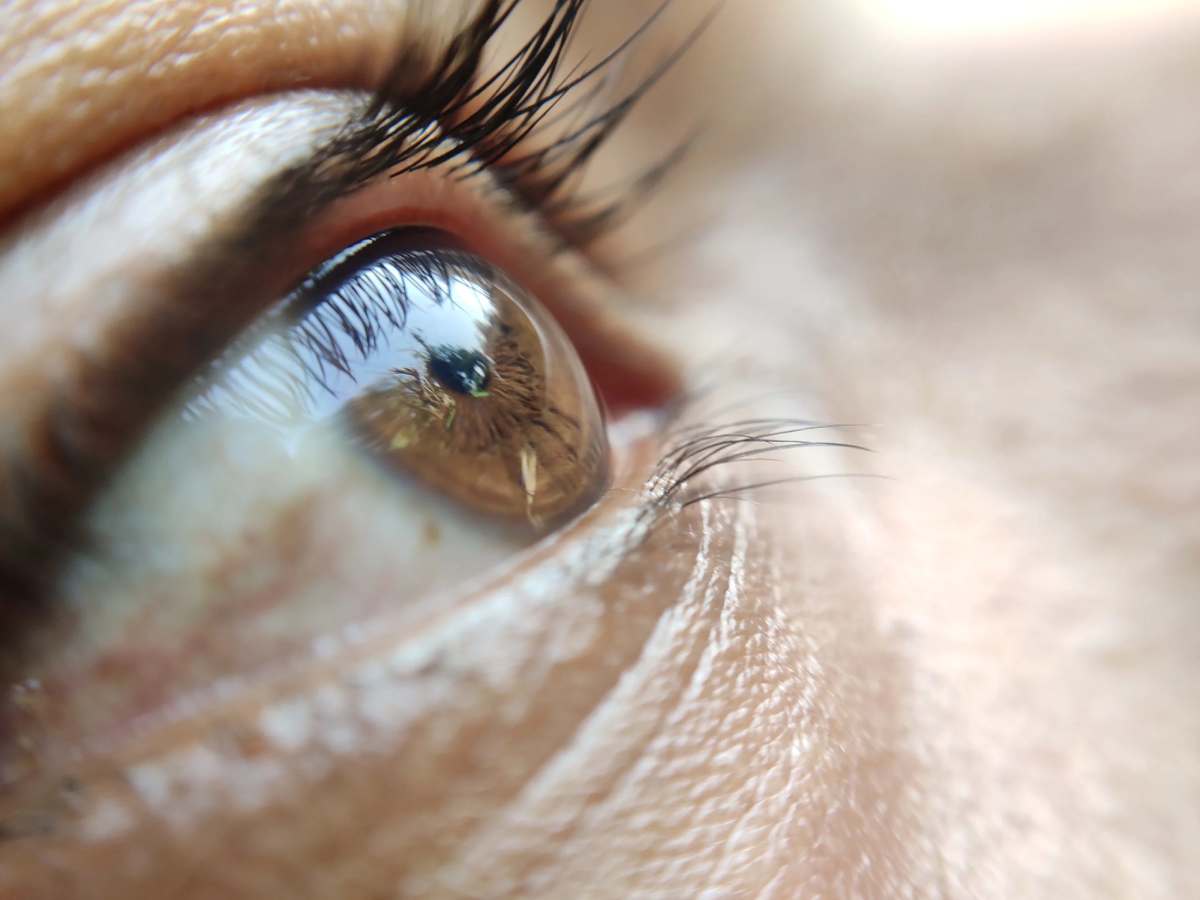
The cornea's structure makes recreating it difficult.

Synopsis: Researchers in India are testing synthetic, biosynthetic and cell-based corneal replacements, including materials derived from plastic and porcine skin. Some have reached patients, but cost, limited applications and challenges in recreating living corneal tissue remain. For now, doctors say no artificial alternative matches the versatility of a healthy donor cornea.
India’s shortage of donor corneas has pushed researchers beyond the search for more donors and into a more difficult question: can a replacement cornea be manufactured?
The answer, so far, is yes, but only in parts.
Researchers and surgeons are working with fully synthetic implants, biosynthetic materials derived from biological sources, and cultured corneal cells. Some of these approaches have already been implanted in patients, while others remain experimental. Yet none has so far reproduced the full structure and function of a healthy natural cornea well enough to replace donor tissue at scale.
“The cornea is the transparent front part of the eye. It is like the window of the eye,” said Dr Bhavatarini, corneal specialist at Dr Agarwal’s Eye Hospital. “For us to see clearly, that window has to remain transparent and clear.”
The cornea’s structure makes recreating it difficult. Disease, injury or inherited conditions can make the normally transparent tissue scarred, swollen or irregular, causing severe loss of vision. A donor cornea can replace the damaged tissue, but researchers are trying to create alternatives for patients who cannot access suitable donor tissue or for whom conventional transplantation is not an option.
At AIIMS, researchers have worked on several approaches to artificial corneas. Dr Radhika Tondon, Chief of the Dr RP Centre of Ophthalmological Sciences, said the work spans three broad levels of artificial replacement.
“We have done research on all three levels of artificial corneas. One is a completely synthetic cornea, which is called a keratoprosthesis,” Tondon said. “We have conducted research on it and have implanted it in patients.”
A keratoprosthesis can restore vision in selected patients, but it does not behave exactly like a natural cornea.
“It does provide good vision, but it does not integrate into the surrounding tissues. Because of that, some problems can arise over time,” Tondon said. “It is not a perfect solution compared with a healthy, normal, native corneal transplant.”
That does not make the technology irrelevant. Instead, its role is currently concentrated among patients for whom conventional transplantation offers little or no option.
“For certain groups of patients where there is no other option, an artificial cornea can be successful,” Tondon said.
The next approach moves away from a completely synthetic implant and towards materials that try to reproduce some of the biological properties of corneal tissue.
At the RP Centre, researchers have also worked with biosynthetic corneas. One such approach, developed using porcine skin, has already reached human patients.
“The biosynthetic cornea that we have tried is developed from porcine skin. We have implanted it in around 70 patients and we have nine years of follow-up,” a researcher at the centre said. “So far, the results have been quite good, but it has not yet come into the market.”
That makes the work more advanced than a purely laboratory concept, but it is still far from becoming a widely available replacement for donor corneas.
Tondon said the biosynthetic approaches remain in trial stages and are not yet being manufactured in India.
“This is being done in a trial mode, and the tissue is not being created in India itself, so it may be quite expensive,” she said.
The National Eye Bank is also exploring another approach. Dr Namrata Sharma, Chairperson of the National Eye Bank, said researchers have worked on “a biosynthetic cornea based on a PVC material, with the aim of developing a substitute for donor cornea tissue.”
Also Read: How India’s changing climate may push your body towards diabetes through metabolic disruption
One of the biggest challenges is that the cornea is not simply a transparent piece of material. It is living tissue with several layers, each performing a different function.
That makes the problem more complicated than manufacturing a clear implant.
Tondon said biosynthetic materials currently have a more limited role, particularly in procedures where only a specific layer of the cornea needs to be replaced.
“It is useful for lamellar surgeries,” she said. “At present, these can only be used for certain lamellar surgeries, where only one part of the cornea needs to be changed.”
The most difficult component may be the innermost layer, known as the endothelium. Unlike many tissues, the cells that make up the corneal endothelium have limited ability to regenerate.
Titiyal said researchers are therefore exploring whether these cells can themselves be cultured and used to repair damaged corneas.
“Researchers are working on endothelial cell cultures as well,” he said. “In some cases, cells can be cultured and injected into the eye, allowing the inner layer to recover.”
This represents a different route to artificial cornea technology. Instead of constructing an entire replacement, researchers are trying to restore the damaged component itself.
The long-term objective is more ambitious.
“Artificial corneas have a limited use at present,” Titiyal said. “In the future, we may potentially have the ability to regenerate a complete cornea.”
Even if these technologies become clinically reliable, another question remains: who will be able to afford them?
A donated cornea does not have the same acquisition cost as a manufactured implant. Artificial alternatives, by contrast, require specialised materials, manufacturing and clinical infrastructure.
“When somebody donates a cornea, there is essentially no cost associated with the donated tissue. But if you want an artificial cornea, the cost can be very high,” Titiyal said.
He estimated that an artificial cornea could cost ₹50,000 to ₹1 lakh even in the government sector, with the cost potentially higher in private hospitals.
“In the government sector, it can cost a minimum of around ₹50,000 to ₹1 lakh. In the private sector, it can cost more than that,” he said.
That creates a significant barrier in a disease burden where affordability matters.
The materials being investigated can also differ considerably in their biological behaviour. Titiyal said some synthetic approaches have an advantage because they do not have the same antigenic properties as biological donor tissue.
“These materials are inert and transparent, and because they do not have the same antigenic properties as biological tissue, the problem of rejection can be avoided,” he said.
But avoiding rejection does not automatically produce a functioning replacement for the entire cornea.
“At present, these are not complete replacements for the entire cornea. They can be used for a particular layer or portion of the cornea,” Titiyal said.
Not every new corneal technology is designed to eliminate the need for donated tissue.
Some are designed to make better use of the tissue that is already available.
Dr Saumya Sharma, corneal specialist at Dr Agarwal’s Eye Hospital, described Pre-Descemet’s Endothelial Keratoplasty, or PDEK, a procedure in which only the innermost layer is transplanted.
“It is one of the most advanced types of corneal transplantation because only the innermost layer of the cornea is replaced,” she said.
The technique also changes how the donor tissue is delivered.
“The tissue is inserted through an injector, similar to the way we insert a lens through an injector during cataract surgery,” Sharma said.
Another technique, known as Corneal Allogeneic Intrastromal Rings, or CAIRS, uses donor tissue in a different way.
It is designed for conditions such as keratoconus, in which the cornea becomes progressively thinner and develops a cone-like shape. Earlier approaches used artificial plastic rings to alter the shape of the cornea.
“There can be complications, including extrusion of the rings, infection and corneal melting,” Sharma said.
CAIRS uses donor corneal tissue instead of the artificial rings. The tissue is customised according to the patient’s requirement and implanted within the corneal stroma.
“The tissue is customised and cut according to the patient’s requirement and then implanted within the corneal stroma,” she said. Combined with corneal cross-linking, the procedure can also help stop progression of the disease, she added.
These procedures do not solve India’s shortage of donor corneas. Instead, they demonstrate how transplantation is becoming more targeted.
A surgeon may no longer need to replace the entire cornea when only one layer is diseased. In selected procedures, that can also allow tissue from a single donor to be used for more than one recipient.
That distinction is important. Some innovations are trying to replace the donor. Others are trying to make every donor cornea go further.
Also Read: In Tamil Nadu’s Kothagiri Hills tea estates, gum disease is widespread – toothbrush a rarity
For all the progress in synthetic materials, bioengineering and cell-based research, doctors say the natural cornea remains difficult to reproduce.
Tondon has seen artificial cornea research evolve from implants towards biological engineering and cell-based approaches. Yet she said none has matched a healthy donor cornea.
“We are continuing to work in this area, but nothing has matched our natural, God-given, nature-made cornea,” she said.
Her point is not that artificial corneas have failed. Rather, they currently occupy a narrower space than donor tissue.
A synthetic implant can help a patient who has no conventional option. A biosynthetic material may work in selected lamellar procedures. Cultured cells could eventually repair a damaged endothelial layer. Newer surgical techniques can use donor tissue more selectively.
But a healthy donor cornea already brings together the transparency, layered structure and living biology that researchers are still trying to reproduce.
“We have such a good tissue naturally available to us. If we can motivate people to donate this natural tissue, that is perhaps the best option,” Tondon said.
For now, that leaves artificial corneas in an unusual position. They are no longer purely futuristic. Some have reached patients, others have shown encouraging results in early human use, and researchers are pushing towards regenerative approaches that could one day create an entire cornea.
But they remain alternatives for specific situations, not replacements for donor tissue at scale.
The technology is advancing but the donor cornea, however, remains the benchmark.
(Edited by Fayisa CA)



