

Published Nov 18, 2026 | 6:56 PM ⚊ Updated Nov 18, 2026 | 6:56 PM


Team from CSIR-Centre for Cellular and Molecular Biology, Hyderabad.

Many of us carry Candida albicans in our bodies. The fungus causes many painful infections when it gains entry into the bloodstream or internal organs.
A master of disguise, it is made of neat, round cells when living harmlessly in the body. But when on the prowl, it can shape-shift into long, dagger-like filaments that our immune system cannot control.
Till now, the answer was to either kill this invader with antimicrobial drugs or inhibit its growth. But now, researchers at CSIR-Centre for Cellular and Molecular Biology, Hyderabad, led by Dr Sriram Varahan, have found a way to disarm the enemy without doing either.
The breakthrough stemmed from an insight Dr Varahan gained: that glycolysis — the cellular pathway that processes sugar — not only released energy but also played a key role in the fungus’s transformation.
The CCMB and THSTI (Translational Health Science and Technology Institute) research team systematically screened a library of small molecules targeting glycolysis. They identified compounds capable of inhibiting the formation of the long, dagger-like filaments.
Two compounds emerged as particularly effective inhibitors. In the presence of these potential anti-infective molecules, the fungus grew but remained in its rounded cell form.
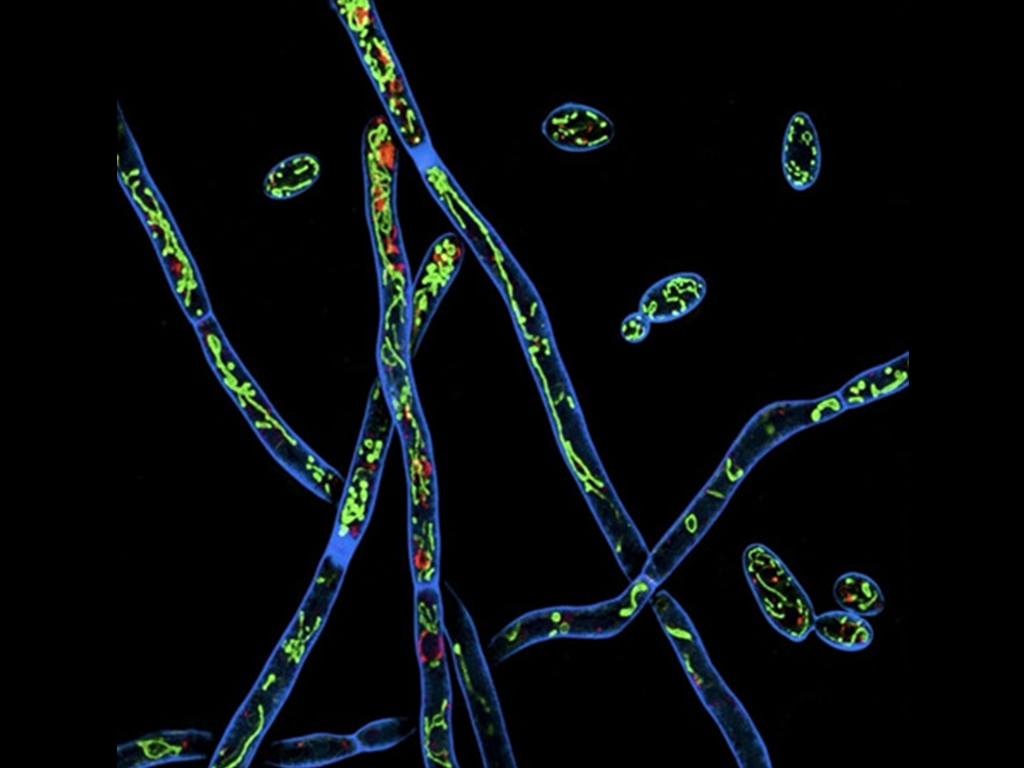
The findings also highlight pyruvate kinase, a key enzyme involved in glycolysis, as an important metabolic node to control fungal morphogenesis.
“The identified compounds provide useful starting points for further investigation into how metabolic pathways can be leveraged to disrupt infection-associated fungal behaviours. Although the work identifies promising candidates, further studies will be required to establish their mechanisms, optimise their properties, and assess their suitability for therapeutic development,” said Dr Sriram Varahan.
The researchers also went a step further, establishing that the compounds broke through the fungus’s defences.
For example, Candida albicans forms biofilms, which shield the pathogen from antifungal treatments.
One of the identified compounds reduced biofilm formation in vitro. It also increased the fungus’s sensitivity to conventional antifungal medicines, including fluconazole and amphotericin B.
These observations raise the possibility that targeting metabolic regulation may complement existing antifungal therapies.
When tested in a preclinical mouse model of systemic Candida infection, a lead compound significantly boosted survival rates.
“Our findings suggest that fungal disease-associated behaviour can be targeted without necessarily stopping fungal growth,” said Dhrumi Shah, first author of the study.
“By identifying molecules that block the transition into the invasive form, we are exploring a complementary strategy that could be developed alongside existing antifungal treatments,” said Dr Sriram Varahan.
The findings have been published in the peer-reviewed scientific journal ACS Infectious Diseases.
The research was carried out by scientists at CSIR-CCMB in collaboration with researchers from the BRIC-Translational Health Science and Technology Institute (THSTI), Faridabad.
Also Read:
How an over-the-counter cream gave the world a fungus named after India
(M Somasekhar is a Senior Journalist based in Hyderabad. Edited by R Rajesh Kumar.)



