

Published Dec 13, 2025 | 11:53 AM ⚊ Updated Dec 13, 2025 | 11:53 AM

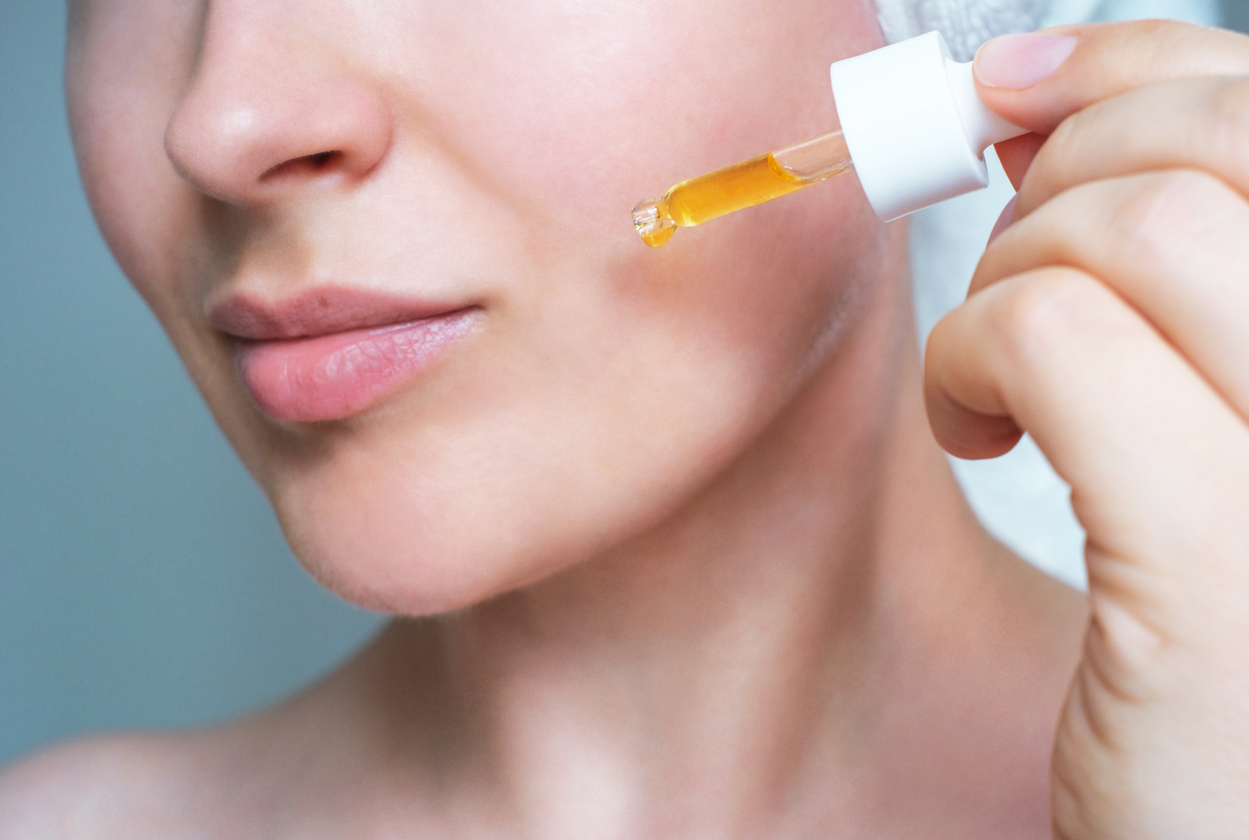
Retinol on face. Representative Image. (iStock)
Synopsis: Dermatologists said skin ageing begins around the age of 25, when the body’s natural collagen production begins to slow down silently. Dr Kalpana Sarangi said that this is also the age at which one of the most powerful skincare ingredients — retinol — can be safely and effectively introduced.
If you thought skin ageing begins only in the late 30s or 40s, you are wrong. Mumbai-based celebrity dermatologist Dr Kalpana Sarangi said skin ageing begins around the age of 25, when the body’s natural collagen production begins to slow down silently.
“Fine lines may not be visible yet, and the face may still look youthful, but beneath the surface, the first biological signs of ageing are already setting in,” she said. This is precisely why dermatologists across the world now describe 25 as the most crucial turning point in modern skincare.
Dr Sarangi spoke to South First about the right age to start using products to take care of the skin, adding that this is also the age at which one of the most powerful skincare ingredients — retinol — can be safely and effectively introduced.
As skincare concerns begin to surface earlier than before — driven by stress, lifestyle changes, sun exposure and pollution — dermatologists are increasingly shifting focus from correction to prevention, and this is where retinol enters the conversation as a game-changing ingredient.
Retinol is a derivative of Vitamin A; unlike many cosmetic ingredients that work only superficially, retinol penetrates deeper layers of the skin. It has two major actions — boosting collagen production and accelerating gentle exfoliation.
Dr Sarangi said retinol is no longer seen just as a solution for visible ageing but as a preventive tool that works at the cellular level even before wrinkles appear, making it especially relevant for those stepping into their mid-20s and beginning their anti-ageing journey with a scientifically backed approach rather than cosmetic guesswork.
“Retinol helps new skin cells come to the surface faster. It also strengthens the deeper structure of the skin by increasing collagen,” she explained. “This is why it works both for fine lines and for post-acne pigmentation and scarring.”
Due to this dual function, retinol is not only used for anti-ageing but is also commonly prescribed for acne marks, uneven skin tone, and stubborn pigmentation.
One of the biggest myths around retinol is that only older people should use it. In reality, dermatologists prescribe retinol even to younger patients when needed.
“We do give retinol to younger people who suffer from acne, post-acne pigmentation, and scarring,” Dr Sarangi said. “In such cases, it is not for ageing but for skin repair. But as a routine anti-ageing product, 25 is the age when we safely introduce it,”
Speaking to South First Dr Divya Sharma, a renowned dermatologist from Bengaluru and the founder of Dr Divya’s Skin and Hair Clinic, said there is no specific age bar for the use of retinol. “But generally, one can start retinol in the late 20s,”
Meanwhile, doctors also clarified that men can definitely use retinol. Doctors told South First that men often benefit greatly because male skin is generally thicker, oilier, and more prone to clogged pores, acne, and uneven texture. Retinol helps reduce acne, fade post-acne marks, improve rough skin texture, control excess oil, and slow the early signs of ageing, such as fine lines and dullness.
Despite its benefits, retinol is not a casual skincare product. Incorrect use can lead to redness, peeling, burning, increased dryness, and extreme sensitivity to sunlight.
“People make the mistake of using strong retinol because they see it trending online,” cautioned Dr Sarangi. “Retinol should always be started slowly, in the right strength, with proper moisturisation and strict sunscreen use. Otherwise, instead of improving your skin, you end up damaging the skin barrier.”
Agreeing to this, Dr Sharma added that even those with a tendency to develop eczema, dry skin or sensitivity, or issues related to impaired skin barrier, rosacea, should avoid using retinol. If they have seborrheic dermatitis or are planning a family, or if pregnant, they should also avoid retinol.
“Teenagers using retinol is a big no-no. If teenagers are suffering from acne, we give a different form of retinol known as adapalene-based retinol,” added Dr Sharma.
Doctors do not recommend self-medication with retinol. Dermatologists emphasised that sunscreen is non-negotiable when using retinol, as the skin becomes more sun-sensitive during treatment.
Another major misconception regarding retinol is that it gives instant glow or immediate transformation. The reality is far more gradual.
“Retinol works slowly and deeply. The skin itself takes weeks to adjust to it,” Dr Sarangi explained. “Visible improvement usually comes after two to three months, and long-term anti-ageing benefits are seen only with consistent use over many months.”
Doctors describe retinol as a long-term skin investment, not a quick fix. Dermatologists stressed that Retinol is meant strictly for nighttime use. It is unstable in sunlight and breaks down when exposed to UV rays, making it ineffective while also increasing the skin’s sensitivity to the sun, which in turn raises the risk of irritation, burns, redness and pigmentation.
(Edited by Muhammed Fazil.)


