

Published Jul 05, 2026 | 7:00 AM ⚊ Updated Jul 05, 2026 | 7:00 AM

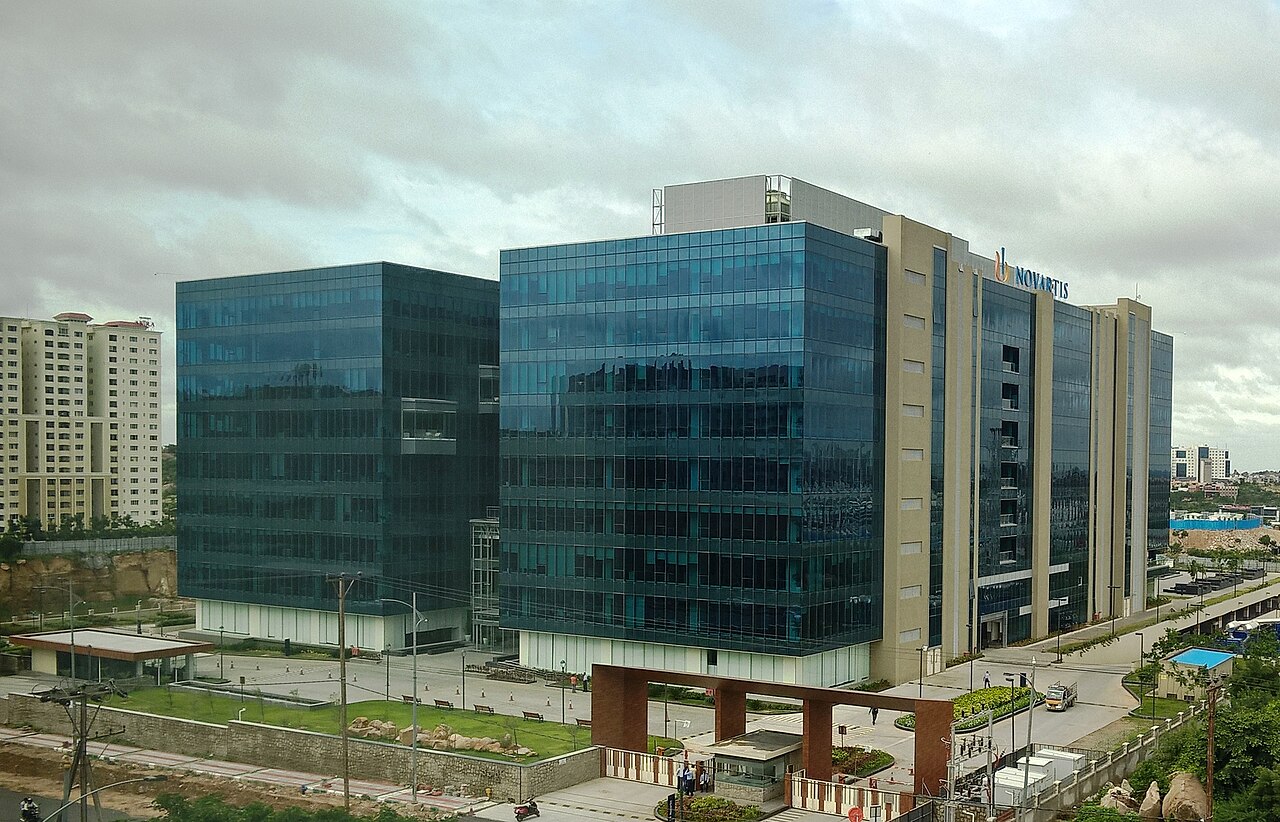
Novartis India headquarters at Genome Valley.

Synopsis: Genome Valley turned Hyderabad into a global pharmaceutical manufacturing hub, but it is not yet an innovation powerhouse. A NITI Aayog analysis shows India dominates generic medicines while capturing just 0.6% of the booming biologics market. Why does manufacturing alone no longer create the greatest value, and what must Genome Valley do to compete through discovery, patents and high-value therapeutics?
Drive north from Hyderabad’s Hitec City, and the landscape shifts. The tall glass towers that lined the road became scarce, and gradually got replaced by low-rise campuses across the city’s northern corridor, housing laboratories, manufacturing blocks, cold-storage units, and cleanrooms.
Welcome to Genome Valley, home to more than 2,000 life sciences companies and 269 USFDA-approved facilities. The firms here supply vaccines to half the planet. Telangana produces nearly 40% of India’s pharmaceutical output.
Despite the fastest-growing global pharmaceutical market, and biologics, vaccines and immunologicals, generating $390.2 billion in imports in 2025, India’s share was merely 0.6%.
If Hyderabad produces so many medicines, why does so much of the pharmaceutical wealth go somewhere else?
Genome Valley solved India’s manufacturing problem. It did not solve its innovation problem. It faces a dilemma of volume vs value.
Also Read: Biological E to invest ₹1,800 crore in Genome Valley
The cluster did not grow by chance. Telangana deployed its policy with intent. Investment approvals moved through TS-iPASS. Genome Valley drew together firms, research institutions and startups into a concentration that few pharmaceutical clusters anywhere could match.
NITI Aayog’s Trade Watch Quarterly acknowledged that Telangana “has developed as a major life sciences and vaccine hub”, a statement government reports rarely make so directly.
Bharat Biotech, Dr Reddy’s and Aurobindo Pharma occupy its campuses. Their medicines travel to over 200 countries. India became the world’s largest supplier of generic medicines, accounting for roughly 20% of global supply. It meets over 50% of Africa’s need for generics, nearly 40% of generic demand in the United States, and approximately 25% of all medicines in the United Kingdom.
Container ships leave Indian ports carrying billions of low-cost medicines to people who could not otherwise afford treatment. The infrastructure works. The regulatory compliance record holds. The manufacturing story is real.
The question is what that story earns.
Also Read: Telangana unveils next-gen Life Sciences Policy
Biologics are medicines derived from living cells rather than chemical synthesis. They include monoclonal antibodies, gene therapies, cell therapies, recombinant proteins and advanced immunological products.
They take longer to develop than generic medicines, require significantly higher research investment, face more complex regulation, and enjoy stronger patent protection. A course of generic antibiotics costs a few cents. A course of monoclonal antibody therapy can cost tens of thousands of dollars. The profit margins are not comparable.
“The global pharmaceutical landscape has increasingly shifted towards high-value segments such as biologics, vaccines, immunologicals and advanced therapeutics,” NITI Aayog noted.
That segment now accounts for 38% of world pharmaceutical import demand, up from 24% a decade ago. It recorded a compound annual growth rate of 12.3% over the period.
The segment India dominates, retail medicaments and formulated generic drugs, contracted from 68.8% to 55.6% of global demand over the same period. As NITI Aayog observed, “India’s comparative advantage remains concentrated in formulations.”
It raises the obvious question. If the market has already shifted, why has India not shifted with it?
In Basel, Switzerland, laboratories replaced factories as the industry’s primary engines of wealth.
Roche and Novartis spent decades investing in original drug discovery, intellectual property and high-value therapeutics. Patents became more valuable than production lines. Research investment made decades earlier created pharmaceutical wealth that still flows, because biologics, once patented, generate revenues that manufacturing contracts cannot match.
Switzerland now exports pharmaceuticals worth over 98% of its domestic production and contributes nearly 22% of total merchandise exports. In blood products, vaccines and immunologicals alone, it exported $69.6 billion in 2025.
NITI Aayog noted that pharmaceutical growth in leading countries “has been driven by the emergence of large domestic firms, such as Roche and Novartis in Switzerland, which have invested heavily in innovation and global expansion.”
India exported $2.2 billion in the same segment.
In global biologics, Basel occupies Genome Valley’s position in Indian vaccines. The difference is not geography. It is the decision each place made decades ago about where to invest next. Basel chose discovery. Genome Valley chose production.
Both choices made sense at the time. Only one of them was compounded.
Bharat Biotech developed an indigenous COVID-19 vaccine at speed and deployed it at scale. That achievement proved that Indian firms carry genuine innovation capability.
But pandemic innovation moves differently from building a continuous pipeline of patented biologics across decades. Covaxin emerged from crisis conditions and public urgency.
Sustained commercial leadership in biologics requires a different kind of commitment: 10 to 15 years of R&D investment before a single dose reaches a patient — with no guarantee of success.
NITI Aayog recorded that India “accounts for roughly 60% of the world’s vaccine manufacturing volume,” yet its share in global dollar-value exports of vaccines and immunologicals sits at 0.6%.
The disconnect, the report added, stems from “producing primarily low-cost, conventional vaccines rather than higher-value patented therapies.”
Genome Valley can manufacture medicines for the world. Its challenge is now proving it can sustain the investment horizon that discovery demands, not just in a crisis, but across the succeeding decades.
For every hundred rupees earned by a leading multinational pharmaceutical company, roughly ₹15 to ₹20 return to research. Indian pharmaceutical companies reinvest about ₹7. That difference, compounded across decades, produces the current map of global pharmaceutical wealth.
Research investment made today creates pharmaceutical wealth many years later. The biologics that generate billions in revenue in 2025 began in laboratories in the 2000s. The therapies set to dominate the 2040s are being discovered now.
However, the reinvestment gap persists. Genome Valley has shifted further from the origin point of tomorrow’s blockbuster therapies.
NITI Aayog identified the structural cause. The private sector “contributes only about 36% of total R&D expenditure in India, compared to nearly 70% in advanced economies,” the report said, “indicating that innovation remains less firm-driven and more dependent on public institutions.”
Such a national pattern shapes Genome Valley. The cluster manufactures medicines for the world, but the intellectual property that generates the industry’s largest profits still originates elsewhere.
India’s life sciences patent filings rose from 440 in 2013 to 3,576 in 2023. The United States filed 31,977 in the same year. China filed 61,617.
Genome Valley’s factories increasingly produce sophisticated medicines. Relatively few own the patents that define the next generation of biologics.
China traced a route that is now under consideration at Genome Valley.
It first dominated active pharmaceutical ingredient (API) and generic manufacturing, using scale and cost advantages to build industrial expertise and integrate into global supply chains. Then it chose to invest upward.
Its national R&D expenditure climbed to 2.8% of the GDP. Pharmaceutical and biotechnology firms increased spending on drug discovery, cell and gene therapies, precision medicine and biologics.
Major clusters assembled in Shanghai, Beijing, Suzhou and Shenzhen, bringing together firms, research institutions, hospitals and investors in deliberate proximity.
The transition was neither fast nor painless. It required sustained political will and absorbed losses across a decade before producing returns. It also required confronting a dependency that Genome Valley has not yet fully resolved.
“India continues to face dependence on imported raw materials and intermediates, particularly from China,” NITI Aayog recorded.
Across the five leading API import categories, China supplies between 66% and 86% of India’s needs, at prices estimated to be 35-40% below domestically produced equivalents.
China moved from that position to innovation. The evidence that manufacturing clusters can make that transition exists. The evidence that it happens quickly or without cost does not exist.
Governments recognise the challenge. The question is whether policy can accelerate a process that normally takes decades.
India has not ignored the gap. Production-linked incentives (PLI) target biopharmaceuticals. The Promotion of Research and Innovation in Pharma MedTech sector (PRIP) scheme has committed ₹5,000 crore to move the sector “from cost-based to innovation-based growth.” Mission Biopharma SHAKTI, launched in 2026-27, targets biologics and biosimilars directly.
These represent intent. They also face friction that scheme names cannot resolve. Pre-grant patent oppositions move without defined timelines, creating uncertainty that discourages the long research commitments biologics require.
Industry-academia collaboration remains thin. Commercialisation of research remains limited. NITI Aayog has called for “a comprehensive long-term policy framework” to support sustained investment in high-value segments, language that signals existing schemes, while necessary, do not yet close the gap.
Consider what success would mean for Genome Valley. A cluster that builds genuine biologics capability in the next decade captures a market growing at 12.3% annually, generating hundreds of billions in global import demand. Its firms own the intellectual property. Its scientists train in discovery rather than formulation. Its revenues compound rather than compete on price.
Consider what standing still means. A cluster that continues producing generics at scale remains valuable but increasingly commoditised, as more countries develop their own generic manufacturing capacity, even as the global pharmaceutical demand for those generics continues to shrink.
The factories already exist. The patents largely do not.
NITI Aayog framed the transition with language that reads less like policy and more like a verdict: “India must complement its traditional manufacturing scale with deep-tech innovation and collaborative research to systematically graduate from the ‘Pharmacy of the World’ to an undisputed global capital for pharmaceutical innovation.”
The infrastructure is there. The scientific talent is available. The global relationships exist. With USFDA-approved facilities, cold-chain networks, and export relationships with regulated markets, Genome Valley carries assets that took decades to build and that no competitor can replicate quickly.
But a decision on the way forward is lacking. As NITI Aayog argued, the next step is not to augment the manufacturing capacity but to have “a comprehensive long-term policy framework” backed by sustained investment, industry-academia partnerships and innovation-linked incentives to build India’s capabilities in high-value pharmaceuticals.
Every day, trucks roll out of Genome Valley ferrying medicines to hospitals across continents. The cluster has already proved it can supply the world. Whether the next generation of blockbuster therapies also begins here will determine whether Hyderabad remains merely the pharmacy of the world or becomes one of its laboratories.
(Edited by Majnu Babu).



