

Published Jan 23, 2024 | 9:00 AM ⚊ Updated Jan 23, 2024 | 9:00 AM

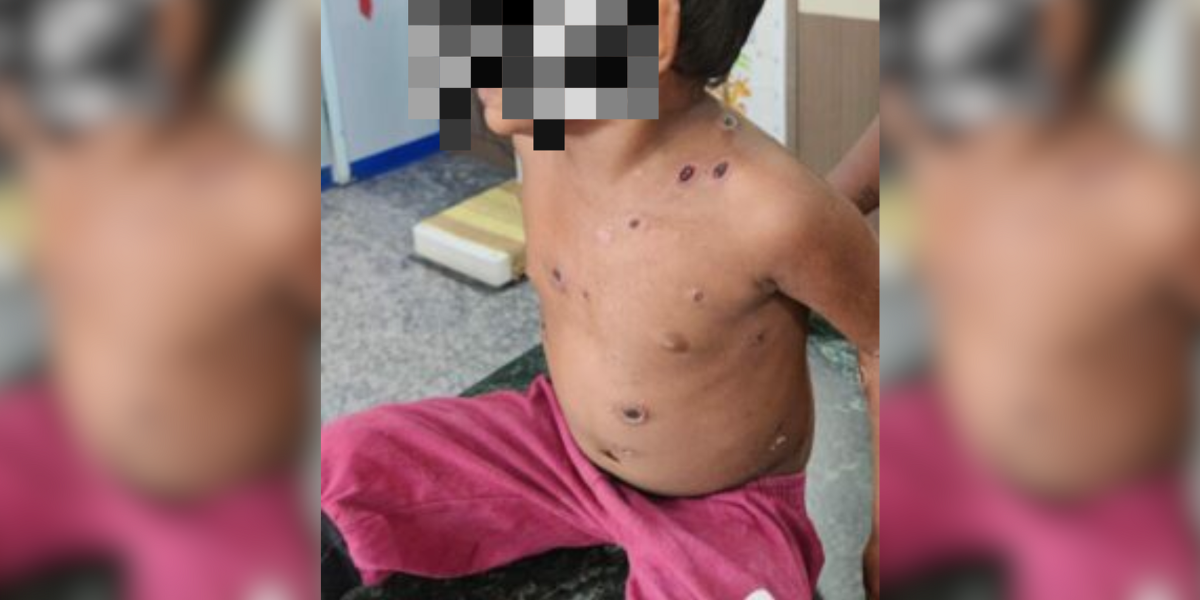
Small child infected with chicken pox. (Supplied)
In Hyderabad, the onset of chicken pox cases has begun, signalling the commencement of the season typically associated with this viral infection.
Paediatricians are urging parents to discuss chicken pox vaccination with their child’s healthcare provider. Renowned paediatrician Dr Sivaranjani Santosh, speaking to South First, emphasises the need for awareness regarding the airborne presence of chicken pox.
Once cases start emerging, the spread accelerates, reaching its peak during the summer months of March and April.
Chicken pox, scientifically known as varicella, is a highly contagious infection caused by the varicella-zoster virus. It’s most commonly associated with children, although it can affect individuals of any age who haven’t had the disease before or haven’t been vaccinated against it.
Dr Narahari B, Professor of Paediatrics from Nagarkurnool Medical College, explains to South First that chicken pox traditionally starts in late January or early February and peaks during March and April.
Explaining the process of transmission, Dr Sivaranjani adds that it is spread easily through the air via cough or sneeze aerosol droplets of an infected person. It can also be transmitted by touching.
Because of its high contagion rate, individuals with chicken pox are usually most infectious one to two days before the rash appears and until all the blisters have crusted over completely.
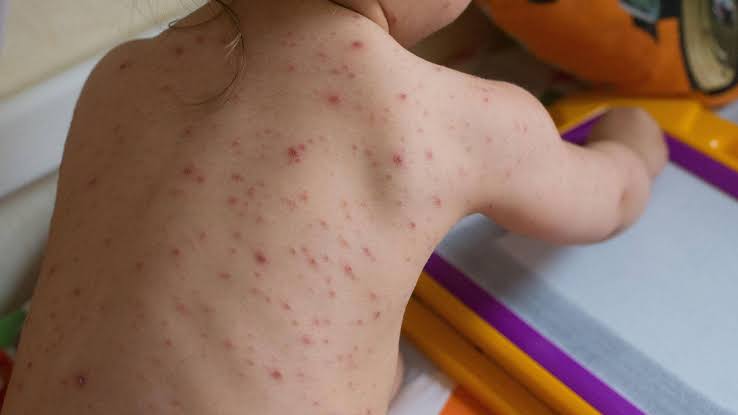
Chicken pox rash. (Wikimedia Commons)
Dr Sivaranjani explains that the child may or may not have fever and they will start developing pimple-like lesions on the body, starting with the face and back and then spreading to the rest of the body.
“These pimple-like lesions slowly become like blisters and then they scab and dry out. So, over the next four to five days, new lesions keep appearing and the whole process may take up to one week,” she adds.
Aside from the lesions, other common symptoms exhibited in children are:
The key to managing this outbreak lies in vaccination, say doctors. Dr Sivaranjani emphasises the importance of following the vaccine schedule: The first dose at 15 months of birth, and a second dose between three to six months later.
However, Dr Narahari clarifies that it is untrue that once a child is vaccinated, there won’t be a case of chicken pox. The child can still get a milder form of the infection. In such cases, the lesions won’t scab and the child remains infectious for 24 hours until the last lesion disappears.
Those who have not taken the chicken pox vaccine during childhood or who have been infected, can still receive the vaccine within three to five days of exposure to potentially mitigate the severity of the disease, according to doctors.
Dr Narahari also mentions that once a person has been infected with chicken pox in their life, it is extremely rare for them to get it again.
Chicken pox can lead to severe complications, especially in certain age groups. “The older you are, the higher the risk of complications,” Dr Sivaranjani notes.
Infants are also at a higher risk. Complications can range from pneumonia, deadly brain infection called encephalitis, bacterial skin infections, to severe conditions like septicemia as well.
Dr Sivaranjani urges, “We strongly recommend that you get your children vaccinated. You can even get them vaccinated as early as their first birthday. In infants and older age children, the risk increases. If the child is in the age group of for vaccination, then please get the vaccination done.”
Like most viral infections, chicken pox treatment is completely symptomatic. “If there is fever then give Paracetamol, rightly and judiciously. Also, give soothing baths to relieve the child from itching. You can apply calamine lotion, too,” suggests Dr Sivaranjani.
She warns against the use of aspirin and advises caution with ibuprofen use, as it may increase the risk of bacterial infections.
She clarifies certain traditional practices like neem baths as “irrelevant” in the current scenario, emphasising instead the importance of regular bathing and cleanliness.


