

Published Apr 28, 2026 | 7:23 AM ⚊ Updated Apr 28, 2026 | 7:23 AM

Measles vaccine. (iStock)

Synopsis: Chennai is reporting cases of Measles among children and adolescents. Even though health officials say there is no major surge, the peak summer season is approaching. Doctors stress full vaccination and early care, warning that even a single missed dose can increase infection risk.
Sporadic cases of Measles continue to be reported across Chennai, particularly among children and adolescents, prompting doctors to stress the importance of timely vaccination and early diagnosis, as the city approaches its peak summer days.
The Directorate of Public Health and Preventive Medicine has clarified that there is no upsurge in measles cases compared to last year, with overall infections remaining under control.
The state’s immunisation coverage stands at 99 percent, and officials reiterated that the Measles-Rubella (MR) vaccine — administered at the ages of nine months and 18 months — offers around 85 percent efficacy and provides adequate protection.
However, the department emphasised that sustained vigilance and strict adherence to vaccination schedules are essential to prevent any rise in cases.
Also Read: One jab of measles vaccine more likely to be ineffective in children born by C-section, says study
“We are currently seeing measles cases, particularly among younger children and adolescents during the summer season, which is typically the peak period,” said Praveen Kumar, Consultant, General Medicine, SRM Prime Hospital, Chennai.
He noted that incomplete vaccination remains a key concern. “Children who are partially vaccinated remain susceptible and can get infected when exposed to a measles case, which is why completing the full immunisation course is essential,” he explained to South First.
Highlighting preventive measures, he added that vaccination remains the primary line of defence.
The MMR (Measles, Mumps, and Rubella) vaccine is usually administered at 15 months, followed by a booster dose between four and six years, and in some cases, an additional booster during adolescence to ensure stronger immunity.
Doctors explained that measles spreads through respiratory droplets, making it highly contagious and requiring prompt isolation of infected individuals. “Infected children should be isolated at home to prevent transmission to others,” Dr Reddy said.
Common symptoms include fever followed by a rash, along with cough, runny nose and redness of the eyes. While most children recover with supportive care, complications can occur in some cases.
“Complications such as pneumonia and ear infections are among the most common and require timely medical evaluation and treatment,” he said, adding that early detection helps doctors initiate treatment at the earliest.
Echoing similar observations, Dr Vigneshwari Raja, Consultant Paediatrics, Apollo Cradle Karapakkam, Chennai, said that cases remain sporadic for now but require attention.
“Only a small number of cases are being seen for now, but, with the peak summer period yet to begin, trends may evolve in the coming weeks,” she told South First.
Recovery does not end when the fever subsides, she highlighted. “Children require continued care at home, with sufficient rest, good hydration, proper nutrition and close monitoring to support complete recovery,” she added.
Also Read: India bags prestigious award of the American Red Cross for efforts to combat measles, rubella
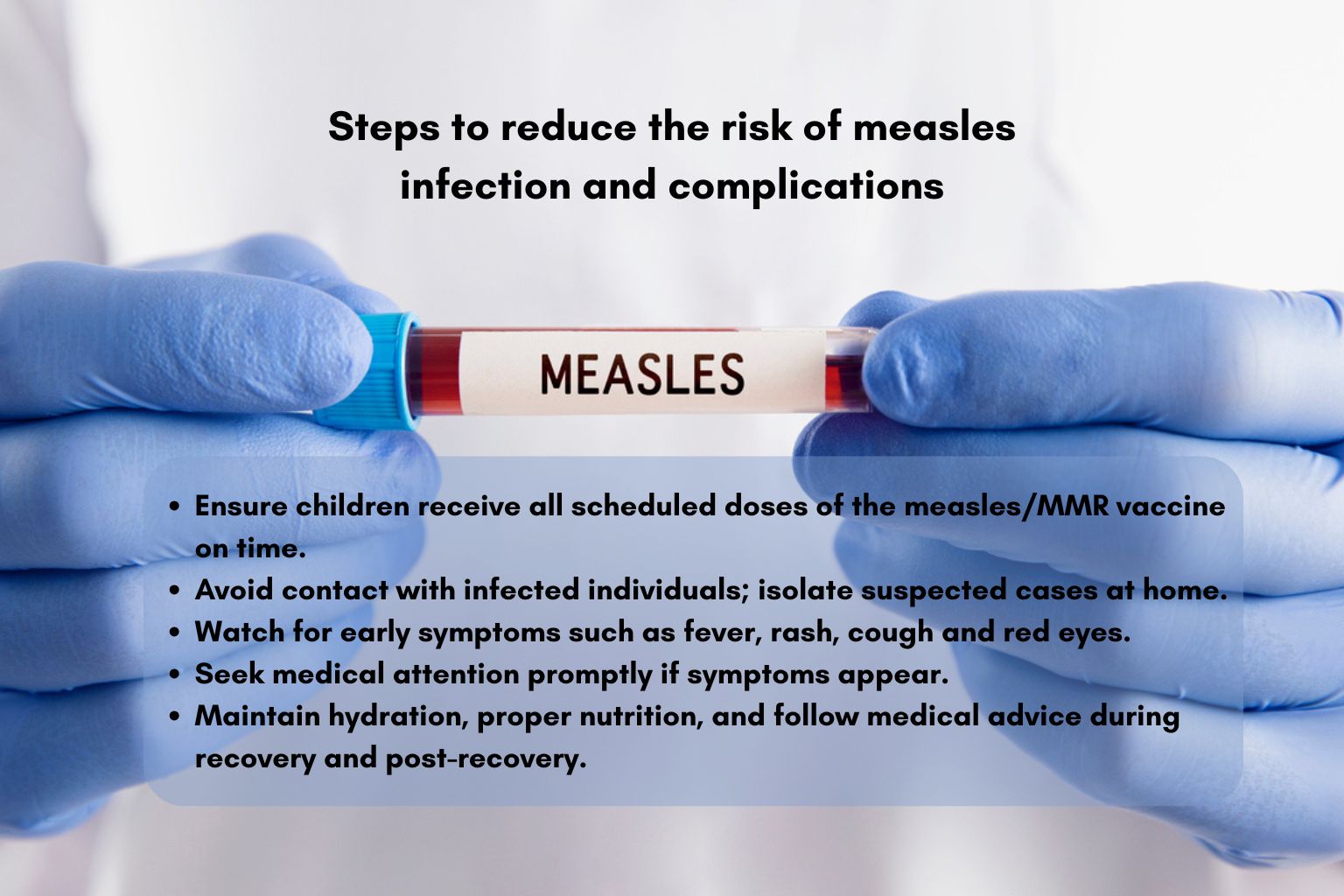
Steps to reduce the risk of measles infection and complications.
Doctors suggested steps to reduce the risk of infection and complications:
(Edited by Muhammed Fazil.)



