

Published Jul 12, 2026 | 7:00 AM ⚊ Updated Jul 12, 2026 | 7:00 AM

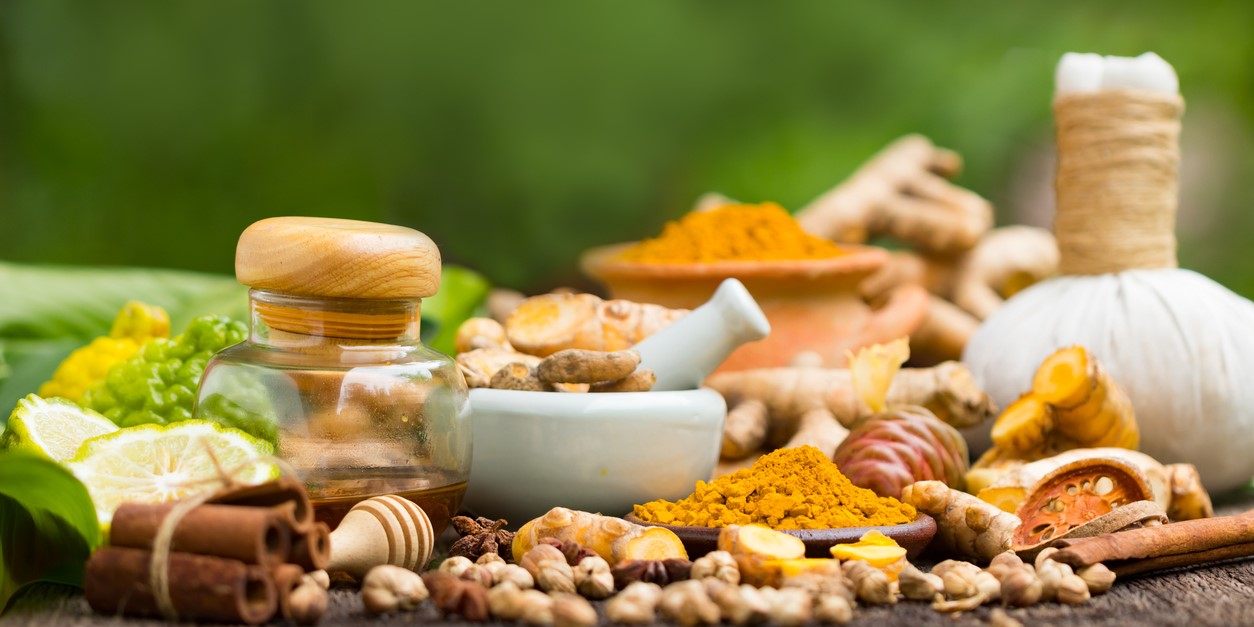
Ayurvedic medicines. Representational Image. (iStock)

Synopsis: A NITI Aayog roadmap envisions Ayurveda becoming part of at least 20 national healthcare systems by 2047 through global research, regulation and branding. But the report also acknowledges the hurdles standing in its way, including limited clinical evidence, regulatory barriers, inconsistent quality standards and restricted practitioner mobility, raising questions about how its global ambitions will be realised.
India wants Ayurveda to become more than a wellness offering sold through herbal supplements, spas and tourism.
A new NITI Aayog roadmap envisions Ayurveda becoming part of mainstream healthcare globally, setting a goal of securing recognition in at least 20 national health systems by 2047. The strategy includes multinational clinical trials, global practitioner registries, overseas treatment centres, insurance coverage and dedicated medical visas.
But before laying out its vision, the report spends much of its time explaining why Ayurveda has struggled to achieve that recognition in the first place.
“The global presence is in many instances constrained by regulatory, institutional, and perceptual barriers,” the report states, adding that Ayurveda needs to shift “from a fragmented and product-centric approach to a more coordinated, evidence-driven, and system-oriented strategy.”
That admission runs through nearly every chapter of the 136-page Strategic Roadmap for Making Ayurveda Global, prepared by PwC for NITI Aayog. Rather than presenting Ayurveda as a system awaiting global acceptance, the report repeatedly identifies the gaps that continue to limit its acceptance.
Also Read: India thinks Ayurveda and other traditional medicines are cheap
No issue appears more often than scientific evidence.
The roadmap argues that Ayurveda cannot achieve wider regulatory approval without stronger clinical validation. At the same time, it recognises that the conventional methods used to generate medical evidence may not easily fit Ayurvedic practice.
It calls for “world-class clinical trials and translational research for generating robust scientific evidence” while also recommending multi-country WHO Collaborating Centre studies, annual safety reports and real-world patient registries.
The report also notes that Ayurveda needs to move away from being viewed as a “wellness-centric” discipline towards becoming a “protocol-driven, clinically credible system of integrative care.”
Yet it leaves unanswered a fundamental question: what kind of evidence will satisfy international regulators while remaining consistent with Ayurveda’s own principles of individualised treatment?
That unresolved tension underpins much of the roadmap.
The report points to expanding exports as evidence that global demand already exists.
Ayush and herbal product exports increased from $1.09 billion in 2014 to $2.16 billion in 2023, while Ayurvedic products now reach nearly 150 countries.
However, the document also acknowledges that most Ayurvedic products continue to be marketed internationally as dietary supplements rather than medicines because of regulatory constraints.
It argues that India must “move decisively from raw-material-heavy exports to a strong presence of high-value finished products, backed by regulatory compliance.”
The recommendation itself reflects a broader reality: export growth has not automatically translated into medical acceptance.
India has built a large domestic workforce, with more than 355,000 trained Ayurveda practitioners.
But the report notes that almost 95 percent remain based within India, highlighting how limited practitioner mobility continues to be.
To overcome that, it proposes creating a Global Ayurveda Register, internationally recognised digital credentials and mutual recognition agreements with partner countries.
The objective, according to the report, is to create a “globally mobile, professionally credible workforce” supported by WHO-aligned credentials.
Whether that ultimately results in licensing abroad will depend on regulatory authorities in individual countries, an issue the report recognises but cannot itself resolve.
Throughout the roadmap, NITI Aayog repeatedly compares Ayurveda with Traditional Chinese Medicine (TCM).
The report concludes that China’s international success rests on decades of government investment, regulatory diplomacy, international standards, research funding and overseas educational institutions.
“Traditional Chinese Medicine provides the most relevant benchmark for Ayurveda’s global ambitions,” it says.
By contrast, Ayurveda’s international expansion remains constrained by “limited practitioner licensure frameworks, fragmented global research leadership” and insufficient scientific validation.
Rather than claiming parity with China, the report presents TCM as the model India hopes to emulate over the next two decades.
Also Read: Ayurveda–TB clinical study announced — Can traditional medicine help patients recover better?
The roadmap devotes considerable attention to global visibility.
It proposes Ayurveda experience centres near the WHO headquarters in Geneva, the United Nations headquarters in New York, London’s Trafalgar Square, Singapore’s Marina Bay and Tokyo’s Shibuya Crossing.
It also recommends multilingual awareness campaigns, partnerships with global hospitality chains, Ayurveda visas and stronger roles for Indian embassies.
Yet the report also cautions that international expansion ultimately depends on something less visible.
It calls for upgrading manufacturing standards to WHO-GMP, harmonising pharmacopoeial standards, publishing certified manufacturer directories and generating internationally acceptable clinical evidence.
“A unified and coherent global branding for Ayurveda is essential,” the report says, but immediately adds that the objective is to transform perceptions from “fragmented herbal wellness to a credible, evidence-backed system of holistic healthcare.”
The emphasis on evidence suggests the authors recognise that marketing campaigns cannot substitute for regulatory approval.
The recommendations stretch across three phases ending in 2047.
Short-term measures focus on regulatory reforms, export systems and research infrastructure.
The medium term seeks insurance pilots, market integration and practitioner mobility.
The long-term goal is formal recognition in at least 20 national health systems backed by sustained evidence generation and internationally accepted quality standards.
Perhaps the report’s most candid observation appears in its conclusion.
It says India must move “from a fragmented, product-driven international presence to a holistic, evidence-anchored, regulation-ready global health ecosystem.”
That sentence captures the roadmap’s central message.
The document is less a declaration that Ayurveda has arrived than an acknowledgement that it still has substantial ground to cover. Heritage and global interest may have created an opportunity.
The report argues that whether Ayurveda becomes a globally recognised healthcare system will depend on something far more difficult: producing the scientific evidence, regulatory confidence and institutional credibility that it repeatedly identifies as missing today.
(Edited by Muhammed Fazil.)



