

Published Jan 14, 2026 | 5:32 PM ⚊ Updated Jan 14, 2026 | 5:32 PM

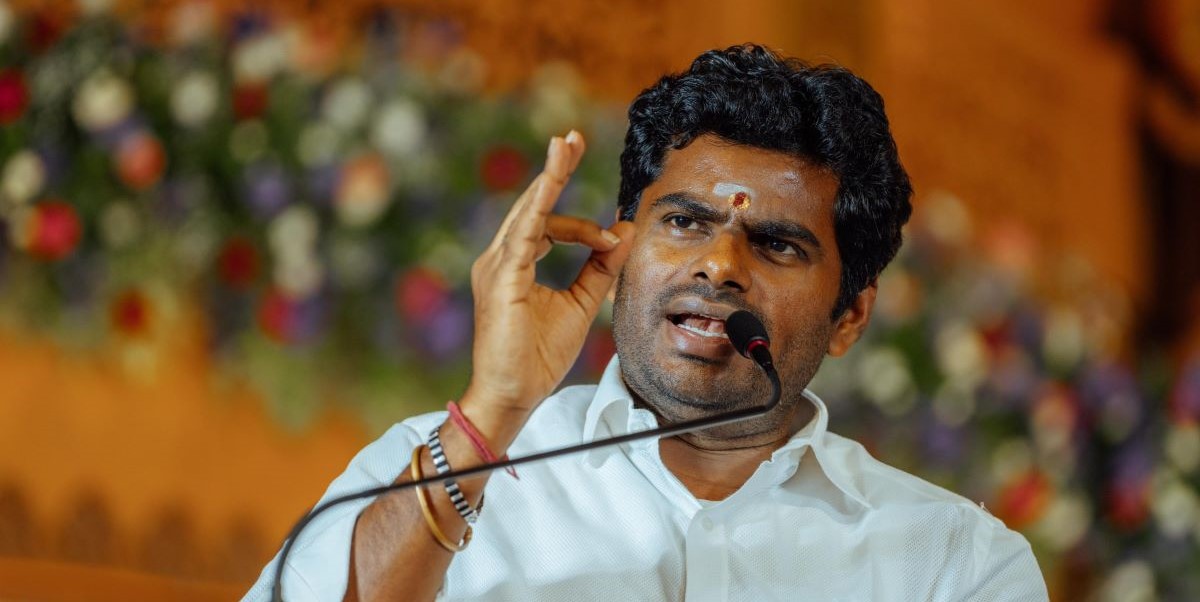
K Annamalai.
Synopsis: Oncologists and nutritionists have slammed former Tamil Nadu BJP president K Annamalai for claiming that prolonged fasting can destroy cancer cells and eliminate the disease. Doctors told South First that the claims amounted to dangerous misinformation and that there is no scientific evidence to show fasting can cure cancer. They cautioned that cancer patients are especially vulnerable to malnutrition and that such unqualified advice could push patients away from evidence-based treatment.
Former Tamil Nadu BJP president K Annamalai has become the latest public figure to draw the ire of the medical community in the country after suggesting that fasting can “destroy” cancer cells.
In clips circulating on social media since Tuesday, 13 January, the former IPS officer is seen claiming that a prolonged “Sashti or Shashti Vratham” fast can eliminate the disease entirely.
“These days, wherever we go, people say that everyone has cancer, only the names differ. What exactly are cancer cells? Research says that cancer cells require nearly seven times more energy than normal cells. If that is the case, then if we cut off the energy supply to cancer cells, wouldn’t they automatically die? How can this be done?” he can be seen telling a gathering in Puducherry.
The comments come despite repeated warnings from doctors asking public figures to refrain from making claims that could mislead patients and push them away from evidence-based treatment.
Medical professionals immediately pushed back, terming it misinformation, and warned that cancer patients are especially vulnerable to nutritional loss and unsafe dietary restrictions.
Annamalai claimed that by starving cancer cells of energy through rigorous fasting, a practice he said has existed in India for thousands of years, patients could completely “cleanse” their bodies of cancer cells once a year.
“In India, for thousands of years, we have followed the practice of fasting. If we fast for 24 hours, the energy supply to the cancer cells in our body stops and they get destroyed. All of us have cancer cells; small numbers of cancer cells are present here and there in the body. It is only when they multiply and grow that it becomes cancer. That is when stages like Stage 1, Stage 2, Stage 3 and Stage 4 cancer occur,” he said.
“We have been observing fasting on Tuesdays for ages, and through that, cancer cells were deprived of energy and destroyed. We fasted on Saturdays, and cancer cells were destroyed. If you want to completely cleanse your body once a year, fast for seven days; all cancer cells will be eliminated.”
The BJP leader then claimed that the absence of records of cancer among earlier generations in India was evidence of the role fasting played in preventing the disease.
“Our ancestors never had cancer; it is only our generation that suffers from it. The reason is that we have forgotten fasting and started consuming fast food. We eat unhealthy food under different names like Kentucky chicken. When excess energy enters the body, cancer cells multiply,” he claimed.
“This is what Swami Vivekananda emphasised. Stay healthy, eat healthy, follow yoga, stay fit, and play some sport or the other. But today, we have turned entirely towards mobile phones. When we spend our time on them, we are unable to spend time on physical health, mental health, or even the interest of the nation.”
Oncologists and nutritionists told South First that while fasting and “fasting mimicking” diets are being studied in controlled settings, there is no clinical evidence that fasting alone can cure cancer or replace standard treatments such as surgery, radiation, chemotherapy, targeted therapy or immunotherapy.
Research over the past decade has examined whether short-term fasting may influence metabolism, inflammation or treatment tolerance in some patients. However, experts said the findings have been preliminary and context-specific, and do not support claims of a cure.
“The notion that fasting can cure cancer by starving it of glucose is not only scientifically flawed but potentially dangerous for patients,” said Dr M Hussain, a radiation oncologist from Tamil Nadu, popularly known as Cancer Doc on X, speaking to South First.
He said the myth stems from an oversimplified understanding of the ‘Warburg Effect’, which assumes that cancer cells rely only on aerobic glycolysis.
“In reality, cancer metabolism is highly plastic and adaptive. Tumour cells utilise multiple alternative fuel sources, including lactate, amino acids and lipids, through distinct metabolic pathways to bypass glucose restriction,” he explained. As a result, fasting does not effectively “starve” cancer cells and often accelerates cachexia and muscle wasting in patients.
“Relying on fasting to induce tumour apoptosis is irrational and a sin. Our focus must be on optimising nutritional status through a high-protein diet to support the patient’s physiology,” he added.
Some experts whom South First spoke to said autophagy is often cited as the reason fasting is claimed to “cure” cancer. In a video shared by Dr Kumaran, an oral and maxillofacial surgeon, the process of autophagy is explained.
However, a senior oncologist from Bengaluru, who did not wish to be named, told South First that while fasting has been shown to have some health benefits, there is no evidence in humans that it either prevents cancer or helps in its treatment.
“Autophagy is not proven to work against cancer specifically. It is an established biological process, but linking it to cancer prevention is a stretch. Most fasting-related benefits linked to longevity come from non-human studies, mainly on rats,” he said.
Another doctor, who also did not wish to be named, said politicians should remain politicians. “[Annamalai] is a former IPS officer, and spreading such evidence-less claims can cause more harm to society,” he added.
Doctors have warned that fasting can increase the risk of malnutrition, which can worsen fatigue, slow healing and complicate treatment, especially in patients who are already losing weight or have poor intake due to the disease or side effects of therapy.
They said any dietary changes during cancer treatment should be guided by the treating oncology team and a clinical dietitian, as what is considered “safe” varies widely depending on the cancer type, stage, treatment plan and the patient’s baseline nutritional status.
Experts also urged patients and caregivers not to experiment with prolonged fasting based on viral videos or political statements, and not to delay or discontinue medical treatment.
Earlier, Navjot Singh Sidhu, a former international cricketer and politician, had claimed that his wife was cured of Stage IV cancer through dietary interventions. At the time, doctors from Tata Memorial Hospital issued a statement urging the public not to delay treatment by following unproven remedies.
They advised people to consult a doctor, preferably a cancer specialist, if they have symptoms of cancer, and said cancer is curable if detected early. Proven treatments include surgery, radiation and chemotherapy.
Doctors added that anyone considering time-restricted eating or prolonged fasting for religious or personal reasons during treatment should first discuss it with their oncologist and a dietitian.
“Fasting is not a cure for cancer. While researchers are studying whether certain fasting schedules might support treatment in limited settings, cancer patients are at real risk of malnutrition and unsafe weight loss. Any fasting during treatment should only be done with the guidance of the treating oncologist and a clinical dietitian,” a doctor told South First.
(Edited by Dese Gowda)


