

Published Sep 09, 2026 | 7:05 AM ⚊ Updated Sep 09, 2026 | 7:05 AM

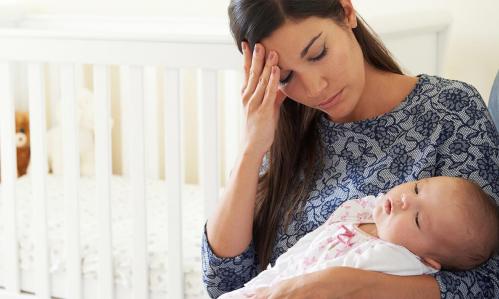
Postpartum psychosis is a rare but serious mental health problem that can develop shortly after childbirth.

Synopsis: Postpartum psychosis is a rare but life-threatening psychiatric emergency that can be mistaken for ordinary exhaustion or baby blues. As the Lindsay Clancy mistrial renews attention on maternal mental health, this story examines India’s challenges in recognising warning signs, the role of families and healthcare workers, gaps in screening, and the need for timely psychiatric intervention.
A new mother stops sleeping. She struggles to cope with the baby. She cannot explain what has changed in her mind.
Families often miss the line between ordinary postpartum distress and a psychiatric emergency.
That issue resurfaced after the murder trial of Lindsay Clancy in the United States ended in a mistrial. Jurors failed to reach a unanimous verdict after seven days of deliberation.
Clancy, a former labour and delivery nurse, admitted to killing her three children. Her defence argued that postpartum psychosis drove her actions. The prosecution disputed this and argued that she acted with intent.
The case pulled postpartum mental health into public view. But in India, doctors say a severe psychiatric illness after childbirth slips past unnoticed because early changes in sleep, behaviour and mood get blamed on exhaustion or the demands of a newborn.
Postpartum psychosis remains rare, but it counts as a psychiatric emergency. It strips away a person’s grip on reality and can bring hallucinations, delusions, confusion, paranoia and behaviour that departs sharply from a woman’s usual self.
“Postpartum psychosis is a rare but serious mental health problem that can develop shortly after childbirth, usually within the first few days or weeks. The affected mothers may get confused, lose touch with reality, and experience hallucinations or develop terrifying powerful false beliefs, what we label as delusions,” said Dr Sachin Baliga, Consultant Psychiatrist at Fortis Hospital, Bannerghatta Road, Bengaluru.
“This is an emergency because symptoms can deteriorate very quickly and the mother, unaware that she is unwell, may behave in ways that can harm herself or her loved ones,” Baliga told South First.
The so-called baby blues bring crying, irritability, anxiety and mood swings, and tend to fade within two weeks.
Postpartum depression lasts longer, bringing sadness, loss of interest, guilt, hopelessness and difficulty functioning. Postpartum OCD brings intrusive thoughts about harming the baby by accident, but the mother recognises these thoughts as unwanted.
Psychosis differs at its root. It erodes a woman’s ability to separate reality from false belief or false perception.
“Postpartum depression is largely characterised by long-term feelings of sadness, loss of interest, anxiety, low energy and feelings of guilt or hopelessness. Postpartum OCD usually involves unwanted, distressing thoughts or images, often involving fear of harm coming to the baby, but the person typically knows these are unwanted thoughts. Postpartum psychosis is a loss of touch with reality, including hallucinations, delusions or severe confusion and agitation,” explained Dr Baliga.
Dr Padmapriya Vivek, Director of Obstetrics and Gynaecology at Gleneagles Hospital, Chennai, urged doctors to track persistence and function rather than emotion alone.
“Some emotional lability, crying, irritability and anxiety are common after delivery and are generally part of the postpartum blues, which usually settle within about two weeks. What concerns us is persistence, severity and a change in functioning,” she told South First.
The warning signs sharpen when a mother starts hallucinating, holds onto false beliefs, or acts in ways that break entirely from who she was before.
“Postpartum psychosis is different and should never be dismissed as ordinary exhaustion or baby blues. Hallucinations, delusions, severe confusion, marked suspiciousness, disorganised behaviour or a loss of contact with reality are red flags and require urgent psychiatric assessment,” Dr Vivek said.
Also Read: Cancer drug case: Big question ahead of final hearing, did regulator present the full picture?
For families, psychosis rarely announces itself. A mother may stop sleeping, seem restless or withdrawn, speed up her speech, or suddenly distrust people she once relied on.
“Families may notice first that the mother is acting very differently than she usually does. She may not be getting much sleep, or may be unusually energetic or withdrawn,” Dr Baliga said. “She may speak much faster than normal, appear confused, be very suspicious towards people’s intentions, or have sudden and extreme mood swings. Any sudden change in behaviour after childbirth should not be dismissed as being tired or overwhelmed.”
Dr Krutika Ainapur, Senior Consultant, Adult Psychiatrist and Sexologist at Maarga Mind Care, Bengaluru, said families often feel that something has shifted long before they can name it.
“Often, it’s the small things that don’t seem to add up. She will not be able to sleep even when the baby is sound asleep, she may seem unusually wound up or restless, her mood swings can go from euphoric to irritable, her speech feels jumbled or she talks miles a minute,” she told South First. “Usually, families can sense that the mother ‘isn’t really herself’ before they put a name to the behaviour.”
Sleep loss carries particular weight. It can worsen mood instability and push a vulnerable woman toward a psychiatric episode.
“Sleep disruption is particularly important, because severe sleep loss can trigger or worsen an existing mood instability and may contribute to the onset or escalation of symptoms. Bipolar disorder is one of the most potent known risk factors for postpartum psychosis,” Dr Baliga said. “But not all women who develop the condition have bipolar disorder or a prior mental health diagnosis.”
“Yes, absolutely. While having bipolar disorder is the biggest risk factor, a good number of women who develop postpartum psychosis have never had any mental health issues before in their lives,” Dr Ainapur said. “That unpredictability is exactly why the sudden change in behaviour can catch everyone off guard and get mistaken for ordinary postpartum adjustment.”
Hallucinations and delusions often centre on the newborn. A mother may believe the baby carries an illness, a curse, or belongs to someone else. She may hear voices, or believe she must follow an instruction that exists only in her mind.
“These beliefs may sometimes include the newborn baby, for instance, the belief that the infant is severely sick or in danger, has special powers, or that someone is trying to harm the mother or child,” Dr Baliga said. “Hallucinations may be hearing voices or seeing or feeling things that are not really there. Delusions are firmly held beliefs that are not grounded in reality.”
“The delusions usually revolve around the baby in some way. She might believe the baby is sick, cursed, not actually hers or in grave danger,” Dr Ainapur said. “Sometimes she feels compelled to act to ‘protect’ or ‘save’ the baby from a threat that only exists in her mind.”
This distinguishes psychosis from postpartum OCD. A mother with intrusive thoughts recoils from the idea of harming her child because she knows the thought does not belong to her. Psychosis removes that recognition.
“Any mother with psychotic symptoms, severe confusion, hallucinations, delusions, suicidal intent, thoughts of harming the infant, severe agitation or significant behavioural disturbance requires urgent psychiatric assessment,” Dr Vivek said. “Postpartum psychosis is a psychiatric emergency. The priority is immediate safety of both the mother and baby, followed by appropriate psychiatric management.”
Also Read: Rabies vaccine Abhayrab fails potency test, CDSCO flags possible counterfeiting
A 2023 qualitative study across India, Malawi and the UK found that people in India could spot changes in sleep, behaviour and functioning without linking them to postpartum psychosis, amid stigma, limited awareness and delayed help-seeking.
“The first symptoms can be mistaken for normal tiredness or emotional changes following childbirth. In India, also, lack of awareness and stigma and beliefs about supernatural or non-medical causes may delay professional help,” Dr Baliga said. “Indian studies show that families were often able to notice changes in sleep and behaviour without realising they were postpartum psychosis.”
A 2025 Indian review of 24 studies on postpartum depression found reported prevalence ranging from 4% to 48.5%, averaging around 18%, and flagged shortages in specialised maternal mental health services and routine national data. These figures describe depression, not psychosis, but point to a wider struggle to track mental illness after childbirth.
“In India, one of the difficulties is that mental-health symptoms may initially be normalised or misunderstood. The NIMHANS study is important in this context because it shows that families may recognise that something is wrong but may not recognise it specifically as postpartum psychosis,” Dr Vivek said. “Stigma, lack of awareness and delayed help-seeking can therefore become major barriers.”
Healthcare attention gathers around the mother during pregnancy and the weeks after delivery, then shifts toward the baby.
“Ideally, every antenatal and postnatal consultation should include a brief conversation about the mother’s mood, sleep, anxiety, coping and support system. Screening tools such as the Edinburgh Postnatal Depression Scale can be useful,” Dr Vivek said. “But a questionnaire cannot replace a doctor’s clinical assessment, especially when there are behavioural changes or concerns about psychosis.”
Dr Manjula NV, Senior Consultant in Obstetrics and Gynaecology at Ramaiah Memorial Hospital, Bengaluru, describes a system that runs without structure.
“My answer is, it is not routine or standardised. There is no routine or standardised antenatal visit focus on mental health because most of the time we are focusing on the physical parameters like height, weight, growth of the foetus and postnatal follow-up itself is inconsistent beyond six weeks of visit,” she told South First. “Even when it happens, no validated screening tools are being used in our Indian settings, both in public and private practice.”
Paediatric visits fill part of this gap. A mother may skip her own follow-up appointments but keep bringing the baby for vaccinations.
“Definitely. Even after the mother’s postnatal visits become less frequent, she continues to bring the baby for vaccinations and paediatric consultations,” Dr Vivek said. “The paediatric team can simply ask the mother how she is coping, how she is sleeping and whether she is getting adequate support.”
“Yes, of course. The paediatrician is the one who really picks this up because whenever the baby is brought for follow-up or vaccination, they usually evaluate how the baby has been doing with breastfeeding,” Dr Manjula said. “It is through the relatives that they come to know that the mother is at risk of developing a mental-health problem.”
A woman experiencing psychosis may not recognise that her thoughts or perceptions have shifted. Family members fill that blind spot, watching across an entire day what a consultation cannot catch in minutes.
“Family members are extremely important because they see the mother in her day-to-day environment. They may be the first to notice that she has stopped sleeping, is behaving differently, has become unusually suspicious or withdrawn, is speaking unusually, or is having difficulty caring for herself or the baby,” Dr Vivek said. “This collateral history is particularly valuable in postpartum psychosis because insight can be impaired.”
“The role of the partner is very, very important. The mother feels that whenever the family comes, they usually hug the newborn child and look at the newborn child. So the mother starts feeling that nobody likes her,” Dr Manjula said. “The partner and the family should give her ten minutes of talk in a very friendly way.”
Also Read: Vitamin D2 and D3 have the same impact on bones – but not on muscle and heart, Hyderabad study finds
Once psychosis emerges as a possibility, safety comes first, followed by urgent psychiatric care. Treatment can include hospital admission, antipsychotic medication, mood stabilisers and, in severe situations, electroconvulsive therapy.
“Treat it like the emergency it is. Make sure someone is with her at all times and that she isn’t left alone with the baby until she’s been properly evaluated,” Dr Ainapur said. “Don’t wait for the next scheduled check-up with the obstetrician, call a psychiatrist directly or go straight to an emergency room. Every hour counts here.”
“Most women need to be admitted to a hospital psychiatric unit so they can be kept safe and stabilised, usually with antipsychotic medication or mood stabilisers,” she said. “With prompt treatment, most women improve significantly within a matter of weeks.”
“Treatment may involve psychiatric care in hospital, antipsychotic drugs and, if appropriate, mood stabilisers. Severe or life-threatening situations may also require electroconvulsive therapy,” Dr Baliga said. “With timely treatment most women can recover although the acute symptoms may settle over weeks and complete recovery can take longer. It is important to have psychiatric follow-up because there is a definite risk of recurrence.”
India does not need to treat every new mother as a potential psychiatric patient. The task instead is to catch a real departure from a woman’s usual self, especially when sleep, function, thought or contact with reality shifts.
“We need to make mental health a routine part of maternal and postpartum care, rather than addressing it only when there is a crisis. This means better training of obstetricians, nurses, primary-care doctors and paediatricians; clear referral pathways to psychiatry; greater availability of perinatal mental-health services; and better education of families,” Dr Vivek said. “Awareness programmes in regional languages are also important because stigma and misconceptions continue to delay treatment.”
“Most of them in India have ASHA workers and door-to-door nurses. Paediatric staff can screen because after the postnatal period, these screening methods will help us,” Dr Manjula said. “We can have a public awareness campaign to reduce the stigma around postpartum psychiatric illness. Routine data collection and postpartum mental-health outcomes are also needed, which is currently a major gap.”
The Lindsay Clancy trial leaves the question of criminal responsibility unresolved. For India’s healthcare system, the more pressing question sits earlier: what happens before a mother reaches crisis.
“From an obstetrician’s perspective, the most important message is simple: we should not wait for a mother to reach crisis point before asking how she is doing. A significant change in mood, sleep, behaviour or functioning deserves attention,” Dr Vivek said.
“Early recognition and timely psychiatric intervention can make a major difference to the safety and wellbeing of both mother and baby.”
(Edited by Fayisa CA)



