

Published Dec 22, 2025 | 8:50 AM ⚊ Updated Dec 22, 2025 | 12:19 PM

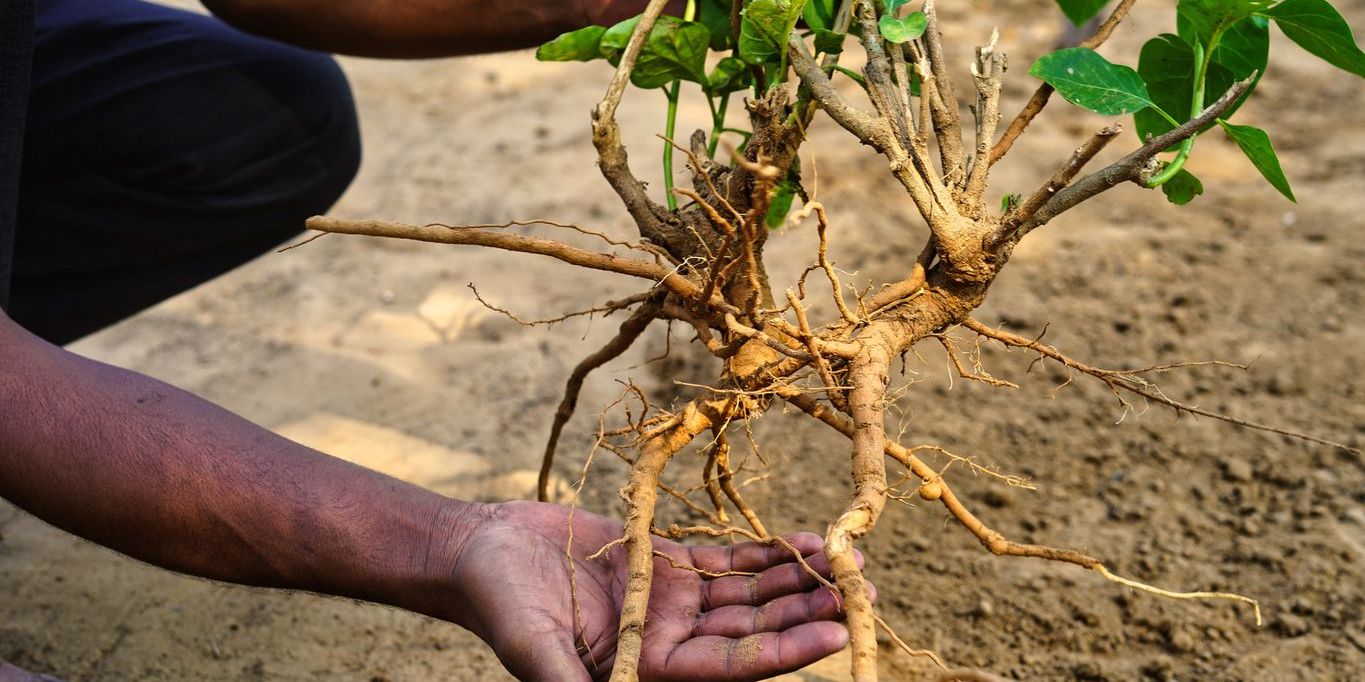
Ashwagandha. (iStock)
Synopsis: Recently, during a WHO conference, international experts, regulators and policymakers examined how ashwagandha could be positioned within modern healthcare systems. While its growing global use and interest in adaptogenic properties were acknowledged, experts stressed the need for rigorous research, standardisation, pharmacovigilance and regulatory oversight.
Ashwagandha, a key herb in Ayurvedic medicine, moved into sharp global focus at the second WHO Global Traditional Medicine Summit in New Delhi this month, where international experts, regulators and policymakers examined how the widely used herb could be positioned within modern healthcare systems.
At a high-level side event organised by the WHO Global Traditional Medicine Centre in collaboration with India’s Ministry of AYUSH, ashwagandha was discussed not as a finished medical solution, but as a candidate for closer scientific scrutiny.
Titled “Ashwagandha: From Traditional Wisdom to Global Impact,” the session brought together experts from the US, Europe and WHO to deliberate on the herb’s evolving scientific, regulatory and safety profile.
While its growing global use and interest in adaptogenic properties were acknowledged, experts stressed the need for rigorous research, standardisation, pharmacovigilance and regulatory oversight.
According to Dr Sonal Asthana, Consultant HPB & Liver Transplant Surgery at Aster Group of Hospitals in Bengaluru, the current attention around the herb is directly linked to the WHO’s recent conclave on traditional medicine, where the organisation acknowledged the importance of preserving and studying long-standing medical knowledge systems.
“ The recognition needs to be seen in context,” he told South First. Traditional medicine predates modern pharmaceuticals, and several drugs in use today have their roots in traditional systems, making the WHO’s engagement an effort to study such knowledge through modern scientific methods.
However, he emphasised that this recognition does not amount to an endorsement of ashwagandha or any other herb as a treatment for specific diseases.
“The WHO is recognising that traditional medicine exists,” he said, “but it is not endorsing therapeutic use for anything and everything.” This distinction, he added, is central to understanding why ashwagandha is being discussed — and why caution is still warranted.
Dr Thiagarajan Srinivasan, Director of the Institute of Liver Diseases and Transplant at MGM Healthcare in Chennai, echoed this distinction by cautioning that global visibility should not be confused with validation.
“WHO’s inclusion of ashwagandha should be understood as documentation and encouragement of research, not as a declaration of safety or therapeutic endorsement,” he told South First.
One of the key reasons this story requires an explainer, Dr Asthana said, is the risk of misinterpretation. With ashwagandha being mentioned on global platforms, there is a growing perception among the public that it has been medically approved or validated. That, he warned, is not the case.
Recognition, in medical terms, simply means acknowledging that a substance or system exists and may have value worth studying.
Endorsement, on the other hand, requires extensive standardisation, safety assessment and clinical evidence — a process that modern pharmaceutical drugs undergo over several years.
Ashwagandha and other herbal medicines have not yet been subjected to that level of uniform testing. Dr Asthana pointed out that even existing studies on ashwagandha highlight the complexity of evaluating it scientifically.
Research so far has looked at more than 20 formulations with varying composition and potency, making it difficult to identify whether benefits or adverse effects stem from the herb itself or from additives and manufacturing processes, he added.
Dr Thyagarajan warned that interpreting such global visibility as reassurance may be premature. “As global use expands, signals of herb- and ayurvedic medicine–induced liver injury are increasingly recognised, often in the absence of rigorous dosing standards or quality control,” he said.
From a liver specialist’s perspective, the biggest concern is unsupervised use, particularly among vulnerable groups. Dr Asthana said People with existing liver disease, including fatty liver disease and autoimmune liver conditions, may have compromised liver function, making it harder for their bodies to metabolise new substances safely.
Patients with multiple comorbidities who are already on long-term medications for diabetes, blood pressure or cholesterol are also at higher risk due to potential drug interactions.
Pregnant and lactating women, older adults and frail patients are other groups where caution is essential, as the effects of many herbal products in these populations remain poorly studied.
Expanding on this, Dr Thyagarajan said most healthy individuals tolerate short-term ashwagandha use without harm, but unsupervised consumption poses meaningful risks in biologically vulnerable groups. “Patients with chronic liver disease have limited hepatic reserve, and even mild herb-induced injury can precipitate decompensation,” he said.
He added that individuals with regular alcohol use, autoimmune or thyroid disorders, or those on multiple long-term medications face heightened and often under-recognised risk due to altered metabolism and drug–herb interactions.
Ayurveda practitioners say this pattern of indiscriminate use differs markedly from traditional clinical practice.
“In Ayurveda, ashwagandha is not prescribed as a one-size-fits-all supplement,” Dr Reshma Kannoth, Professor of Kayachikitsa at VPSV Ayurveda College Kottakkal in Kerala, told South First.
“We assess the patient first — their constitution, symptoms and overall health — before recommending it. It is not meant to be taken daily by everyone as a general wellness product.”
Dr Kannoth noted that commercial formulations often detach the herb from its clinical context.
“Classical practice emphasises indication, dose and duration,” she said. “Our research teams are actively working on standardisation, safety evaluation and quality checks, and we are already taking concrete steps in that direction.”
Addressing concerns about the lack of large clinical trials, Dr Thyagarajan said published case reports linking ashwagandha and other herbal supplements to drug-induced liver injury (DILI) should be taken seriously, even in the absence of high-volume data.
“For herbal products, randomised safety trials are uncommon, dosing is poorly standardised, and manufacturing quality varies widely,” he said. “Case reports function as the earliest and most sensitive signals of hepatotoxic risk.”
While individual reports cannot establish incidence or definitive causality, he noted that recurring patterns — such as temporal association, improvement after discontinuation, and exclusion of alternative causes — strengthen biological plausibility, particularly when similar presentations emerge across regions.
For traditional medicine products like ashwagandha to be meaningfully integrated into mainstream healthcare, Dr Asthana said, several gaps need to be addressed.
Primary one among them is standardisation. Unlike pharmaceutical drugs, where the active ingredient and dosage are precisely defined, herbal formulations often vary widely between brands and batches.
He explained that doctors need clarity on what the active compound is, how much of it is present in each dose, and whether one batch of a product is identical to the next.
Manufacturing practices, including production in certified Good Manufacturing Practice (GMP) facilities, also play a critical role in ensuring safety and consistency.
Until such safeguards are in place, he cautioned against equating policy-level recognition with clinical approval. The concern, he said, is not limited to ashwagandha alone, but applies to all medicines — traditional or modern.
“What we don’t want,” he said, “is people assuming that because the WHO mentioned it, it is safe to take freely.” For now, he added, ashwagandha remains a subject of scientific interest rather than established medical care, making careful explanation, rather than enthusiasm, essential.
Dr Thyagarajan added that the lack of standardisation is one of the single biggest obstacles to assessing liver safety. “The same product name may represent entirely different chemical exposures,” he said. “When liver injury occurs, reproducibility — which is central to pharmacovigilance — is lost.”
Evidence-informed vigilance, not alarm
In his clinical practice, Dr Thyagarajan said the concern is no longer purely precautionary. “We are increasingly encountering sporadic but credible cases of suspected ayurvedic and siddha medicine–induced liver injury, including those temporally linked to ashwagandha-containing supplements,” he said.
While these cases are typically idiosyncratic and improve after withdrawal, he added that under-recognition remains likely due to poor labelling and lack of disclosure by patients.
“This does not justify alarm or blanket prohibition,” he said. “But it does justify heightened clinical suspicion and routine enquiry. The concern is evidence-informed vigilance, not hypothetical caution.”
(Edited by Muhammed Fazil.)


