


Published Dec 13, 2025 | 7:00 AM ⚊ Updated Dec 13, 2025 | 7:00 AM

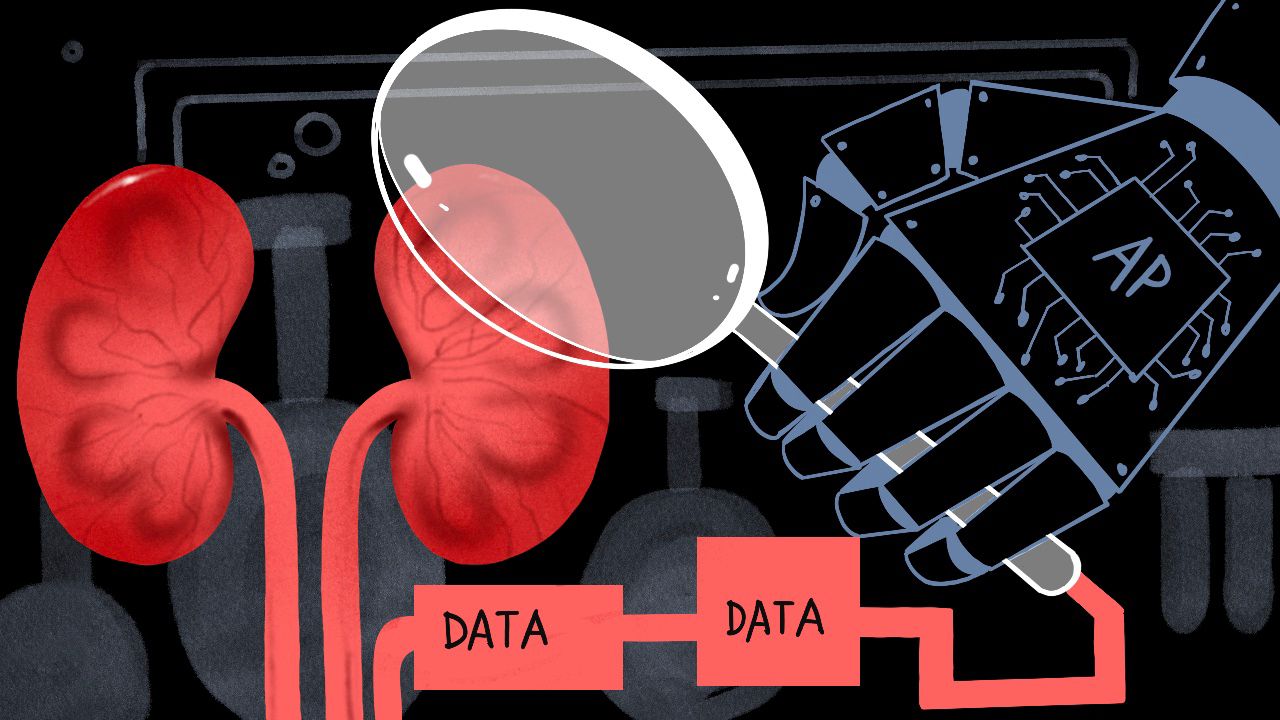
Researchers from the Symbiosis Institute of Technology in Hyderabad and the Aditya Institute of Technology and Management in Tekkali have jointly developed a machine learning system that can predict kidney failure with 98.9 per cent accuracy.
Synopsis: The Uddanam nephropathy, a chronic kidney disease endemic to the coastal belt of Andhra Pradesh’s Srikakulam district, has helped researchers achieve a breakthrough in early CKD detection. Using data from a region long afflicted by unusually high rates of the illness with mysterious origins, researchers have built a ‘stacked’ machine learning model that can predict early kidney failure with up to 98.9 per cent accuracy.
For more than three decades, farming communities in the Uddanam coastal belt of Andhra Pradesh’s Srikakulam district have lived under the shadow of a debilitating illness with mysterious origins.
Though chronic kidney disease, or CKD, is one of the major health problems affecting people across the world, it is especially prevalent in Uddanam, so much so that it has been dubbed Uddanam nephropathy.
In some villages, between 40 and 60 percent of residents are affected, far in excess of the national average. Since the 1990s, thousands have succumbed to the disease, yet the cause of the disease is still unknown. The World Health Organisation has listed it among the least understood kidney conditions in the world.
Now, after decades of unanswered questions, the region has become the source of an unexpected breakthrough.
Researchers from the Symbiosis Institute of Technology in Hyderabad and the Aditya Institute of Technology and Management in Tekkali have jointly developed a machine learning system that can predict kidney failure with 98.9 per cent accuracy. Their findings were published in the journal Scientific Reports.
Using clinical data from 1,055 patients across 34 panchayats in the Uddanam belt, the team built a model that combines multiple algorithms to detect early signs of the disease, even before symptoms appear.
Some of the first symptoms of Uddanam nephropathy are fatigue, reduced urine output and nocturia. Patients often wake several times through the night to urinate. As the condition advances, kidney function declines steadily, leading to advanced kidney failure.

Some of the first symptoms of Uddanam nephropathy are fatigue, reduced urine output and nocturia.
Hypertension is absent in most cases. Kidney biopsies reveal chronic tubulo-interstitial nephritis, tubular atrophy, interstitial fibrosis and minimal proteinuria. These patterns distinguish Uddanam nephropathy from other forms of chronic kidney disease.
The epidemic has hit agricultural workers the hardest across seven mandals. Rivers in the region run seasonally. When they dry, farmers rely on borewells. Studies have found pesticides, high silica, lead and phthalates in the groundwater. The contamination theory gained traction but proof remained elusive.
Other researchers pointed to chronic dehydration among workers who labour under intense sun, or to genetic susceptibility unique to these communities.
“Hypotheses range from groundwater contamination and agrochemical exposure to chronic dehydration and genetic susceptibility,” the researchers noted in their study.
The research team collected clinical records containing 37 medical parameters. Age, blood pressure, albumin levels, urea, creatinine and packed cell volume appeared in each file.
They then fed this information into what they describe as a ‘stacking ensemble model’, combining several different algorithms — Support Vector Machines, K-Nearest Neighbours, Naïve Bayes and Neural Networks — into a single predictive engine for better predictions.
“The statistical analysis and results for the suggested Stacking CKD prediction system are detailed in this section. The investigation concentrated on how well the model predicted CKD. Several ML models and performance metrics were examined for prediction,” the researchers wrote.
The model achieved an F1 score of 98.9 percent and an area under the curve of 0.999.
These numbers show how accurate the system is. An F1 score close to 100 percent means the model is very good at correctly identifying who does and does not have early kidney disease. An area under the curve of 0.999 means it almost never confuses healthy patients with sick ones.
In contrast, individual algorithms working alone produced far lower scores.
The analysis revealed which biological signals matter most. Albumin levels topped the list. This protein circulates in the blood and drops when kidneys lose their filtering capacity. Packed cell volume came second, followed by haemoglobin, blood urea and serum creatinine. SHAP analysis confirmed that albumin and packed cell volume provide the strongest predictive power.
“Albumin is the most important factor, causing the biggest drop in CA when changed, which matches medical findings that low albumin levels are linked to kidney disease progression,” the study states.
The research team used Principal Component Analysis to refine their model. This technique transformed 37 features into 17 uncorrelated components that captured 78.7 percent of the data’s variance. The reduction removed redundant variables and filtered out noise.
The researchers used tenfold cross-validation to ensure their model works beyond the training data. They divided the dataset into ten segments, trained the system on 90 percent and tested it on the remaining 10 percent. The cycle repeated until every segment had served once as a test set.
Though Uddanam nephropathy is endemic to the region, access to kidney specialists is still scarce. Most patients reach doctors only after symptoms emerge, when treatment options narrow and costs mount. Dialysis machines are hours away by road. Transplants require money few families possess. The new model offers a pathway to mass screening programmes that could identify high-risk individuals while intervention remains possible.
“Early detection is critical in Uddanam, where access to nephrologists is scarce and many patients are diagnosed only in later stages. The AI system could support mass-screening programmes by identifying high-risk individuals long before symptoms appear,” the researchers argue.
The stacking ensemble outperformed previous attempts to predict chronic kidney disease in the region. Earlier studies using single algorithms or different feature sets achieved accuracies below 98.8 percent. The new system’s meta-learner, a logistic regression model that learns from the predictions of all base algorithms, produced results with fewer input features.
“In all four proposed scenarios of predicting kidney diseases, our Stacking ensemble produces better results. The accuracies achieved by SVM, RF, and k-NN are less than 98.8 percent, respectively. Thus, our proposed PCA and Stacking ensemble is better than other ML models and past studies with respect to less number features,” the authors stated.
The researchers acknowledge limitations in their dataset. Male patients outnumber female patients, reflecting who seeks medical care in the region but potentially introducing bias. Future iterations will gather balanced data that represents women more accurately.
“Future work will focus on gathering a balanced dataset. This will include more female CKD patients and data from various regions. The goal is to reduce gender bias and improve model fairness,” the authors wrote.
They envision expanding the model to incorporate longitudinal health records, environmental measurements, dietary patterns and genetic markers specific to Uddanam communities. Real-time monitoring systems using wearable health devices could enable continuous assessment and timely medical responses.
The team believes predictive analytics must pair with health education. Teaching communities about chronic kidney disease risk factors and encouraging early health-seeking behaviour could slow the epidemic’s advance.
“Predictive analytics and health education programmes are helping us educate the community about CKD risk factors and encourage early health-seeking. Future research can build on our study’s foundations to reduce CKD prevalence and improve Uddanam residents’ quality of life,” the researchers concluded.
(Edited by Dese Gowda)


