

Published Mar 12, 2026 | 11:53 AM ⚊ Updated Mar 12, 2026 | 11:58 AM

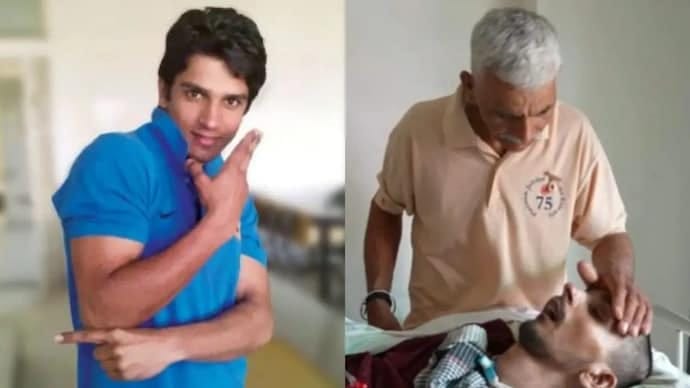
Harish Rana was allowed passive euthanasia by the Supreme Court in a landmark verdict.
Synopsis: The Supreme Court’s ruling in Harish Rana vs Union of India marks a humane milestone in end-of-life care. By permitting withdrawal of life-sustaining treatment in irreversible vegetative states, it applies the Common Cause framework to a real family’s plea. The judgment distinguishes passive euthanasia from active, mandates palliative care, and urges workable hospital mechanisms and legislation for patient dignity.
For families who have spent years watching a loved one remain in an irreversible vegetative state, trapped between grief, hope, guilt and legal uncertainty, the Supreme Court’s judgment in Harish Rana vs Union of India may come as a moment of long-awaited relief.
In a first-of-it’s kind individual ruling after the landmark Common Cause judgment, a Bench of Justices JP Pardiwala and KV Viswanathan permitted the withdrawal of life-sustaining treatment for Harish Rana, who has been in a permanent vegetative state since a traumatic fall in 2013.
The court held that the medical board could, in accordance with the law laid down earlier, exercise its clinical judgment regarding withdrawal of treatment.
People including doctors and legal experts working with several such families speaking to South First said that this ruling is legally significant not because it “legalises euthanasia” it does not, but because it applies the Supreme Court’s earlier framework on withholding or withdrawing life-sustaining treatment to a real family’s plea for closure.
In doing so, the court reaffirmed that a patient’s dignity does not end where medicine reaches it’s limits.
In a statement issued after the verdict, Advance Care Planning-India (ACP-I), a collective of medical, legal and public health experts, welcomed the judgment as “sensitive and humane,” saying it is grounded in constitutional values and the ethical duty of doctors to act in the best interests of patients.
The collective underlined that the judgment positively requires palliative and end-of-life care if life-sustaining treatment is withdrawn, and said this could pave the way for more meaningful advance care planning between treating teams, patients and caregivers.
That may be where the judgment speaks most deeply to families across India. Dr Rajani S Bhat, palliative medicine specialist and pulmonologist who is also part of the ACPI told South First for years, families in similar situations have often faced agonising choices with little institutional support: continued invasive medical treatment with no therapeutic benefit, or seek withdrawal and risk legal confusion, hospital resistance or moral stigma.
The collective opines that the court now has directly addressed that fear by cautioning doctors against legal wariness a the cost of patient dignity and by making clear that clinically assisted nutrition and hydration is itself a form of medical treatment–one that must be continued or withdrawn based on the patient’s best interests.
In Karnataka and several other places there might have been requests for euthanasia even from people who are suffering from chronic illnesses and have no support system. However, SC clearly drew distinction between active euthanasia, which remains illegal, and the withholding or withdrawal of life-sustaining treatment in legally recognised situations.
For instance, in Karnataka, 86 year old HB Karibasamma, a native of Davanagere who has applied for active euthanasia and is from past 24 years fighting for the government to release guidelines and make it accessible to the poor.
Speaking to South First, she says, “there is a gap between legal recognition and lived reality. Even though Karnataka issued a 30 January, 2025 circular to operationalise the right to die with dignity by setting up primary and secondary medical boards in hospitals and enabling Withdrawal of Life-Sustaining Therapy, she says ordinary people, especially the poor, still have no real clarity about how the system works or where to approach it,”
She also has decided to do a fast till death from 22 April if there is no guidelines clearly given to the public by the Karnataka government.
However, the bench on Wednesday, 11 March, clearly made the distinction on who can be considered for euthanasia and also emphasised that “best interests” must be assessed holistically, taking into account not just medical factors but emotional, social and psychological considerations, alongside the views of next of kin or designated healthcare representatives.
For many families, that recognition matters. It acknowledges the emotional burden borne by caregivers who often become full-time-decision makers, years after recovery has ceased to be medically possible. It also places the patient, not merely the procedure, at the centre of the law.
The experts also expressed content that SC went a step further to clarify that withdrawal of treatment cannot mean abandonment. Instead, it said, there must be a structured plan for palliative and end-of-life care. The judgment also frowned upon the practice of “discharge against medical advice,” signaling that institutions cannot simply step away once curative treatment is stopped.
The collective also observed that in practical terms, the judgment seeks to make the 2018 Common Cause guidelines more workable. SC has directed the state governments to ensure that Chief Medical Officers maintain a panel of registered medical practitioners who can serve on the secondary medical board in such cases. It also urged the Union government to enact comprehensive legislation governing end-of life decisions.
Like Karibasamma said, the right to refuse futile treatment and the legality of passive euthanasia have been recognised in principle since 2018–and the guidelines were simplified further in 2023–implementation on the ground has remained patchy, leaving many families unsure were to go, whom to approach, and whether hospitals could cooperate.
However, Karnataka is not starting from zero on this. In fact, the state has already begun operationlising the Supreme Court’s Common Cause framework on withholding or withdrawing life-sustaining treatment.
The Health and Family Welfare Department issued a government order on 30 January, 2025 nominating registered medical practitioners to serve on the Secondary Medical Board for such cases, and the department’s orders page also separately lists “Salient Features of SC Judgment on WLST,” showing that the process has moved from theory to administrative action.
This is important because one of the biggest hurdles for families has been not the law alone, but the absence of workable hospital level mechanism when they seek closure for a loved on in irreversible condition.
Hospitals in Karnataka have also begun building the culture and systems needed for implementation, and St John’s Medical College Hospital in Bengaluru appears to be among the stronger examples.
A senior doctor told South First that St John’s has an established Department of Pain, Palliative Medicine and Supportive Care that explicitly offers end-of-life care, psychosocial support and even home-based care for chronically and terminally ill patients.
It’s hospital overview says palliative care is available even in situations where futility of care is an issue and the institution even hosted a dedicated workshop in November 2025 on living wills and withholding/withdrawing life-sustaining medical treatment.
“These steps suggest that at least some hospitals are no longer treating end-of-life decisions as a legal grey zone, but as a structured part of ethical patient care,” the doctor added.
(Edited by Amit Vasudev)


