

Published Mar 29, 2026 | 1:21 PM ⚊ Updated Mar 29, 2026 | 1:21 PM

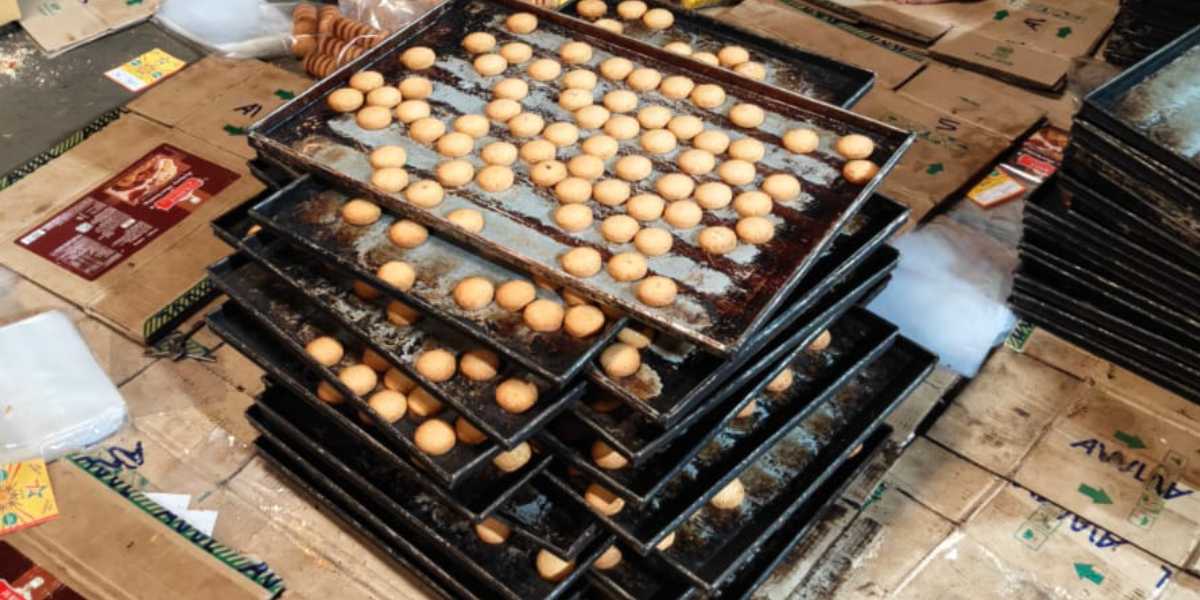
Synopsis: Recent police raids in Hyderabad found that manufacturers have been mixing chemicals while making the city’s traditional dessert, Osmania biscuits. The biscuits contained talc powder, low-quality ingredients, and were prepared in conditions that officers described as unsanitary.
On the morning of Saturday, 28 March 2026, officers from Mailardevpally Police Station in Hyderabad walked into a plot in Laxmiguda and found what they were looking for.
Inside, under the name Anjani Foods, a man named Masthan Reddy had been quietly manufacturing Osmania biscuits for two years, packing them into 99 cartons of 30 packets each, and shipping them wholesale to other states.
The biscuits contained talc powder, low-quality ingredients, and were prepared in conditions that officers described as unsanitary.
What makes the find particularly striking is not just what was in the biscuits. It is where they were being made.
Hyderabad holds a designation that very few cities in the world can claim. In 2019, UNESCO named it a Creative City of Gastronomy, recognising what the organisation described as a city where “rich Hyderabadi cuisine has evolved as an interesting combination of local flavours and international recipes.”
The Osmania biscuit sits at the heart of that identity. Born in a Nizam’s hospital over a century ago, inseparable from the city’s Irani chai culture, it is the edible symbol of everything the UNESCO title celebrates.
That symbol, it now turns out, was being filled with talc powder and dispatched across state lines.
What distinguishes the Laxmiguda raid from routine enforcement action is the language of the FIR itself. In his confessional statement recorded before panchanama witnesses, Masthan Reddy did not merely deny or deflect. He acknowledged exactly what he was doing and why it was wrong.
“During the preparation of the Osmani Biscuits, I should maintain cleanliness in my company premises and use only quality oil and good ingredients,” he stated. “If this is not followed, it may cause harm to people’s lives. Even though I am aware of this,” he continued, he had been adulterating his product regardless.
This is not an admission extracted under pressure. It is a statement of knowing, deliberate disregard for public safety, recorded in the accused’s own words.
A near-identical confession emerged from the same day’s raid on the mixture unit in Brundavan Colony. Accused Munnir Arun Kumar told investigators: “During the preparation of the mixture, I should maintain cleanliness in my company premises and use only quality oil and good ingredients. If this is not followed, it may cause harm to people’s lives. Even though I am aware of this, I am using low-quality oil and ingredients.”
Two accused, two units, two confessions. The same words, almost verbatim.
The awareness of harm was not absent. It was simply overridden by profit.
The 28 March raids were not isolated. They were part of a broader enforcement wave that has laid bare systematic food adulteration across the city.
An illegal bakery in KD Colony was found making Osmania biscuits, rusk, and butter buns using low-quality raw materials, with goods worth ₹12.54 lakh seized.
A unit in Attapur was adulterating ginger-garlic paste with acetic acid and synthetic colours, supplying it in bulk to catering services across the city.
A factory in Katedan was using rotten eggs alongside hazardous chemical additives, including sodium benzoate, sorbic acid, and calcium propionate, to manufacture cakes sold primarily to children.
A fake coconut powder racket in Begum Bazar was repackaging substandard loose powder under branded labels, without batch numbers or expiry dates.
Nearly 3,800 kilograms of adulterated paneer and khoa were seized from dairy outlets in Secunderabad.
In the Ali Nagar case, where 675 kilograms of adulterated ginger paste were seized from a house masquerading as a food unit, DCP Srinivas stated plainly: “Strict action will be taken against those endangering public health by manufacturing and selling adulterated food products.”
The pledge was welcome. But it came from the police, not from the Commissioner of Food Safety. That distinction, as the parliamentary record shows, matters enormously.
The Union Minister of State for Health, Prataprao Jadhav, tabled state-wise food safety enforcement data in Parliament covering 2022-23 to 2024-25.
For Telangana, the numbers are difficult to read without alarm.
In three years, the state’s designated food safety authorities tested 14,312 samples. They cancelled 16 licences across the entire period. They filed zero criminal cases.
The minister had confirmed to Parliament that the Act “empowers authorities to pursue punitive measures including criminal prosecution and licence cancellation against defaulting Food Business Operators,” and that “state food safety authorities are primarily responsible for enforcement at the field level.”
On paper, that framework existed in Telangana. In practice, it did not function.
The final year’s data makes the trend worse. Sampling fell by 46 per cent in a single year. Civil cases dropped by 71 per cent. Licence cancellations hit a new low of one.
The state has a population of 40 million.
The contrast with comparable states removes any possibility that this reflects a national pattern. Kerala, with a similar annual sample count, secured 206 criminal convictions in 2024-25 alone. Karnataka recorded 34. Chandigarh, a Union Territory of barely one million people, recorded 41 convictions from just 374 samples.
Andhra Pradesh, which shares Telangana’s geography, food culture, and regulatory architecture, has pursued criminal enforcement consistently every single year.
Telangana has not done so once in three years.
The formation of H-FAST, the Hyderabad Food Adulteration Surveillance Team, under Police Commissioner VC Sajjanar, is a direct consequence of that vacuum.
A 28-member unit of inspectors and sub-inspectors, working alongside food safety officers and a public toll-free number, has in weeks done what three years of statutory enforcement apparently could not.
However, this is an uncomfortable substitution. The Food Safety and Standards Act vests enforcement authority with state food safety officers, not the police. When police are compelled to fill a regulatory gap that should not exist, it does not resolve the underlying problem. It papers over it.
UNESCO’s recognition of Hyderabad was not merely ceremonial. The designation committed the city to, in the organisation’s own words, “preserving and documenting the rich cuisine of the city in order to promote knowledge sharing,” and “placing gastronomy as a key creative category alongside other cultural events, to bridge the gap between the old and the newer parts of the city.”
Those are institutional commitments, not just cultural aspirations.
They carry an implicit obligation to protect the authenticity of the very foods that earned the recognition in the first place.
The Osmania biscuit has endured for over a century. It survived the fall of the Nizam, the reorganisation of states, and the wholesale transformation of Hyderabad into a technology and services economy.
What it has not previously had to survive is the combination of knowing adulteration by its own manufacturers and near-total regulatory inaction by the authorities charged with protecting it.
(Edited by Muhammed Fazil.)


