

Published Apr 12, 2026 | 8:08 AM ⚊ Updated Apr 12, 2026 | 8:08 AM

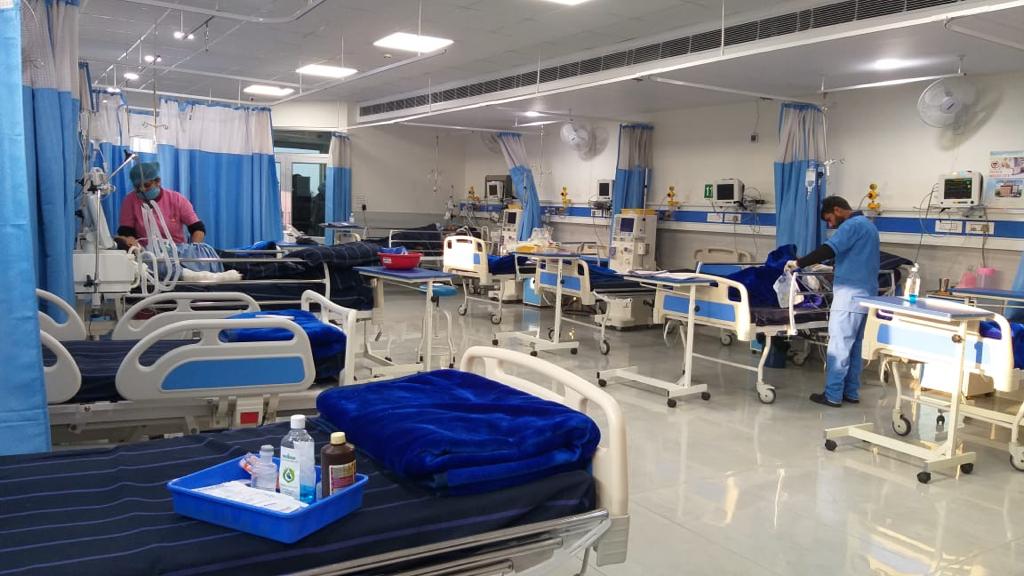
A Bengaluru hospital followed a legally prescribed process to withhold and withdraw life-sustaining treatment for a terminally ill patient.
Synopsis: In March 2026, the Supreme Court’s ruling in the Harish Rana case underlined that the right to die with dignity is inseparable from the right to live with dignity. Legal commentators have described the judgment as the point where passive euthanasia, or more precisely the withdrawal of life-sustaining treatment in tightly regulated situations, moved from a theoretical right to a practical reality.
Even as the Supreme Court’s March 2026 decision in the Harish Rana case put the “right to die with dignity” back in public debate, a new paper from Karnataka shows that the state had already moved to make that right workable in hospitals.
Published in the Indian Journal of Medical Research, the paper documents how a Bengaluru tertiary-care hospital followed a legally prescribed process to withhold and withdraw life-sustaining treatment for a terminally ill patient, turning what has long remained a constitutional principle into a step-by-step clinical pathway.
The paper matters because, in India, the gap has never really been about the idea itself. The Supreme Court had recognised the right to die with dignity in the 2018 Common Cause judgment and simplified the procedure in 2023.
But for families and hospitals, the harder question remained: how does one actually act on that right without stumbling into legal confusion, professional fear or institutional paralysis? The Karnataka case study attempts to answer that, using a real patient journey to map the procedure in detail.
The authors, from Bengaluru-based the Department of Pain and Palliative Medicine, the Neuro and Surgical Intensive Care Unit under the Department of Anaesthesia, and the Department of Forensic Medicine and Toxicology at St John’s Medical College, and have given a detailed step-by-step process of its implementation.
The paper cited the case of an 83-year-old man with advanced dementia, cardiac failure, stage-4 chronic kidney disease and multiple long-term illnesses. He had been admitted under palliative medicine with worsening delirium and declining overall health. The octogenarian also had an implantable cardioverter-defibrillator, or ICD, a device meant to correct dangerous heart rhythms.
But in the final stage of an irreversible illness, such a device can also prolong the dying process and add distress. His wife and daughter, who were his legal decision-makers, asked that the defibrillator function be deactivated and that there be no escalation to invasive life-support such as intubation, dialysis, ventilation or tube feeding.
What makes the paper notable is that it does not merely discuss end-of-life ethics in the abstract. It records the precise institutional steps taken after that request was made. That is where Karnataka’s role becomes significant.
The IJMR paper says healthcare institutions can comply with the court’s guidelines fully only after state governments activate specific processes, and notes that Karnataka did so by early 2025.
Separately, the Indian Association of Palliative Care said the January 2025 Karnataka order made the state the first in India to make withholding or withdrawal of life-sustaining treatment feasible across the state.
The first step is the request. In such cases, the process begins either when the family explicitly asks for withholding or withdrawal of life-sustaining treatment, or when the issue emerges during family-clinician discussions.
The doctors then have to check whether there is a valid advance medical directive, or living will. In the case of the octogenarian, the patient had executed one in California in 2017, but it did not meet the legal requirements for such directives in India. It meant that the hospital had to proceed as a case without a legally valid Indian advance directive, relying instead on surrogate decision-making and the court-mandated process.
The paper explains that the patient’s wife submitted a signed and witnessed request seeking deactivation of the defibrillator while preserving the pacemaker function. The reason was explicitly stated: to spare him needless pain, suffering and a prolonged dying process.
The medical team did not stop there. Before any institutional action could begin, it had to establish that the patient’s condition was irreversible, that he lacked decision-making capacity, and that the family understood the consequences of withholding or withdrawing treatment.
The paper says the patient’s condition was reviewed with inputs from multiple specialities, his decline was found to be irreversible, and his dementia and delirium meant he could not make an informed decision about his own treatment.
The hospital also ordered an interrogation of the ICD, a non-invasive technical evaluation of the device, to document battery life, lead function and the patient’s historical dependence on it. This was not a token formality. It helped determine how far the patient was actually reliant on the device and whether continuing it would serve any meaningful clinical purpose. Only after these steps did the treating physician formally write to the hospital administration to initiate the due process for withdrawal and withholding of life-sustaining treatment.
The paper makes clear that the heart of the procedure lies in a double-layered medical review. The hospital’s chief administrator first constituted a Primary Medical Board comprising the treating physician, a cardiologist and an intensivist, each with the required years of clinical experience.
The board examined the patient, reviewed investigations, assessed whether any reversible causes had been missed, checked the ICD interrogation report and spoke to the wife to ensure she fully understood the consequences of disabling the defibrillator and withholding other life-sustaining interventions. It then submitted its signed report in support of the family’s request.
That alone was not enough. A Secondary Medical Board then had to be formed with a different set of senior clinicians, including one state-empanelled member. In Karnataka, one solution was to use a clinician already empanelled for brain-death certification under the Transplantation of Human Organs and Tissues Act.
In this case, the secondary board included a neurologist who was also an empanelled member of the brain-death declaration committee, along with other senior specialists. This second board reassessed the patient, considered psychiatric inputs, applied a cognitive test, confirmed the irreversibility of his condition and again interviewed the wife to verify that her consent was informed. It then concurred with the first board.
Both reports had to be completed within 48 hours of the boards being formed. The chief administrator then sent the two concurrence reports, the wife’s request and consent, and a covering letter on the background circumstances to the jurisdictional Judicial Magistrate of First Class. Only after this legal communication was completed could the hospital proceed.
After the paperwork and reviews were completed, the technologist was called to deactivate the defibrillator function. The patient remained in hospital for two more weeks while symptoms were managed, his caregiver was trained, and medications were adjusted.
He was then discharged with palliative home care follow-up. According to the paper, he died pain-free at home, with family around him, 45 days after the defibrillator was deactivated.
The outcome is central to the paper’s argument. It says these procedures can prevent terminally ill patients from undergoing burdensome, non-beneficial and expensive interventions that only stretch the final phase of life. For families, it can reduce emotional turmoil and catastrophic medical expenditure. For doctors, it can reduce moral distress and replace fear-driven practice with a legally defensible, ethically grounded process.
The larger significance of the paper lies beyond one patient. It argues that the Supreme Court’s directives become meaningful only when states fill in the “last-mile” administrative gaps.
Karnataka did that by designating custodians for living wills, creating a practical route for forming the secondary medical board, and securing a way for hospitals to communicate directly with the jurisdictional magistrate. That administrative groundwork, the authors suggest, is what allowed one institution to move from hesitation to implementation.
The timing of the paper is significant, too. In March 2026, the Supreme Court’s ruling in the Harish Rana matter once again underlined that the right to die with dignity is inseparable from the right to live with dignity. Legal commentators have described the judgment as the point where passive euthanasia, or more precisely the withdrawal of life-sustaining treatment in tightly regulated situations, moved from a theoretical right to a practical reality.
The Karnataka paper now offers a hospital-side view of what that reality looks like on the ground.
The procedure, though legalistic, can be understood more simply. Here is the process that the paper mentions:
Step 1: Raise a request
The family or caregiver asks the doctor about stopping or not escalating life-support treatment.
Step 2: Check for a living will
The doctor verifies if the patient has an Advance Medical Directive (living will)
Step 3: Submit written consent
The legal decision-maker (family) gives a signed, witnessed request explaining the reasons
Step 4: Detailed medical discussion
Doctors will:
Step 5: The doctor formally initiates the process
The treating doctor sends an official request to the hospital administration to start the legal procedure.
Step 6: First medical board reviews the case
A Primary Medical Board (PMB) of three doctors evaluates the patient and speaks to the family.
Step 7: First report is submitted
The PMB documents its findings and submits a signed report (within 48 hours)
Step 8: A second independent board is formed
A Secondary Medical Board (SMB) with different doctors, including a state-approved member, is set up.
Step 9: Second review and confirmation
The SMB re-evaluates the patient, interacts with the family, and submits its report (within 48 hours)
Step 10: Legal intimation before action
The hospital sends both board reports, along with the family’s consent and case details, to the Judicial Magistrate before implementing the decision.
(Edited by Majnu Babu).


