

Published Dec 10, 2025 | 5:15 PM ⚊ Updated Dec 11, 2025 | 11:12 AM

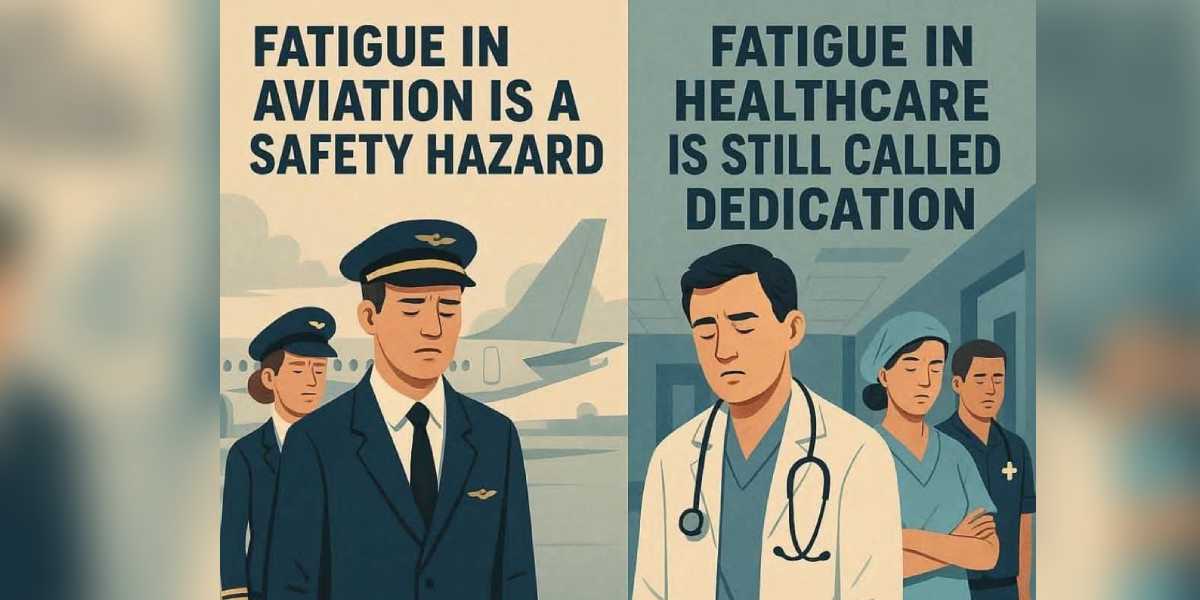
The association points to doctors who work 24 to 48 hours without breaks.
Synopsis: The Indian Medical Association has demanded strict duty-hour caps for doctors, comparing 36–48-hour shifts to aviation’s regulated rest periods. Highlighting fatigue-related errors and patient risk, the IMA criticised unchanged conditions despite Supreme Court directives post-R.G. Kar tragedy. It seeks enforceable limits, adequate staffing, and recognition that exhaustion is a safety hazard, not dedication.
A doctor completes a 36-hour shift at a government hospital. Her hands shake as she writes prescriptions. She doesn’t remember when was the last time she slept. In the next room, a pilot prepares for a domestic flight. Aviation rules guarantee him rest after eight hours of duty. The doctor continues her rounds.
The Indian Medical Association (IMA) has raised this question with force: if fatigue threatens passenger safety in aircraft, why does the same logic not apply to operating theatres and emergency wards?
“In aviation, fatigue is formally recognised as a safety hazard, and strict duty-hour regulations exist because a tired pilot is a risk to human life. Yet, in healthcare, where decisions also determine life and death, fatigue is often dismissed as dedication, sacrifice, or professional expectation. This disparity is unacceptable, illogical, and unsafe,” IMA said in a statement.
The association points to doctors who work 24 to 48 hours without breaks. Junior doctors and residents bear the heaviest burden. They move from ward to ward, deliver diagnoses, perform procedures, console families. Sleep arrives in snatches on clinic benches or not at all.
The rape and murder of a young doctor at RG Kar Medical College triggered protests across the country. The case exposed not just violence but the conditions that made her vulnerable: long hours, isolated spaces, absent safeguards.
The Supreme Court responded with recommendations. It asked for 16-hour duty limits. It called for CCTV cameras. It demanded separate rest rooms for women doctors. Months have passed. Hospitals have changed little.
“In spite of Hon’ble Supreme Court’s recommendations of 16 duty hours, CCTV cameras, separate rest rooms for lady doctors etc., nothing has been done so far,” the IMA noted.
Dr Dileep Bhanushali, IMA president, described how the profession normalises sleeplessness.
“Many doctors wear it as a badge of honour, we have even seen consultants work/be on call 24×7 as there is no concept of group practice. Sleep deprivation among practicing consultants is as much an issue for patient safety,” he said.
Hospitals run on a model that depends on overwork. Staff shortages persist. Rosters stretch beyond reason. The system treats exhaustion as commitment rather than danger.
The IMA argues this harms both doctors and patients. A surgeon who has not slept makes errors. A physician who cannot think clearly misses diagnoses. Fatigue does not enhance care. It compromises it.
— Sundar Sankaran (@sundar_s1955) December 8, 2025
The IMA has set out specific changes it expects from the government, the National Medical Commission, and hospitals:
The association wants enforceable duty-hour limits for all doctors, from trainees to consultants. It seeks mandatory rest periods between shifts and schedules that allow recovery. It demands adequate staffing so overtime becomes exceptional rather than routine. It calls for institutional and legal protections to ensure workplace safety.
“Doctors are committed to saving lives, but they deserve dignity, rest, and safety while doing so. Fatigue cannot continue to be glorified as sacrifice. It is time to recognise it as a systemic flaw that needs urgent correction,” the statement said.
The association has asked the Government of India, the National Medical Commission, and healthcare institutions to act immediately. It wants regulations that protect doctors and patients equally.
Aviation authorities understood decades ago that tired pilots crash planes. They wrote rules. They enforced limits. They monitored compliance.
Healthcare has reached the same crossroads. The IMA believes the principle remains identical: human lives depend on alert professionals. Whether those professionals fly aircraft or operate on patients should not determine their right to rest.
The doctor finishes her shift. She walks to the hospital gate. Another shift begins in eight hours. She wonders if she will manage to sleep.
(Edited by Amit Vasudev)


