

Published Jun 21, 2026 | 7:00 AM ⚊ Updated Jun 21, 2026 | 7:00 AM

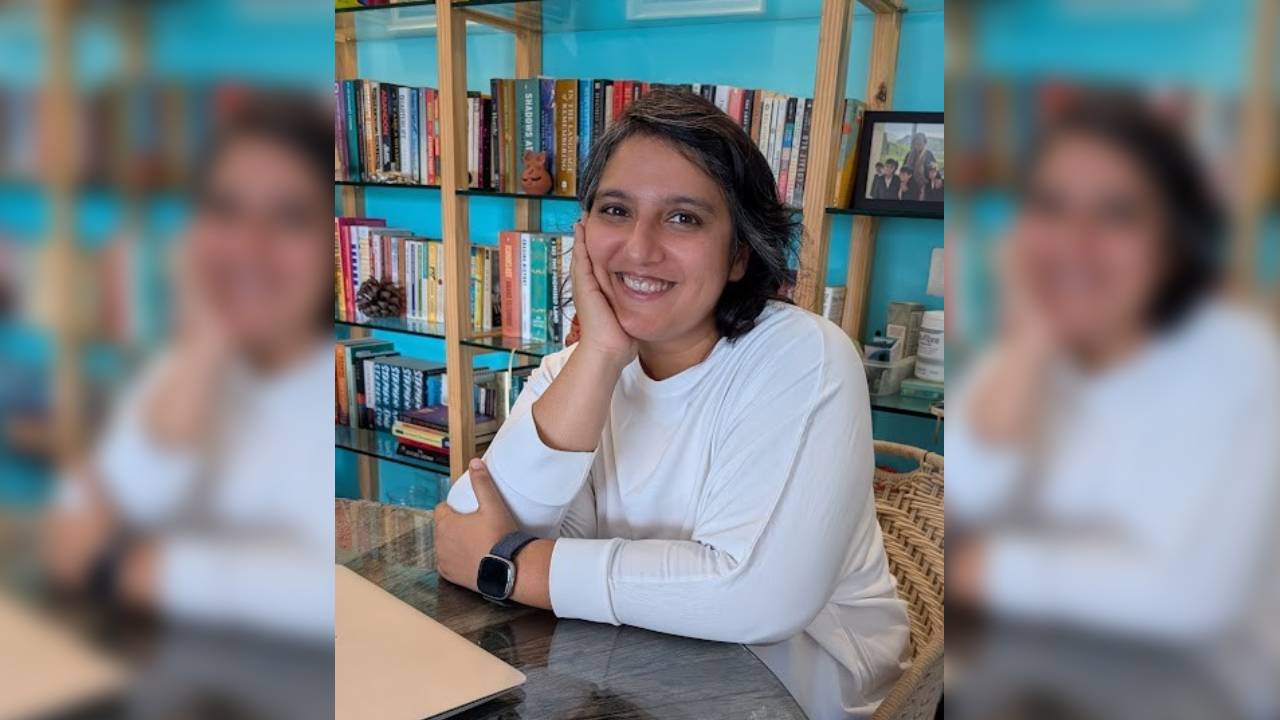
Aditi Anand feels cinema is not only about big dramatic moments. It is about very small moments, tiny memories that people bring to the screen.

Synopsis: Movie producer Aditi Anand speaks about political storytelling, creative fearlessness, and how working with voices like Iranian-French graphic novelist and filmmaker Marjane Satrapi and Pa. Ranjith shaped her understanding of cinema. In this conversation with South First, she reflects on censorship, representation, queer identity, and why films can never be separated from politics.
In contemporary Indian cinema, few producers have consistently associated themselves with films that carry strong social, political and emotional depth like Aditi Anand.
From acclaimed projects like Paan Singh Tomar and No One Killed Jessica to more recent Tamil films like Writer, J Baby and Bison, the producer and co-founder of Neelam Studios, Anand, has built a reputation for backing stories that challenge, provoke and reflect society.
In an interview with South First, Anand spoke about her unconventional journey into cinema, her collaboration with filmmaker Pa. Ranjith, why Tamil cinema became her “real film school,” and how cinema can become a powerful political and cultural force.
Edited excerpts:
Q: Your journey has taken you across many worlds, from wanting to join the army, to business, activism and now cinema. Looking back, what has remained constant throughout the journey?
A: I wasn’t a very good student in school. Actually, I was terrible. I don’t know how I even finished my education. But somewhere around Class 11, I had a history teacher who was probably the first teacher in my life who thought I was actually good at something.
It changed things for me. I became interested in history and eventually pursued it in college. It opened my eyes to incredible stories and helped me understand our country differently. I realised there were so many beautiful stories about India that were never being told.
If I had been academically stronger, maybe I would have gone on to do an MA or MPhil. But because I couldn’t study that way, I think I carried that desire to understand who we are as a nation and how we became who we are into cinema.
Cinema became the most powerful way for me to have that conversation.
Even my dream of joining the army fell through because at that time, women were mostly allowed only into technical or medical corps, and there was no way I could have done science. I think all my handicaps in life somehow pushed me exactly where I needed to be.
Q: Your filmography consistently leans towards socially and politically conscious stories. Is that an intentional choice, or just the kind of cinema you’re naturally drawn to?
A: It’s definitely both. It is a deliberate choice, but it is also natural that I am drawn towards such kinds of cinema.
I believe cinema is the most powerful medium (of communication) in this country. What makes cinema unique is that for a film to truly work, every person in the audience has to see themselves on the screen. They need to see their dreams, their aspirations, their life reflected.
My love for history brought me towards socially conscious storytelling. But I didn’t really know how to practically implement those ideas until I met Ranjith sir.
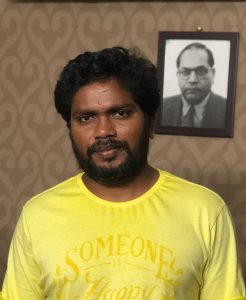
Pa. Ranjith reflects a much more complex understanding of India.
Sometimes you meet someone who speaks directly to your soul.
I watched Kaala (marketed also as Kaala Karikalan) only because a friend was involved in producing it. I wasn’t expecting the film to affect me the way it did.
Suddenly, I was seeing a very mainstream, commercial film with a superstar that was deeply political, deeply powerful.
The craft was extraordinary. The final sequence with the colours almost tells the history of left politics in India without saying anything directly.
What Santhosh Narayanan did with the music was incredible. I became obsessed with the film.
Q: Your association with Pa. Ranjith looks bigger than filmmaking. Did you realise at some point that you two were building a cultural and political movement through cinema?
A: I don’t think there was ever a conscious conversation. I saw that somebody like Pa. Ranjith had a mission, and I wanted to be part of it.
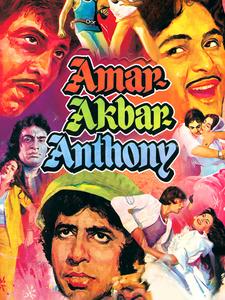
Manmohan Desai-directed 1977 film dealt with religious tolerance.
I’ve always wanted to make socially conscious films that are also socially complex. Films that reflect the real diversity of this country, not a simplified version of diversity.
Take old Hindi films from the 1970s and 80s. A film like Amar Akbar Anthony presents a beautiful idea of secularism, but it is still a simple understanding.
What I love about working with people like Ranjith is that they reflect a much more complex understanding of India. They tell stories about communities that have historically been oppressed or marginalised, but their narration of such stories is empowering. They allow people to become heroes in their stories. It sounds simple, but it changes the way you look at cinema.
Cinema is not only about big dramatic moments. It is about very small moments, tiny memories that people bring to the screen.
Recently, I asked a friend to name five people they consider heroes, people they would love to work with. I realised that out of my own list, I had already worked with three of them. That includes Ranjith sir, Mari sir, and Marjane Satrapi.
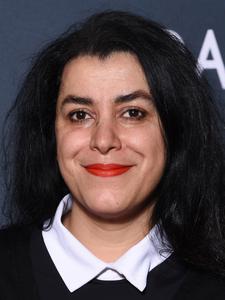
Iranian-French graphic novelist, cartoonist, illustrator, film director, and children’s book author Marjane Satrapi (22 November 1969 – 4 June 2026).
All of them bring the same kind of political energy to the screen. What I admire about them is that it is never about giving lectures or telling people what to think. It is about bringing yourself honestly to the screen.
I was devastated when I heard about Marjane Satrapi. She wasn’t just an artist to me. She was an incredible human being. What I admired deeply was her ability to be politically incorrect when needed, because I think sometimes that you have to stand by your convictions even if they are unpopular.
I feel very grateful that I got the opportunity to spend time with Marjane and get to know her.
That kind of fearlessness, whether I see it in Ranjith sir, Mari sir or Marjane, has deeply shaped how I understand cinema and why I continue believing in it as a powerful medium.
Also Read: Caste, colour, and anti-caste politics in mainstream cinema
Q: After years in Bollywood, you once said Tamil cinema became your real film school. What was it about Tamil cinema that changed your understanding of filmmaking?
A: I don’t think Bollywood did not teaching me anything. I think I was finally ready to learn.
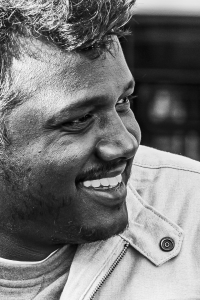
Directors like Mari Selvaraj bring political energy to the screen.
By the time I came to Tamil cinema, I had become extremely frustrated because it was becoming harder and harder in Bombay (Mumbai) to make films that were political or even slightly controversial.
Around that time, I met Ranjith sir in Goa during Pariyerum Perumal screening at IFFI.
I had already watched Kaala, but somewhere inside, I still had this arrogance that young people have — that you think you understand cinema, you think you know everything.
Then I watched Pariyerum Perumal.
It was the exact opposite of Kaala. If Kaala takes you outward politically, Pariyerum Perumal takes you inward emotionally.
The last scene with the glasses, it lays out Mari Selvaraj’s philosophy as a filmmaker in the smallest possible moment, and it is devastating.
Then something happened in that theatre that completely changed me.
I had worked with so many studios before, so I was used to films opening with one-and-a-half minutes of partner slides, marketing logos, and production cards.
But this film opened with a black screen. And on that black screen, only three words appeared. “Educate. Agitate. Organise.” That was it. And then the film started.
I remember feeling that those three words changed me as a person.
Q: So what became your biggest learning from working with Pa Ranjith and filmmaker Mari Selvaraj?
A: The biggest lesson was fearlessness. With Ranjith sir, I learned how to trust instinct.
We produce so many films together, and many times at the beginning of a project, I’m convinced the film won’t make any money and that we’re going to lose everything.
But he is unstoppable. And cinema needs that kind of fearlessness.
You cannot explain everything on paper when making films. Of course, you have to be smart and know how to market a film.
But ultimately, sometimes you simply have to jump off a cliff and trust your instincts. Mari sir taught me something else.
When we were making Bison, he didn’t even give us a final script until shooting was over. The script kept changing constantly.
Halfway through the shoot, he decided he wanted to reshoot several portions.
But after watching Pariyerum Perumal, I understood that sometimes filmmakers work through intuition.
Those scenes he re-shot became my favourite parts of the film.
It taught me that cinema is not mathematics. It requires belief. Ranjith sir has this unbelievable urgency.
He can think of a film in January, put everything together by February, finish production by December and release it by Pongal.
That kind of instinct, that ability to believe in something before the world sees it, was my biggest learning.
Q: Indian cinema has long normalised colourism and rigid beauty standards. Even films deeply dealing with politics, like Bison Kaalamaadan, faced criticism. Do you think socially conscious cinema itself still struggles with these deeply rooted biases?
Aditi Anand: One hundred per cent. Absolutely. I think we have to acknowledge that there are no easy answers to these questions. Real social change doesn’t happen with revolutionaries standing on the fringes. Real change happens through constant engagement at the centre.
I think intelligent criticism like this, criticism that is thoroughly thought-out and willing to engage, is very powerful and very necessary.
This conversation is much bigger than colourism or gender. It is also about queer people, trans people, and how representation itself functions.
For example, queerness in cinema should not only mean making films about queer people. Queerness can exist through queer characters in films, not because their identity is the story, but because they exist as normal human beings.
Their existence on screen reflects their existence in real life.
When that existence is absent on screen, it slowly creates an absence of recognition in society as well.
I think this change will happen. But it will happen when more socially progressive people enter positions of power.
Take women, for example. When there are more women producers, writers, directors, cinematographers—when women start occupying decision-making positions, these small shifts happen.
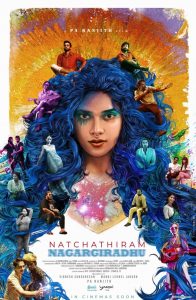
The 2022 movie has a woman at the centre, but not in a role you are usually allowed to see women.
Those small shifts are incredibly powerful. I don’t think we got everything right. I don’t think anybody ever gets everything right.
The question is simply this: are you willing to try or not?
I think it is okay to hold certain people to higher standards. Not because we want to punish them, but because we believe they have the intelligence and emotional openness to evolve.
Making a film like Natchathiram Nagargiradhu itself was a very powerful statement. It had a woman at the centre, but not in a role you are usually allowed to see women.
So I’m not dismissing criticism. I’m saying engagement matters. And I know that even if I cannot make these changes immediately, I will make them incrementally. It is a process.
Also Read: Pa Ranjith’s Natchathiram Nagargiradhu is a milestone
Q: At a time when censorship debates and shrinking creative freedom dominate cinema conversations, do you feel filmmakers are becoming more cautious about telling uncomfortable truths? What has been your biggest struggle while standing behind stories you deeply believed in?
A: Let me answer that in two parts. Yes, the space has shrunk.
But I think this is happening globally. There was an African writer who recently tweeted about how young people today are afraid to even post a tweet without reading it 20 times, without showing it to five people for approval, because they fear saying one wrong thing and inviting a backlash.
And I think that says a lot about the world we are living in.
We are raising a generation that is constantly scared. Every word you say can be recorded. Everything can be watched.
Censorship is not new. The desire of the establishment to control speech has always existed.
Whether it was the Congress party, the BJP, or the Janata Dal — whoever was in power, governments have always wanted some control over what people say.
What has changed now is how scared we have become. Why are we so afraid to push back? Because only when people push back can real shifts happen.
What I’m seeing, especially in cinema, is that we have started censoring ourselves. I do it myself.
I produced a film where there was a controversial scene. I believed that it could cause trouble.
So I made the director shoot an alternative version of the same scene. Because I didn’t know whether the platform would accept it.
Even if they accepted it, I didn’t know whether legal cases would follow. So there is definitely a growing fearfulness.
It’s not just the fear of government. It is the fear of everyone around us.
Today, you can do 10 things with good intentions. And then do one thing, still with good intention, but with a bad outcome. And suddenly your career can be over.
Also Read: Revisiting the history of caste politics in Malayalam cinema
Q: But doesn’t that become even more dangerous?
A: I wouldn’t say more dangerous. I’d say it is a direct product of censorship.
If we start judging people by intention instead of simply by mistakes, we can create a healthier atmosphere for open conversation.
I believe people who occupy positions of privilege and power need to show more courage.
If someone already has enormous privilege, let’s say, even if they get cancelled, the worst that could happen is they don’t make their next hundred crores.
But they already have eight hundred crores behind them. So, people like them not standing by their convictions is depressing.
Q: What has been the most frustrating experience you have faced as a producer?
A: Honestly, it wasn’t direct censorship. What depresses me more is the censorship that comes from commercialisation and callousness.
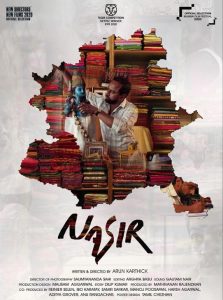
Arun Karthick-directed 2020 movie chronicled the seemingly simple, but complex life of a Muslim salesman in communally tense Coimbatore.
At least with state censorship, you feel anger. You feel rage. You want to fight back.
Take a beautiful film like Nasir. It never got a censor certificate.
Such kind of censorship at least gives you something visible to resist. But then there is another kind of censorship.
As filmmakers, we sell things. We have to sell to audiences. We have to sell to streaming platforms. We have to sell to financiers, producers, and investors.
Sometimes the market decides what stories are acceptable. It is equally depressing. I’m a queer person myself.
My partner and I were petitioners in India’s equal marriage case. And during that period, every interview we gave, domestic publications, international publications, followed the same formula.
They would ask how we met. They would ask about our personal lives. Then they would ask two questions about struggle, oppression, and sadness. And one question about the legal case.
Interview after interview, the only parts that ever got published were the depressing parts. How oppressed we were, how difficult our lives were, how marginalised we felt. But that wasn’t my life.
My life is amazing.
I kept thinking, when I was younger, if I had seen queer people living fulfilled, joyful lives, it would have completely changed how I saw myself.
So, I now feel like I need to find stories that show empowered queer South Asian lives. Because being queer is not simply a tragedy. It doesn’t mean you can’t have marriage, family, children or fulfilment.
You can have a full life. Empowerment does not erase struggle. That is something I learned deeply.
Also Read: People cry foul at injustice in films, little justice in reality
Q: How do you see cinema actors entering politics and becoming chief ministers?
A: The state we are talking about, Tamil Nadu specifically, has a long history of cinema and politics intersecting.

Politics is ultimately about understanding the pulse of a generation. Pictured, an installation by Sudarsan Pattnaik.
So I don’t find it unusual. Politics, at its core, is about showing people your soul. Or at least convincing them that you are showing them your soul.
When people believe you are authentic, they will do extraordinary things for you.
Politics is the new war. Elections are the new wars. And you need people willing to fight those wars.
I don’t find it problematic when someone from the cinema wants to become the chief minister.
What interests me more is what this moment says about India right now.
Young people are frustrated. They are tired of being told that they don’t deserve power. They are tired of being told their ambitions should wait.
We are seeing an entire generation that feels deeply restless. You can see this reflected in the kind of cinema becoming popular.
Young men especially want to see themselves winning. And that ambition itself is not a bad thing. The real question is, who is going to harness that energy politically?
Politics is ultimately about understanding the pulse of a generation and riding that wave. And from a sociological perspective, I find this moment extremely interesting. Because winning is sometimes easier than staying.
Also Read: Kalaignar: Transforming cinema and politics
Q: Years from now, when history looks back at your journey, what do you hope people remember most, the films you produced, the causes you fought for, or simply the fact that you refused to stay silent?
A: This is a really deep question. I don’t know.
I guess… I would want history to remember me as somebody who was never willing to stay inside a box.
As somebody willing to engage with complex ideas. As somebody who was not looking for simple solutions.
I don’t think my politics, the causes I care about, and the films I make are separate things. I think they are all pieces of the same whole.
I hope history remembers me as someone who was fearless.
(Edited by Majnu Babu).



