

Published Jun 10, 2026 | 7:00 AM ⚊ Updated Jun 10, 2026 | 7:00 AM

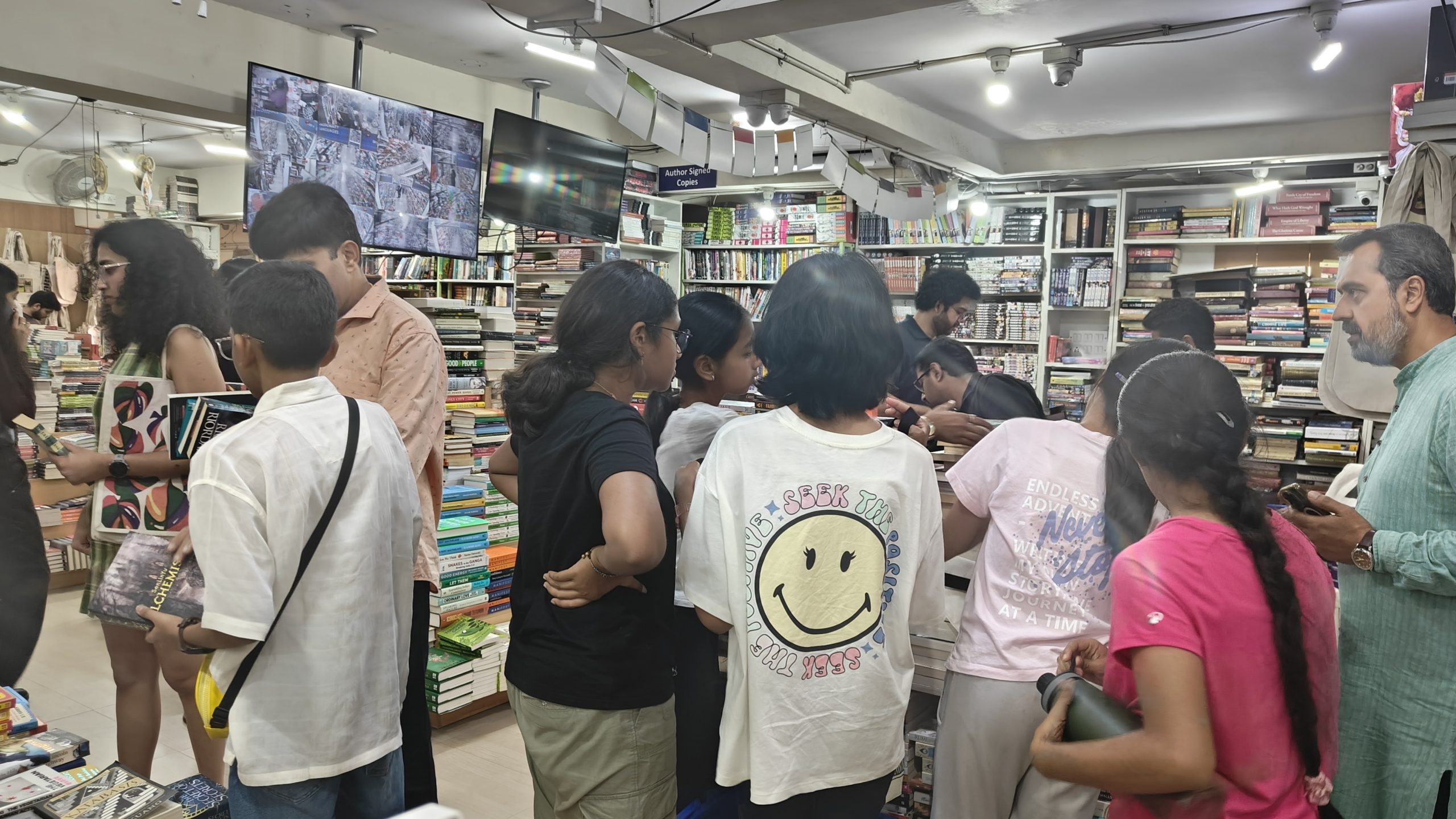
For many, bookstores are spaces of belonging, where communities form around a shared love of reading. (Credit: Blossom Bookhouse)

Synopsis: For many bookstore owners, the appeal also lies in something that online stores cannot offer: human connection. No matter what kind of reader you are or what books you enjoy, you’re likely to find like-minded people exploring the same shelves and titles. Mahesh B, one of the owners of The Paperback Bookshop in Kammanahalli, compares discovering a book in a bookstore to wandering through a forest until a path suddenly reveals itself.
If you moved to one of India’s metropolitan cities for work or study, chances are your options for socialising are limited. Barring opportunities available through universities or workplaces, you may find yourself choosing between drinking holes and a handful of cultural spaces. Often, however, these can get expensive quickly, while those who are less extroverted may struggle to make connections and find common ground.
Bengaluru, however, offers an alternative: a thriving culture of independent bookstores.
Imagine browsing through a bookstore and finding a book that looks and smells ancient. Curious, you decide to leaf through its pages. Around you, people are doing the same. A woman reads aloud to her child; a man is absorbed in a book whose title you cannot see; another person enthusiastically recommends a beloved book to a friend.
You feel comforted, as though you are part of something much bigger than yourself. Feeling at home, you continue turning the pages until you come across a scrawl of words beneath a paragraph: another person’s thoughts on the very book you are holding.
“I mean, you could read the story, then read another person’s thoughts on it, and form your own as well. Isn’t that truly exciting?” asked Siya, a regular at Blossoms Book House on Church Street, smiling broadly.
For readers like Siya, bookstores are more than places to buy books. They are spaces of belonging, where communities form around a shared love of reading. In many ways, people are not just preserving bookstores; they are preserving their safe havens.
Reflecting on what a space like Blossoms means to her, Siya recalls meeting one of her closest friends there.
“I was reading The Kite Runner and got so absorbed in it that I only realised I’d gotten a papercut when it started hurting. I looked up, and another reader came over and told me she was reading the same book. We decided to share our thoughts once we had both finished it. We’re besties now.”
While reading is a personal activity, Bengaluru’s bookstores have become spaces for communities to naturally emerge from it. Social media, book clubs, reading groups and literary events have connected readers to one another. As Aruna puts it, there is a kind of “serendipity” to it.
“They have become my third place – not home, not work, but a space where my mind can breathe. In a fast-paced city like Bangalore, indie bookstores feel like a pause button,” she adds.
Also Read: Can AI fix Bengaluru’s governance?
At a time when one can have everything from luxury smartphones to toiletries home-delivered within minutes, physical bookstores can seem like relics of the past. Yet Bengaluru still boasts more than half a dozen major independent bookstores scattered across the city.
When one of the city’s most beloved literary haunts, The Bookworm on Church Street, was devastated by unseasonal rains in April, Bengalureans rallied both online and offline to help save it.
Located in a low-lying area, the store was flooded, leaving books worth more than ₹14 lakh drenched and unsellable. As news of the damage spread, regulars and volunteers rushed to help. Some even took to Instagram to suggest a “wet-book fair” to offset some of the losses.
Dhanush, a regular at The Bookworm, recalled his reaction to the incident:
“I was heartbroken seeing thousands of books ruined at the store. I visited multiple times in the first two weeks after the incident to buy books, including some slightly damaged ones being sold at discounted rates. I also volunteered for a few hours one weekend, helping sort and organise salvageable stock alongside other volunteers and the wonderful team there.”
For Krishna Gowda, owner of The Bookworm Bookshop, the response from readers was overwhelming.
“Flooding was accidental, but readers’ desire to help was not. We were surprised by how readily they came forward to share our pain, offer moral support, and pray for us.”
went to @bookworm_Kris today to pick up some more books. the salvage operation for the damaged books continues (and luckily plenty of sun today) ❤️ pic.twitter.com/Tf30xn0ZU0
— Tareque Laskar (@tarequelaskar) May 10, 2026
That outpouring of support offers a glimpse into why Bengaluru continues to cherish its independent bookstores.
Both owners and readers acknowledge that buying a book online is often faster and sometimes cheaper. Yet the experience of visiting a bookstore, the joy of discovery, the chance encounters and the nostalgia attached to physical books, continues to draw people in.
“It is the experience that readers are after. Despite having food delivery apps, people still visit restaurants. It’s not just for the food; it’s for the experience. The joy of coming to a bookstore, picking up a physical copy from the shelf, leafing through a few pages, deciding whether you’re interested, and putting it back – those are things people value,” said Subodh Sankar, owner of Atta Galatta in Indiranagar.
“I think there’s a range of human emotions and experiences that cater to those emotions. If you’re a reader, you do a combination of everything. You can watch the IPL on TV, but you still end up going to the stadium.”
Also Read: Trump-ite world or not, there was never any West—only arguments about it
For many bookstore owners, the appeal also lies in something that online stores cannot offer: human connection.
No matter what kind of reader you are or what books you enjoy, you’re likely to find like-minded people exploring the same shelves and titles.
Mahesh B, one of the owners of The Paperback Bookshop in Kammanahalli, compares discovering a book in a bookstore to wandering through a forest until a path suddenly reveals itself.
While algorithmic recommendations may occasionally satisfy a reader’s immediate interests, he believes they follow predictable patterns and cannot offer the same sense of discovery.
“Online shopping is good if you already know a title or if you’re okay with whatever the algorithm throws up,” he said.
Krishna Gowda, owner of The Bookworm Bookshop, describes the difference as one of “personal service”.
“Independent bookstores listen patiently and engage with readers. Our recommendations are better than any algorithm’s recommendation. That’s what keeps our readers invested,” he said.
That personal touch, owners argue, also helps explain why readers keep returning across generations.
Mahesh believes older readers often circle back to independent bookstores out of memory and nostalgia, recalling the era of circulating libraries.
In turn, they introduce younger family members to these spaces. For many children and teenagers, a visit to a bookstore becomes both a bonding activity with parents and an opportunity to browse, touch and experience books away from screens.
Mayi Gowda, owner of Blossoms Bookstore, says these relationships deepen over time in ways that online retailers cannot replicate.
“Many customers have been visiting us for years, and now even their children come to the store. People come not only to buy books, but also for conversations, recommendations, and the experience of discovering something unexpected.”
At the same time, thriving online reading communities are helping new readers discover these spaces.
Trends such as “BookTok” and “Bookstagram” often encourage readers to seek out the latest trending titles as quickly and cheaply as possible. They can also steer people towards independent bookstores and physical books.
“I came across Blossoms through an Instagram page. The person in the reel looked so happy to be there, and I wanted to have that experience myself. I just had to visit,” said Nyra, a reader.
Another reader, Bhairavi, believes social media has unintentionally strengthened demand for physical books, especially signed editions, collectibles and older titles that are not always easy to find online.
“Social media is all about trends, hauls, and collections. People end up wanting to own books, and that ownership isn’t as visible when it’s an e-book or audiobook. Physical books become part of the collection, and hardcovers are especially attractive,” she said.
For Krishna Gowda, this enduring appeal goes beyond collecting books. He believes The Bookworm functions as a refuge for many readers, a place where browsing shelves becomes a form of meditation and a respite from the pressures of daily life.
Also Read: ‘Dhurandhar: The Revenge’ and the rise of political storytelling in Indian cinema
Despite their allure, it has not been smooth sailing for many independent bookstores in the city. Over the last five years, several have shut their doors.
Nagasri Book House, located in the Jayanagar Market Complex, closed in 2024. Speaking to The New Indian Express, one of its owners, Venkatesh, said the decision was largely due to age and a desire to spend more time with family.
“We are at the phase where we need to spend more time with our families. Neither of our children have any interest in continuing the business and we didn’t consider selling. It’s always good to end things on a strong, happy note, so we decided it’s time to stop,” he added.
Another beloved bookshop, Premier Bookshop, located at the corner of Church Street and Museum Road, closed after setbacks caused by the Covid-19 pandemic and a steep increase in rent. Together, these challenges made it difficult for owner TS Shanbhag to sustain the store.
Those that remain face stiff competition from online platforms that offer heavily discounted books and instant delivery. Owners also point to the challenge of staying relevant in a crowded entertainment landscape, the prevalence of pirated copies and the growing popularity of OTT platforms that compete for readers’ time and attention.
Mayi Gowda also highlighted the practical difficulties of running an independent bookstore.
“Rising rents, increasing operational costs, and maintaining a wide inventory are difficult. Another challenge is finding and retaining the right staff – people who understand books and can engage meaningfully with customers. For independent bookstores, the human touch matters a lot,” he added.
For many store owners, overcoming these challenges means creating a niche or an experience that cannot be replicated by online retailers or chain bookstores.
Subodh Sankar believes that each independent bookstore has carved out its own identity. Atta Galatta, for instance, focuses primarily on Indian writing and books by Indian authors. The store also stocks titles in several Indian languages.
Many of its customers visit specifically in search of Indian literature and the sense of community that the space fosters as a cultural hub.
Blossoms, meanwhile, has built its reputation on personalised recommendations and a strong second-hand collection, which many readers enjoy exploring.



