

Published May 14, 2026 | 7:00 AM ⚊ Updated May 14, 2026 | 7:00 AM

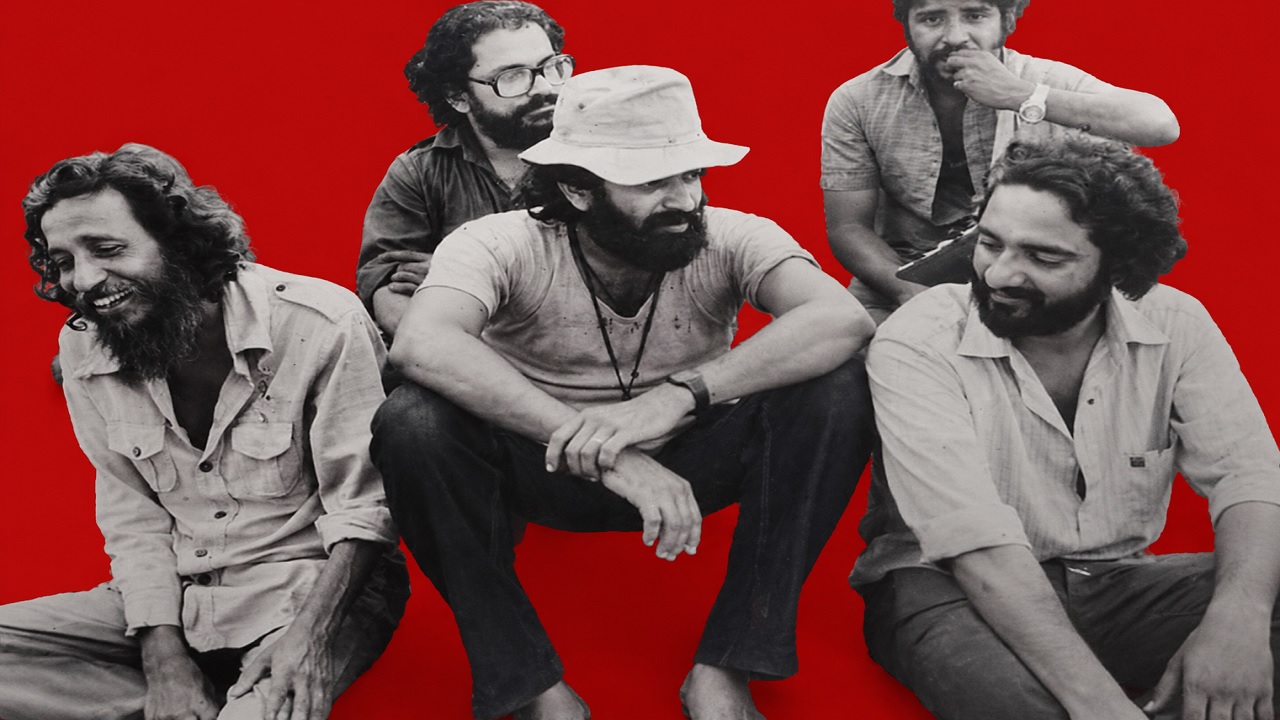
Forty years later, Amma Ariyan heads to the Cannes Film Festival with its restored 4K premiere.

Synopsis: John Abraham’s Amma Ariyan, a landmark Malayalam film shaped by Kerala’s radical Left politics of the 1970s and 1980s, will return to the global stage with a restored 4K premiere at the Cannes Film Festival on May 16. The film, produced through public contributions under the Odessa Collective, follows the death of a young activist and captures a generation marked by political idealism, state violence and emotional collapse.
“‘He liked drugs, rock music, politics too at times. He was very confused when I met him. We talked politics. I tried to tell him political beings are basically human. He seemed to understand, but he was always evasive.’”
This is how Hari’s roommate Ayyappan describes him to Purushan in Amma Ariyan – a man torn between rebellion and uncertainty, much like a generation of Kerala’s youth drawn to extremist politics during the turbulent 1970s.
Hari was not written as a triumphant revolutionary hero. He was fragile, restless and disillusioned – a failed hero carrying the anxieties of his time.
Four decades later, John Abraham’s radical yet deeply layered cinematic masterpiece is returning to the world stage. The restored 4K version of Amma Ariyan will have its world premiere at the Cannes Film Festival on May 16, making it the only Indian feature selected for a premiere at this year’s festival.
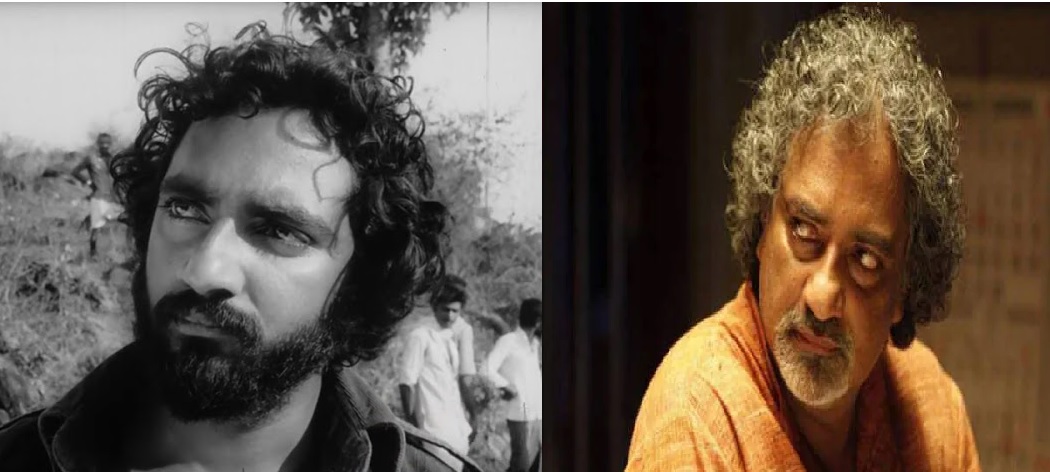
Actor Joy Mathew
Made under the banner of the Odessa Collective, the film itself was an act of people’s cinema. Its production was funded directly by ordinary people across Kerala, turning the making of the film into a political and cultural movement.
John Abraham died at 49, a year after Amma Ariyan – his final film.
Speaking to South First, Joy Mathew, who played Purushan, remembers not just the making of the film, but an entire era – the dreams of revolution, the wounds of a generation, his dearest John Abraham, and his enduring creation, Amma Ariyan.
Joy Mathew reflected on why Amma Ariyan continues to resonate four decades after its release. He said he did not enter the film as an actor, but as someone deeply connected to the extremist movements of that era.
He described Hari, the tabalist in the film, as a figure shaped by police brutality, emotional collapse and Kerala’s turbulent Left rebel phase in the 1980s.
“John Abraham saw the film as a historical document of Kerala,” he said, adding that its cinematic language, costume design and narrative style still feel fresh to film students today.
Joy Mathew said his association with the film came through the Odessa movement and political activism rather than formal acting workshops. “Many former Naxalites and activists across Kerala supported the film in different ways,” he recalled.
Reflecting on the generation portrayed in the film, he said revolutionaries were not stereotypes. “People imagine red shirts, but many of us wore denim jeans, rode Yezdi bikes and carried music, books and contradictions within us.”
He described Hari as a character drawn from fragments of many confused youths of that period – people caught between ideology, art and personal struggles.
Speaking about Left politics today, he said progressive thinking remains part of Left ideology. “Left is not just about a red flag. Feminism, trans rights and social justice are also part of it,” he said, adding that the dream of armed revolution has largely faded in India.
Also Read: Prof KN Panikkar: A warrior historian who battled fascism
Amma Ariyan was John Abraham’s reflection on Kerala’s extremist movement in the late 1970s and the deaths of many of his close friends involved in it. He described the film as a deeply personal “letter to a mother” about the silence, pain and emotional struggles of his generation.
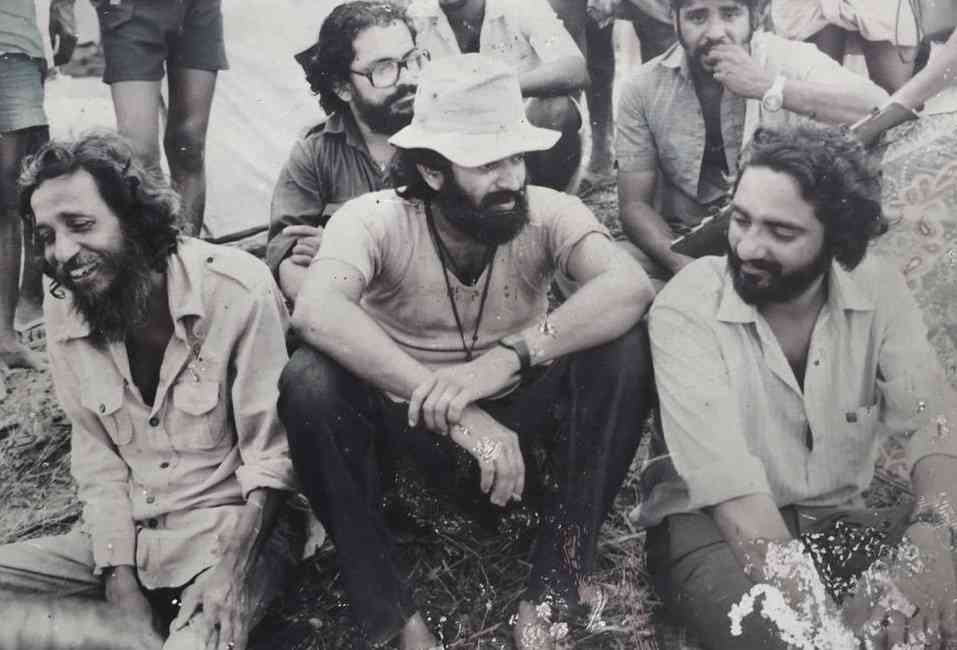
John Abraham, Venu and Joy Mathew
Abraham believed cinema should connect directly with ordinary people, awaken social awareness and remain accessible through initiatives like Odessa.
Speaking to South First, film critic Sajil Sreedhar, who closely interacted with John Abraham, described Amma Ariyan as “an experiment born from the people”.
“The Odessa Collective gathered funds from ordinary people – from ₹10 to ₹100, whatever they could contribute. It was never meant to be a commercial film,” Sajil recalled.
He said the film mirrored John Abraham’s own life and contradictions. “John was an intellectual, but not everyone could understand his thoughts or the contradictions within him. Those conflicts were visible in his characters too. He drifted between alcohol, ideas, revolution and friendships.”
Sajil also spoke about Kerala’s intellectual culture during that period.
“There was a time when intellectual mania was widespread in Kerala. Young people carried Kalakaumudi magazine almost as a symbol of intellect. But John was different. Having studied at the Pune Film Institute, his ideas were far ahead of his time and were not widely accepted then.”
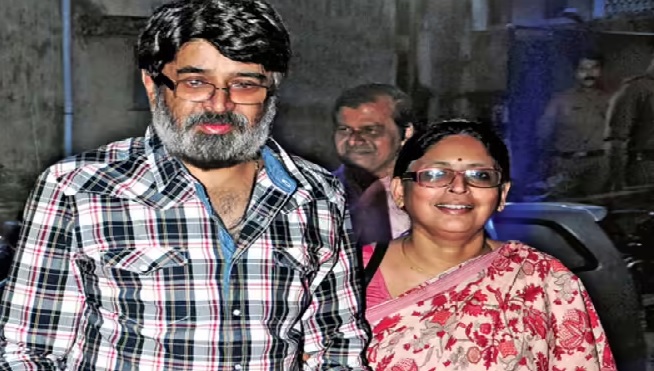
Venu and Beena Paul
“Decades later, his voice continues to reach newer generations, who are now able to understand and connect with his cinema more deeply,” he added.
For Shivendra Singh Dungarpur of the Film Heritage Foundation, restoring Amma Ariyan was a personal mission shaped by screenings at the Film and Television Institute of India, where archivist P. K. Nair introduced students to John Abraham’s work.
No original camera negative survives. The restoration of Amma Ariyan relied on two severely damaged prints preserved at the National Film Archive of India.
The painstaking process, undertaken by the Film Heritage Foundation, L’Immagine Ritrovata and the Odessa Collective, involved extensive manual repair work, including more than 4,000 sound corrections.
Cinematographer Venu and editor Beena Paul, both part of the original film, supervised the restoration.
Also Read: The real Kerala story: History, pluralism, and food culture beyond polemics
The film follows the aftermath of Hari’s (Harinarayanan) suicide and the journey his friends undertake to inform his mother in Fort Kochi. Hari is a young artist drawn into Kerala’s radical Left politics. Purushan (Joy Mathew), who was preparing to leave for Delhi for higher studies, abandons his plans after coming across Hari’s unidentified body in Wayanad.
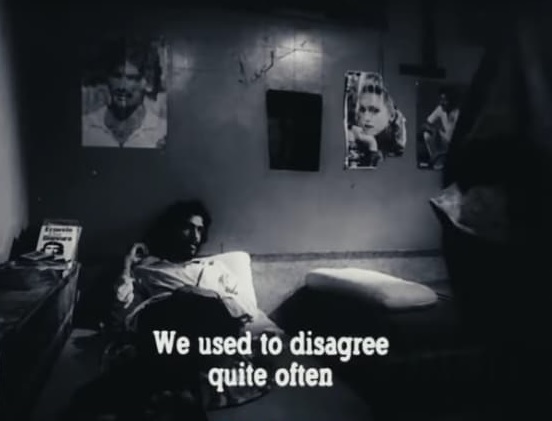
A screen grab from the movie.
Disturbed by the death, Purushan travels across Kerala to uncover Hari’s identity and reach his family.
Along the way, he meets students, activists, musicians, theatre workers and Hari’s old friends. Their journey through places like Beypore, Kodungallur and Vypin slowly turns into a collective political and emotional experience, tracing Kerala’s history of resistance and dissent.
Through Purushan’s reports and reflections, the film captures a period marked by state violence, youth radicalisation and political uncertainty.
The film’s most haunting element is Hari’s transformation.
At first, his room is filled with posters of cricketers and film stars – symbols of a carefree youth shaped by popular culture. Slowly, the walls change. The faces of entertainers and sports icons give way to Che Guevara, Karl Marx and Mao Tse-tung.
Hari changes alongside them – from a young man who once refused to play the tabla for political programmes into someone pulled deep into radical Left activism.
Ayyappan, the roommate who played a key role in politicising Hari, remembers him as confused and restless. Through scattered memories and conversations, the film pieces together the portrait of a generation searching for meaning through revolution.
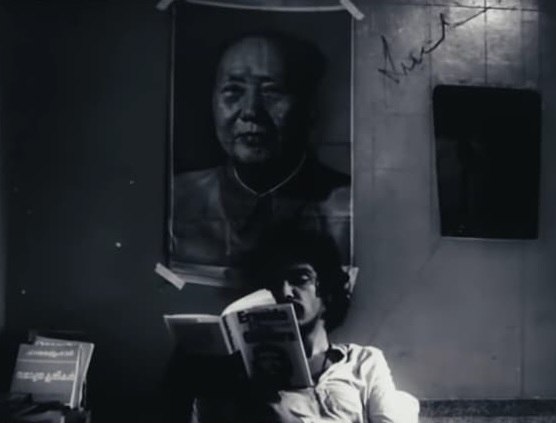
A screen grab from the movie.
Hari moves from idolising cricket and pop culture to taking part in an attack on a police station and seizing arms, believing violence could offer purpose or redemption.
His suicide is not framed merely as a personal tragedy or the despair of an artist losing his hands.
Instead, the film places it within the larger emotional landscape of revolution, where death, sacrifice, heroism and political idealism become dangerously intertwined. One friend remembers Hari breaking a musical instrument, almost as if art itself had collapsed within him.
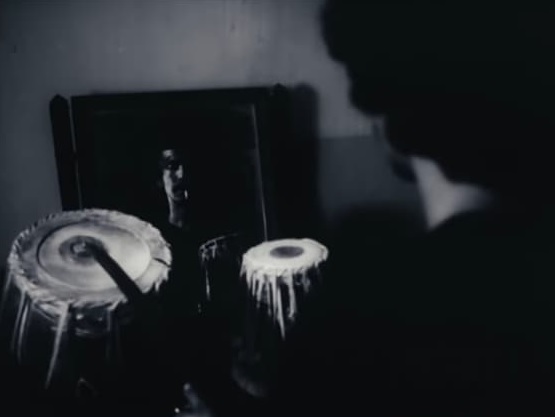
A screen grab from the movie.
In Kerala during that period, Hari was never just one individual. He represented a generation of young people consumed by the romance of extremist ideologies and the melancholy and intensity of Left politics that shaped the 1970s and 1980s.
It was a time when rebellion carried poetry and self-destruction in equal measure – a political and emotional atmosphere that now feels distant, almost unimaginable.
When Hari’s mother finally learns of his death, she quietly asks, “Wasn’t it a suicide?” – a line that shows how many mothers of that era sensed the emotional and political turmoil within their children, even if they could never fully understand the worlds they had entered.
“His dreams, his hopes… I, his mother, could never understand them. I cannot even weep.”



