

Published May 13, 2026 | 8:00 AM ⚊ Updated May 13, 2026 | 8:00 AM

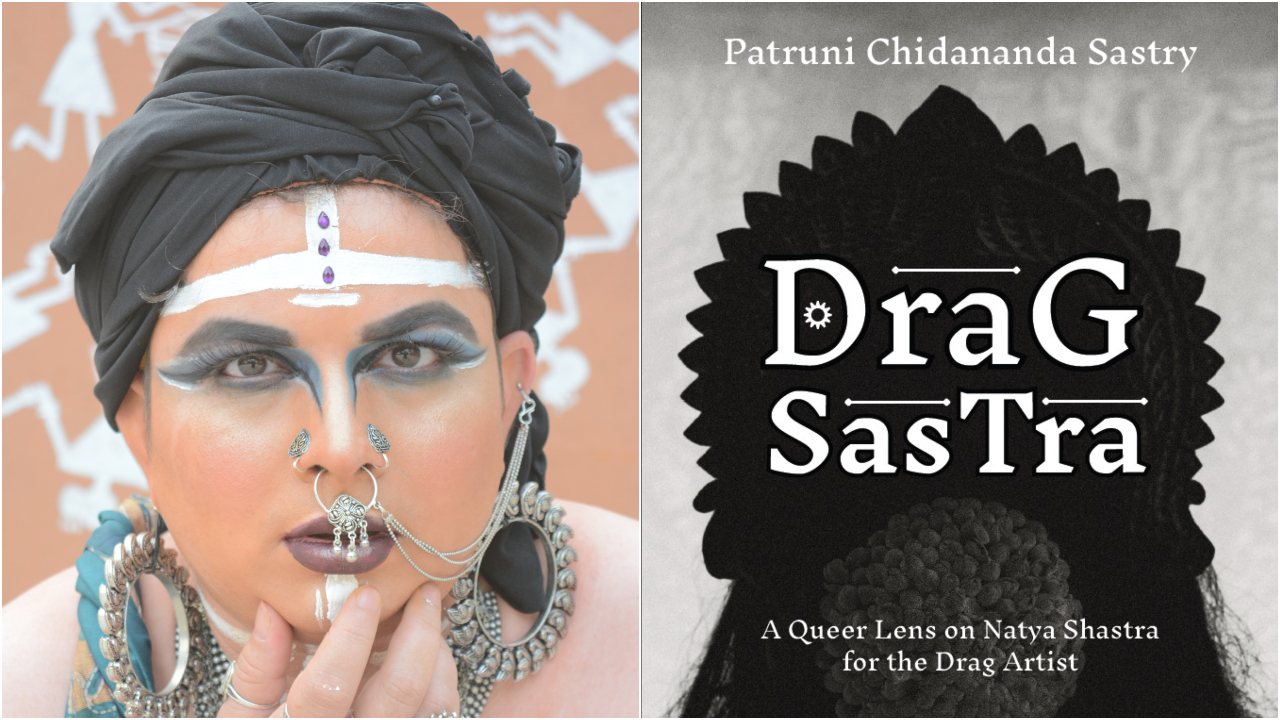
Drag Sastra doesn’t reject global influences but, at the same time, grounds drag in Indian culture.

Synopsis: Patruni Chidananda Sastry’s ‘Drag Sastra’ reimagines drag through Indian classical traditions, drawing on texts like Natya Shastra and performance forms such as Theyyam and Yakshagana. The book challenges Western-centric views, showing drag as a method of identity construction rooted in Indian culture. Sastry bridges tradition and queer expression, reclaiming histories and expanding drag beyond nightlife into storytelling, protest, and daily life.
In his recently launched book ‘Drag Sastra’, queer artist Patruni Chidananda Sastry looks at drag through the lens of Indian classical traditions.
For many people in India, drag is still viewed through a narrow lens. It is associated with nightlife, performance clubs, or borrowed Western culture. Hyderabad-based artist Patruni Chidananda Sastry claims that drag is something older and deeper and has linkages with the Indian classical dance form.
A trained classical dancer and a long-time practitioner of drag, Sastry has spent years navigating the space between tradition and self-expression.
His second book, Drag Sastra has emerged from that journey. It attempts to understand drag through Indian performance traditions. The book was launched recently at the Hyderabad Dance Festival. Published by Ukiyoto, the book is available on Amazon, Flipkart, and Ukiyoto’s website.
“I have been doing drag for over six years, and before that I was a classical dancer. There was always this comparison, personally and socially, between drag and dance,” says Sastry, who identifies himself as a pansexual. What struck Sastry over time was how differently the two were perceived. While classical dance is a revered art form, drag is still dismissed as frivolous, overly sexualised, or even “anti-social.”
That difference in perception became his premise for the book.
Sastry began with a simple question: why is drag always explained through Western frameworks? Why not look at Indian traditions instead?
In Drag Sastra, he turns to classical texts like the “Natya Shastra” and “Abhinaya Darpana”, and re-reads them through a queer lens.
“The idea that a performer transforms into another identity is already there. The person on stage is not limited by who they are socially.”
Sastry, a passionate advocate of LGBTQIA+ rights, points out that Indian storytelling has always included such transformations. From mythological figures like Mohini, where Vishnu takes on a female form, to theatre traditions where performers step into roles beyond their own gender, these ideas are not new.
“What fascinated me was that almost every region in India has some form of gender performance,” he says. In the book, the author traces this across traditions like Theyyam, Bhoota Kola, Yakshagana, and Therukoothu are forms where identity, costume, and transformation are central.
Also Read: Axis Bank’s ‘Pink Capital’ report to boost LGBTQIA+ financial inclusion
In the book, Sastry puts forth an interesting idea that drag is not just a performance, it is a method.
Explaining this in a simple way, he says, “In corporate life, people talk about ‘personas’ all the time. You behave differently with clients, friends, or family. You are constantly adapting.”
According to him, drag is a conscious version of that process. “It’s about how you construct, amplify, and perform identity. It’s not limited to stage shows or costumes. A drag artist does not always need to perform a dance or a scripted piece. Sometimes simply dressing up and presenting oneself becomes the performance.”
This approach expands drag beyond nightlife or entertainment, placing it in dance, theatre, protest, storytelling and even daily life.
A large part of the book Drag Sastra explores how classical concepts translate into drag today.
For instance, rasa, the emotional aspect in a performance, is ubiquitous in drag, according to Sastry. In Bharat Muni’s “Natya Shastra”, a treatise on performing arts, the navarasas have an important role to play in classical dance form. The performer has to convey navrasa or the nine emotions, through his body language and expressions.
“A reveal in drag creates surprise. That’s adbhuta rasa. If a performance provokes anger or discomfort, that’s raudra rasa.”
He takes his own work to emphasise this. In one performance, “Pyres of Pride”, he reflects on queer lives lost to violence and erasure in the larger LGBT movement. The performance uses costume, storytelling, and visual shifts to evoke anger and grief.
Citing another example, he describes a performance about a mother giving birth to an intersex child. The piece moves through shock, confusion, care, and acceptance, building karuna rasa, or compassion. “I didn’t want the book to stay abstract. I wanted to show how these ideas live in practice.”
One of Sastry’s biggest concerns is how limited the public understanding of drag remains in India.
“People think drag is only nightlife and automatically sexual. That’s not true.”
He points out that Indian culture has long embraced public forms of performance involving gender play, whether in folk theatre or community rituals. These were not hidden or marginal; they were part of everyday life.
Drag Sastra doesn’t reject global influences but, at the same time, grounds drag in Indian culture. “If we disconnect art from culture, it loses its meaning. When you speak in a language people understand, the connection becomes stronger,” he explains.
For him, this is also about reclaiming histories that were disrupted or sidelined over time. He sees the book as a starting point, a way to open dialogue between classical forms, contemporary drag, and queer expression. “I want artists to feel that they can root their work here. That drag can be Indian, local, and still powerful.”
Drag Sastra shifts the conversation from asking whether drag belongs in India to recognising that, in many ways, it always has.



