

Published Jan 05, 2026 | 9:58 AM ⚊ Updated Jan 05, 2026 | 9:58 AM


Synopsis: The Hyderabad neighbourhood of Abids turns alive every Sunday with the sight of books neatly lined up alongside the footpaths. A large number of sellers line the roads of Abids, spreading their stock across tarpaulin sheets, makeshift shelves, folding tables, and even parked motorcycles.
Every Sunday evening in the Hyderabad neighbourhood of Abids, there comes an old man looking for the same book.
He wears a mask, hat and large glasses, and he moves slowly from one footpath stall to the next, asking the same question. Woh Lee Child wala aaya kya? (Has the Lee Child one come?) The answer is always no. Sometimes the sellers shake their heads before he finishes the sentence, already knowing what he will ask.
For Muhamed Younus, who has been selling books on Abids’ pavements for over forty years, the man has become a kind of marker of time. “He’s been asking for months,” Younus said, seated behind a low table stacked with paperbacks. “But we don’t stock old books now.”
The statement explains much of what Abids reads today.
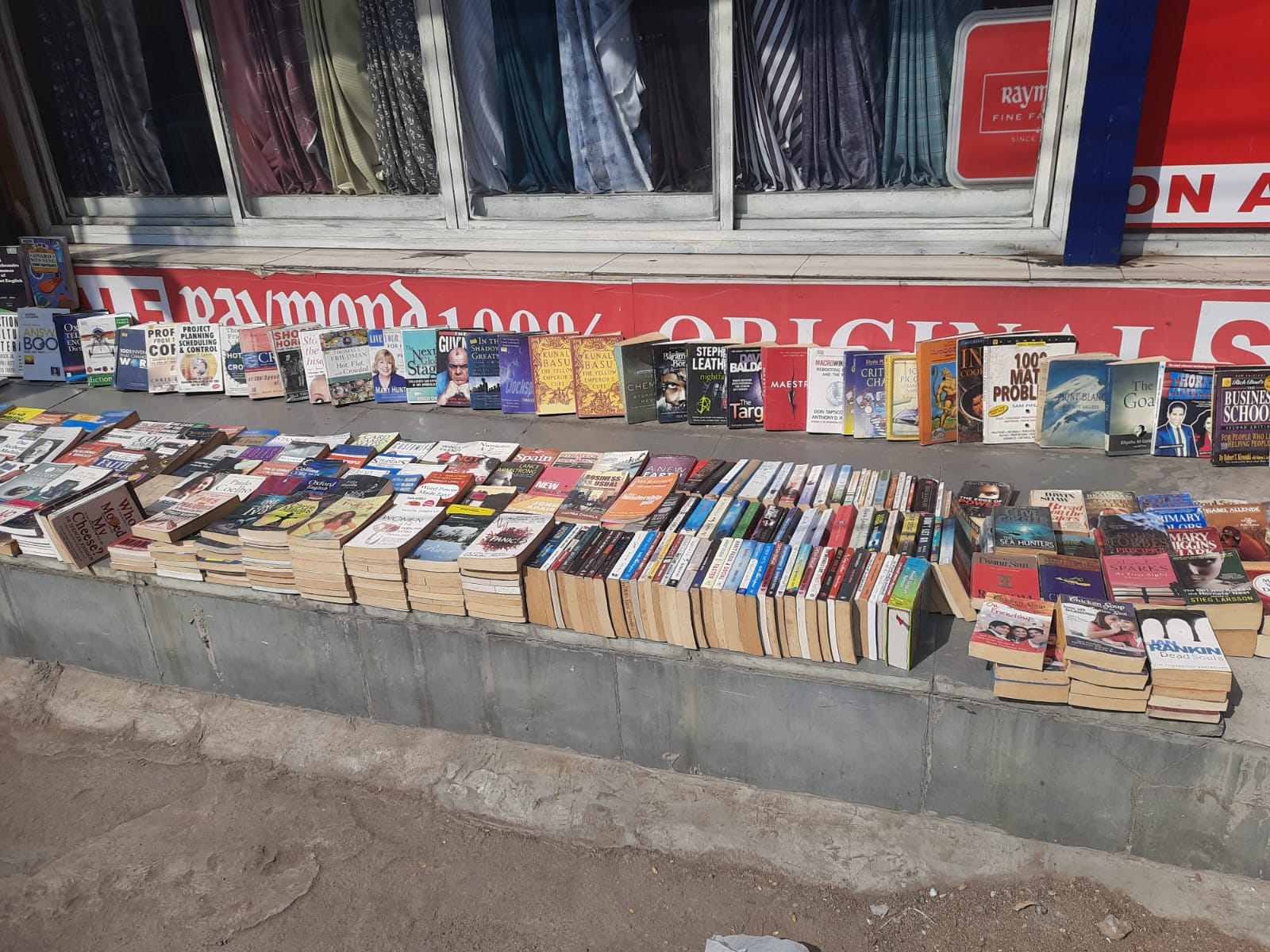
Books lying on the street on a Sunday in December at Abids
Every Sunday, a large number of sellers line the roads of Abids, spreading their stock across tarpaulin sheets, makeshift shelves, folding tables, and even parked motorcycles.
The display looks abundant at first glance. But closer inspection reveals how tightly edited these collections are. Sellers insist they only stock what moves. Anything that does not sell disappears.
Younus is blunt about it. “Old books don’t sell anymore. Only new ones,” he said, arranging a stack of glossy paperbacks.
The logic is simple: Space is limited, and every unsold book is a loss. His customers are not browsing for forgotten classics or chasing out-of-print titles. They are looking for what they already recognise.
The dominant genres are fiction, romance, psychology, and self-help. Almost all of them are paperback. Almost all of it is by foreign authors.
Books like Atomic Habits, Do Epic Shit, Powerless, and Five Survive appear across multiple stalls, sometimes in different editions, sometimes in varying states of wear. The covers are familiar from Instagram posts and bestseller lists, their popularity preceding them. These are the titles younger readers reach for first, flipping through quickly before asking the price.
Exam preparation books, once a mainstay of street book markets, are noticeably absent. There are no UPSC guides, no SSC manuals, no thick competitive exam volumes. A few dictionaries linger on the edges of the piles, but they are not centre stage. The shift mirrors the crowd itself.
“People who come shopping to Abids buy books and go,” Younus said. There is no loitering culture here anymore.
The prices reflect this transactional rhythm. The cheapest books start at around ₹20, often dog-eared or sun-faded. Usually, these are children’s books.
Most books, old or new, hover closer to ₹150 or ₹200, but no price is fixed. Bargaining is not just expected; it is the operating system. The same book can sell for different amounts within the same hour, depending on who is asking and how long they are willing to negotiate.
Despite visible foot traffic, sellers said that business is thinner than it once was. One bookseller attributed the drop at this particular time to the Hyderabad Book Fair, which is currently underway.
“It’s reduced because of online,” one shopkeeper said, without bitterness, as if stating a weather condition.
The sourcing of the books seems to be a more sensitive subject. Some sellers said their stock comes from Mumbai and Delhi, often in bulk. Others refused to answer the question altogether, citing a lack of permission to share details.
The opacity is telling. These stalls operate in an informal economy, visible yet vulnerable, and the books themselves seem to arrive through channels best left unnamed.
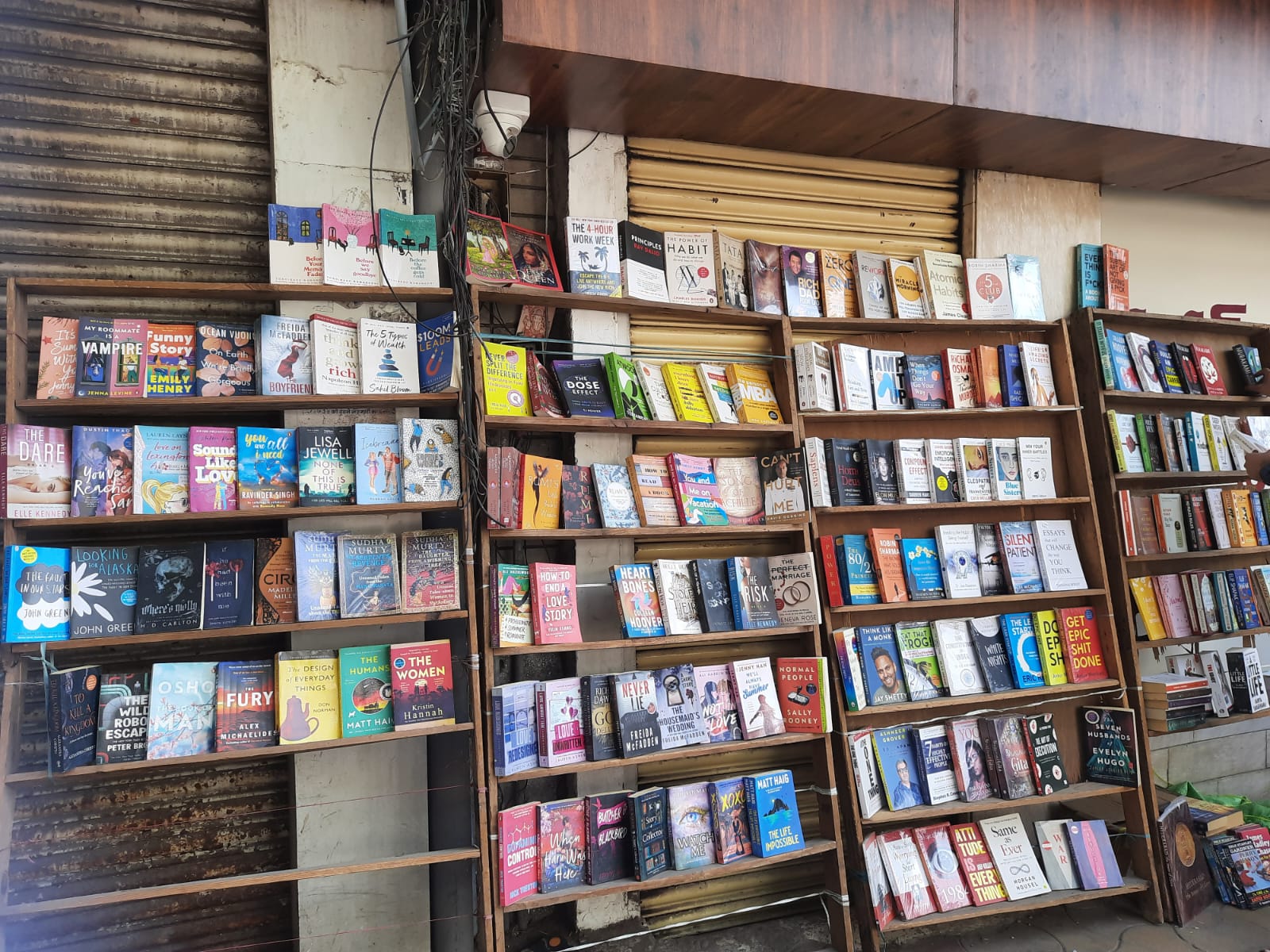
A bookshelf in Abids.
As the evening goes on, most people who stop at the stalls leave with a book. The exchange is quick: A few pages flipped, a price asked, a counter offered. Money changes hands, and the crowd keeps moving.
A passerby in his mid-fifties, walking very slowly, glanced at the stalls with a sense of nostalgia.
“At one point, this road used to be full of books,” he said, already continuing on his way. “Now there’s barely anything.”
It is not entirely true. There are still books there, plenty of them, but they are not trying to be everything anymore.
They are narrowly tuned to demand, trimmed of excess, shaped by algorithms even when they sit on the footpath.
The old man with the mask would return next Sunday, ask again, and again, to hear “no” as the answer. But he would leave with another book in his hand, one that sells, one that belongs to now.
In Abids, that may be the clearest definition of what survives.
(Edited by Muhammed Fazil.)


