


Published Dec 20, 2025 | 11:06 AM ⚊ Updated Dec 20, 2025 | 3:20 PM

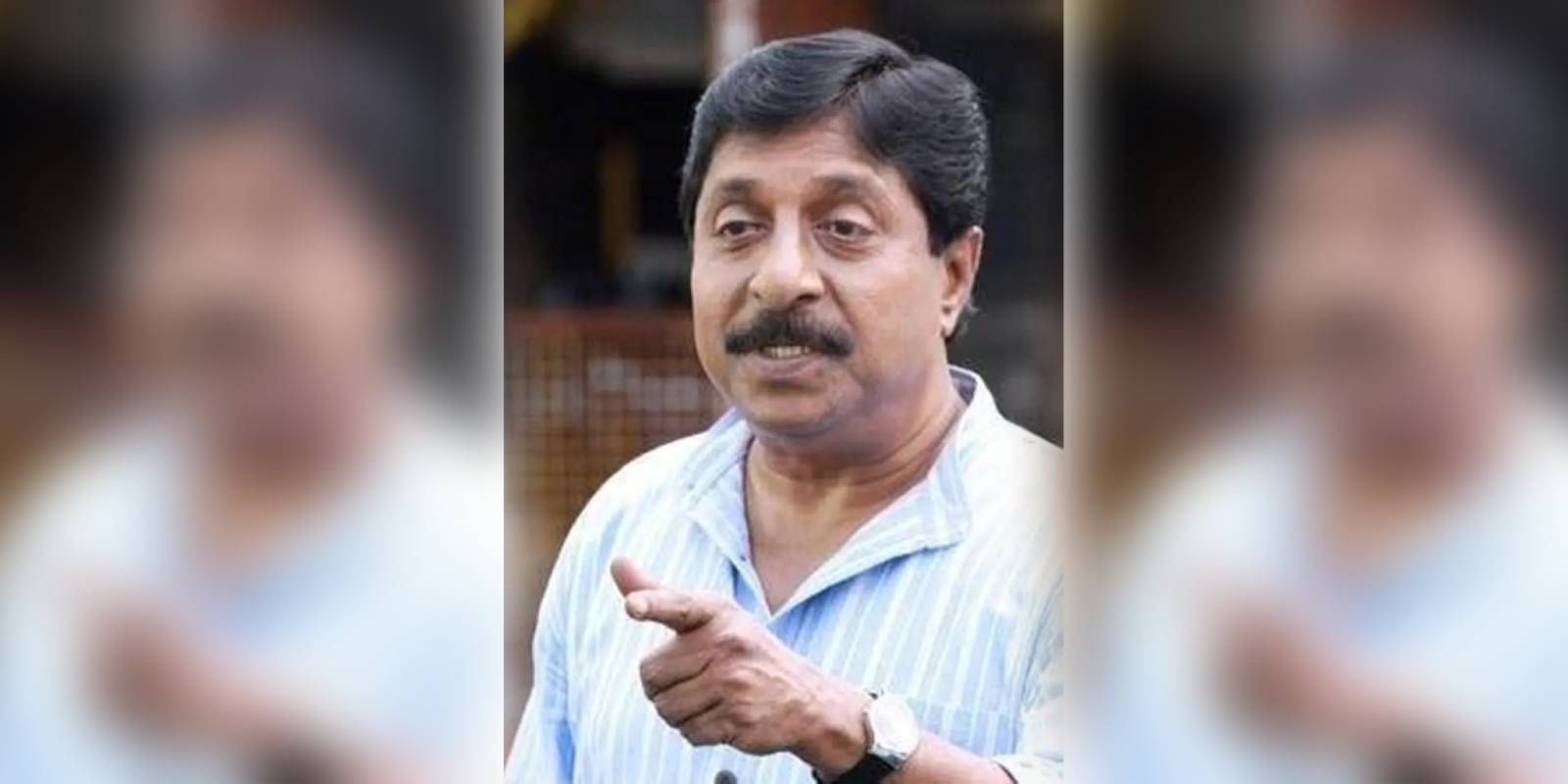
Actor- director Sreenivasan. (Supplied)
Veteran Malayalam actor, scenarist and director Sreenivasan has passed away, on Saturday, 20 December, bringing down the curtain on one of the most influential creative journeys in the history of Malayalam cinema.
He breathed his last around 8.30 am after suffering shortness of breath while on his way to a private hospital for dialysis. He was immediately taken to the Tripunithura Taluk Hospital, where doctors confirmed his death. His wife Vimala was beside him at the hospital at the time as he breathed his last.
The mortal remains will be kept at the Ernakulam Town Hall from 1 pm to 3 pm on Saturday, allowing fans and members of the film fraternity to pay their last respects. The funeral will be held at his residence in Kandanadu on Sunday, 21 December, at 10 am, with official honours.
Renowned for his razor-sharp writing and fearless social commentary, Sreenivasan carved a unique space for himself as a storyteller who never shied away from calling out hypocrisy, political doublespeak and social pretensions.
What set him apart was his rare ability to present hard-hitting realities in a refreshingly humorous and accessible manner, making his films both entertaining and deeply thought-provoking. One of the most prolific scenarists the industry has seen, Sreenivasan penned several scripts that went on to become classics, many of which continue to enjoy immense popularity decades after their release.
His writing breathed life into characters that were strikingly ordinary and unglamorous, yet profoundly real. Whether as a writer or performer, he had an uncanny knack for extracting humour from the most difficult situations, a quality that made his work timeless.
Born on 4 April 1956, in Koothuparamba’s Patiyam village, Kannur Sreenivasan carved a unique place for himself in Malayalam cinema as an actor, screenwriter, director, and social commentator whose sharp satire reshaped popular filmmaking.
Sreenivasan’s personal life was deeply rooted in cinema as well.
He is survived by his wife, Vimala Sreenivasan, and sons Vineeth Sreenivasan and Dhyan Sreenivasan, both of whom have successfully followed in their father’s footsteps as actors, directors, and filmmakers.
He had been resting at his residence in Udayamperoor, Ernakulam for an extended period due to illness.
Following a sudden deterioration in his health, he was admitted to a hospital in Thripunithura, where his death was confirmed on Saturday morning, marking the end of an era in Malayalam cinema.
He entered the film industry in 1976 after completing an acting diploma, making his debut with Manimuzhakam, directed by P. A. Bakkar.
As a director, he delivered two landmark films — Vadakkunokkiyanthram and Chinthavishtayaya Shyamala — both of which were critically acclaimed and commercially successful.
His on-screen characters, many written and portrayed by himself, remain etched in popular memory for their authenticity and their ability to evoke laughter even years later.
Sreenivasan’s scripts such as Sandesham achieved cult status for their bold political satire, while a long list of films from the 1980s and 1990s that he scripted — including Gandhi Nagar Second Street, Varavelppu, Sanmanasullavarkku Samadhanam, Aram + Aram Kinnaram, and Mukendetta Sumitra Vilikkunnu — continue to command a loyal fan following.
Beyond acting, Sreenivasan also tried his hand in dubbing, lending his distinctive voice to Mammootty in films such as Vidhichathum Kothichatum, Vilkanundu Swapnaam, Oru Madapiravinte Katha, and K. G. George’s acclaimed Mela.
He also dubbed for Tamil actor Thyagarajan in Oru Muthassikkatha, showcasing his versatility behind the scenes.
A multiple State Film Award winner, Sreenivasan was recognised for his exceptional storytelling and cinematic vision.
His honours include Best Story for Sandesham, Best Screenplay for Mazhayethum Munpe, Best Popular Film for Chinthavishtayaya Shyamala, Best Film for Vadakkunokkiyanthram, and a Special Jury Award for Thakarachenda.
Notably, he also won the State Award for Best Film for his debut directorial venture, underlining his mastery across creative roles.
With his passing, Malayalam cinema loses a creative force whose genius lay in blending satire, social realism and humour with effortless ease. Sreenivasan leaves behind a legacy of films that not only entertained generations but also held up a mirror to society, ensuring his voice will resonate long after the final credits roll.
Veteran Malayalam actor and Dadasaheb Phalke Award winner Mohanlal paid an emotional tribute to writer-actor Sreenivasan, saying his departure felt like losing a part of Malayali society itself. Mohanlal said Sreenivasan returned “without saying goodbye” and described their bond as one that went far beyond professional collaboration.
He noted that every Malayali saw themselves in the characters created by Sreenivasan, who uniquely portrayed the dreams, disappointments, pains and joys of the middle class.
Mohanlal said iconic characters like Dasan and Vijayan became timeless only because of the magic of Sreenivasan’s writing, adding that his creations were reflections of society that captured pain through laughter. Recalling their journey together on and off screen, Mohanlal said they lived like Dasan and Vijayan—laughing, quarrelling and making up—before bidding an emotional farewell to his “beloved Sreeni”.
Actor and MLA M Mukesh also mourned the loss, calling Sreenivasan a soulmate, guide and brother of over four-and-a-half decades. Mukesh said Sreenivasan represented an innocent, unconditional love that stood by him through life’s ups and downs.
Remembering their years of acting, producing films and travelling together, Mukesh described Sreenivasan as an irreplaceable shade tree in times of crisis, whose absence leaves a void that cannot be filled.
Kerala Legislative Assembly Speaker A N Shamseer on Saturday condoled the demise of Srinivasan, terming his death a great loss to Kerala and the Malayalam film industry.
In a condolence message, Shamseer said Srinivasan was a rare creative talent who consistently brought socially relevant issues closer to the public through simple, heart warming and relatable presentations.
Through his films and performances, he powerfully portrayed the sorrows, struggles and hopes of ordinary people, leaving a lasting impact on society.
The Speaker noted that Srinivasan’s unique ability to blend humour with sharp social criticism set him apart and ensured his contributions would remain unforgettable in the history of Malayalam cinema.
“Even time cannot fill the void created by his demise at this moment of grief,” Shamseer said.
He also expressed solidarity with the bereaved family members, colleagues and countless admirers of the filmmaker-actor, sharing their sorrow during this difficult time.
CPI(M) state secretary MV Govindan also paid rich tributes to the veteran actor, describing him as an immortal artist who profoundly shaped the thoughts, imagination and sense of humour of Malayalis.
In a condolence message issued after the demise of the legendary filmmaker, Govindan said Sreenivasan’s passing marks the end of an era in Malayalam cinema, though his creative legacy will continue to inspire generations beyond the boundaries of time.
“He who deeply touched the thoughts, imagination and sense of humour of Malayalis has stopped writing stories. But that great genius will continue to inspire the world of cinema,” the CPI(M) leader said.
Recalling his last meeting with Sreenivasan, Govindan noted that despite various physical disabilities, the filmmaker remained intellectually vibrant.
“Even when I last saw him, I felt that Sreenivasan was constantly refreshing his thoughts,” he said, underlining the artist’s lifelong commitment to creativity.
Govindan highlighted Sreenivasan’s unique ability to portray the struggles and aspirations of the common man on the silver screen, blending sharp social commentary with humour.
“He had a rare talent to bring serious issues of everyday life to cinema with wit and warmth,” the statement said.
Tracing his early life, Govindan said Sreenivasan’s childhood association with libraries played a crucial role in shaping his passion for reading, drama and acting, which later blossomed into a multifaceted cinematic career.
Over several decades, Sreenivasan shone as a writer, actor and thinker, leaving an indelible mark on Malayalam cinema.
“Sreenivasan’s creative ability to present profound themes with a large heart will be remembered as long as cinema exists,” Govindan said, extending condolences to the bereaved family and expressing solidarity with the Malayalam film fraternity in their moment of grief.
Leader of the Opposition V D Satheesan has described legendary actor-screenwriter Sreenivasan as a unique artist who reshaped Malayalam cinema by portraying the lives of “small people in a big world and big people in a small world” with extraordinary sensitivity.
In a condolence message, the Opposition Leader said Sreenivasan’s five-decade-long career stands apart for achievements “no one else can reach,” highlighting the depth of his writing and the breadth of his acting.
Referring to Sreenivasan’s oft-repeated remark that filmmaker Priyadarshan’s “trick” made him a screenwriter, the leader noted that time had proven it to be Malayalam cinema’s great fortune.
“Like gold extracted from the earth, most of the characters Sreenivasan wrote and portrayed were deeply familiar to us,” the message said, adding that his work redefined the idea of a hero in Malayalam films.
Classics such as Thalayana Manthram, Vadakkunokkiyanthram and Sandesham were cited as timeless examples of his craft.
The Opposition Leader also remembered Sreenivasan as a symbol of willpower and fighting spirit, whose films captured the many layers of an average Malayali’s life — love and longing, helplessness and innocence, friendship and hatred, sharp satire and uncomfortable truths.
“What Sreenivasan shouted out loud carried a powerful message to Kerala society,” the message said.
Stating that there is hardly a Malayali who does not recall Sreenivasan’s dialogues or scenes at least once a day, the leader said his work transcended boundaries of age, caste, religion and politics.
“Farewell to a unique talent of Malayalam cinema, an innocent man, a lover of humanity and a dear friend,” Satheesan said in his condolence message.
Cultural Affairs Minister Saji Cheriyan on Saturday said Kerala has lost an extraordinary talent with the demise of veteran actor, screenwriter and director Sreenivasan, calling his passing an irreparable loss to Malayalam cinema.
In a condolence message, the minister said Sreenivasan amazed the film world for nearly half a century through his multifaceted contributions as an actor, screenwriter and director.
“There is no other artist who brought the life experiences of the common man to the silver screen with such originality and simplicity,” he said.
Cheriyan noted that several films which changed the course of Malayalam cinema were born from Sreenivasan’s pen.
Works such as Nadodikkattu, Varavelppu, Mithunam and Pattanapravesham continue to live in the minds of audiences for the way they portrayed human conditions, while films like Vadakkunokkiyanthram and Chinthavishtaya Shyamala elevated the artistic stature of Malayalam cinema.
Describing him as an artist who used humour as a tool for thought rather than mere laughter, the minister said each character portrayed by Sreenivasan felt like a beloved presence in every Malayali household.
He expressed solidarity with the bereaved family members and film lovers, sharing their grief at the loss of an artist who keenly observed life and transformed it into enduring art.
Chief Minister Pinarayi Vijayan on Saturday condoled the death of Srinivasan, describing his passing as an “irreparable loss” to Malayalam cinema and to Kerala’s cultural life.
In a condolence message, the Chief Minister said Srinivasan was among the rare filmmakers who succeeded in bringing the life of the common man to the silver screen and elevating audiences’ social consciousness through humour and thought.
He noted that Srinivasan broke several entrenched stereotypes in cinema and fearlessly presented ideas that often invited sharp criticism, while still earning respect even from those who disagreed with him.
“Srinivasan creatively transformed the way Malayalam cinema entertained audiences and used satire as a powerful medium to express his social views,” Vijayan said.
He added that Srinivasan, who excelled as a story writer, screenwriter, director and actor, carved out a distinct identity in every field he worked in, and that many of his characters would remain etched in the minds of Malayalis forever.
Recalling his personal association, the Chief Minister said Srinivasan’s death was also a personal loss.
He fondly remembered an interview they did together, during which Srinivasan won his heart with his humour, and described him as a symbol of love and friendship with whom he shared a warm relationship.
Born and raised in Patiyam in Kannur district, Srinivasan’s life journey—marked by perseverance and self-made success—stands as a lesson in diligence, the Chief Minister said, adding that his passion for cinema and relentless effort made him an enduring inspiration.
(Edited by Sumavarsha, with inputs from Dileep V Kumar)


