


Published Dec 20, 2025 | 11:05 AM ⚊ Updated Dec 20, 2025 | 11:05 AM

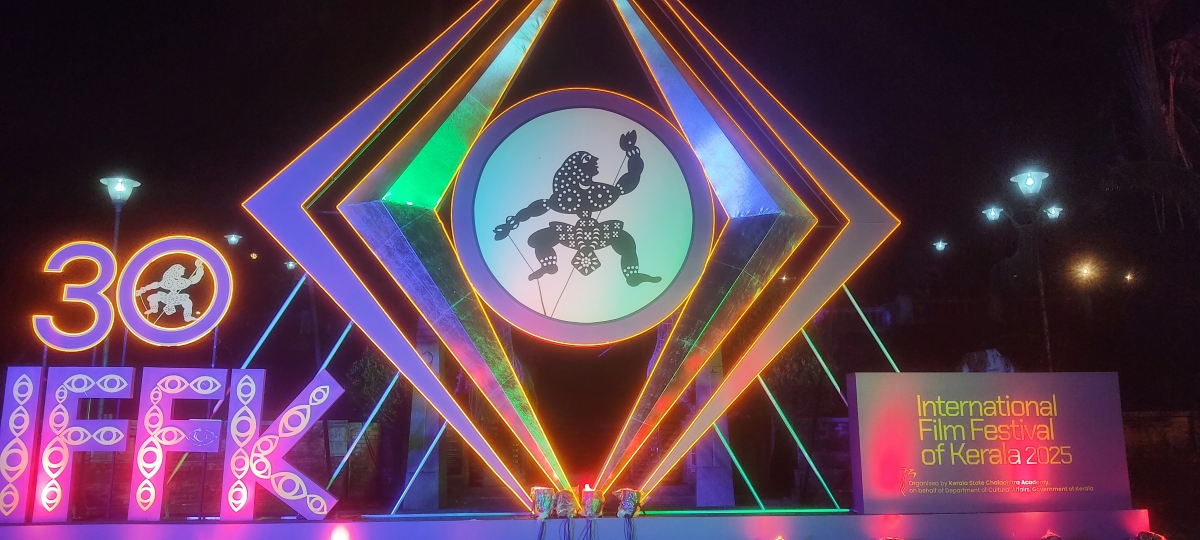
30th IFFK. (Supplied)
Synopsis: Resul Pookutty, chairperson of the State Chalachitra Academy and organiser of the film festival, said at a press conference said the ministry did not provide any reasons for the denial. He added that, through personal sources, he learned the issue was linked to diplomatic concerns involving certain countries.
Earlier this week, the prestigious International Film Festival of Kerala (IFFK), was put in a tight spot, with the Ministry of Information and Broadcasting (I&B) not granting censor exemptions to 19 films scheduled to be screened at the eight-day festival held in the state capital.
However, taking a strong political stand, the Kerala government led by Chief Minister Pinarayi Vijayan gave the Kerala State Chalachitra Academy permission to screen all films as scheduled.
Following which, the academy had screened some of these films over the past two days. Meanwhile, the Union Ministry also cleared 13 additional films, including Palestine 36, Beef, Heart of the Wolf, Bamako, Battleship Potemkin, Red Rain, Riverstone, The Hour of the Furnace, Tunnels: Sun in the Dark and Timbuktu.
However, the Ministry directed the state to drop six films, citing the lack of mandatory political clearance from the Ministry of External Affairs (MEA).
The directive, routed through the Chief Secretary to the Kerala State Chalachitra Academy, sought to bar All That’s Left of You, Clash, Flames, Eagles of the Republic, Yes, and A Poet: Unconcealed from the festival.
The 30th IFFK began on 12 December and is ended on Friday, 19 December.
Resul Pookutty, chairperson of the State Chalachitra Academy and organiser of the film festival, said at a press conference said the ministry did not provide any reasons for the denial. He added that, through personal sources, he learned the issue was linked to diplomatic concerns involving certain countries.
He said he had spoken to Congress MP Shashi Tharoor regarding the matter, which helped resolve the issue to a large extent. Pookutty also said film cancellations occurred on two consecutive days because the academy received oral approval for censor exemptions, but the official emails did not confirm them.
He said he contacted Cultural Affairs Minister Saji Cheriyan and Chief Minister Pinarayi Vijayan, both of whom assured him that all films would be screened as scheduled.
However, on Thursday evening, the academy decided to step back from screening the remaining six films. This decision followed a notice from the I&B Ministry on Wednesday, warning that stringent provisions of the Cinematograph Act, 1952, could be invoked against the organisers if the screenings continued.
Speaking to the media, Pookutty said he was prepared to screen the films with political backing from the state government. However, after receiving the ministry’s notice, the academy decided to cancel the screenings to avoid jeopardising India’s external relations. “This was purely the academy’s decision,” he said.
He added that the ban was due to bureaucratic delays rather than political interference.
Notably, Battleship Potemkin, a nearly century-old classic that has been screened worldwide, was among the films initially denied permission. Another film The Hour of the Furnaces, which had been screened by different Kerala film societies and international festivals. Both these films are considered the foundational texts in cinema history courses.
The other films that were denied permission included: A Poet: Unconcealed Poetry, Bamako, Clash, Eagles of The Republic, Heart of The Wolf, Once Upon a Time in Gaza, Palestine 36, Red Rain, Riverstone, The Hour of the Furnaces, Tunnels: Sun In The Dark, Yes, Flames, Timbuktu, and Wajib.
Incidentally, Clash (Dir: Mohamed Diab), had won the Suvarna Chakoram (Golden Crow Pheasant) Award at the 21st IFFK.
Palestine based films that were initially denied permission include Palestine 36, Yes, Once Upon a Time in Gaza, and All That’s Left of You. However, these films had already screened at the festival. Palestine 36 was the inaugural film of the event.
Veteran director Adoor Gopalakrishnan was the first to speak out against the Central government’s decision. Speaking to the media, he said, “To advertise one’s ignorance like this is very bad for the government and very bad for the people.”
He urged the authorities to reconsider the ban on the films. He said decisions should not be made solely based on film titles, and also clarified that the film Beef is not about eating cow meat. “The entire issue reflects a serious lack of understanding of cinema,” he added.
Director Kamal also expressed his displeasure over the Ministry of Information and Broadcasting’s objection to the screenings.
Several delegates raised strong objections as well. A protest march was also held at Tagore Theatre, the main venue of the festival.
Delegates voiced concern that the Centre’s move could derail the festival in the coming years.
Amid the chaos and tension of screening cancellations, here are the films that stole the spotlight at the festival.
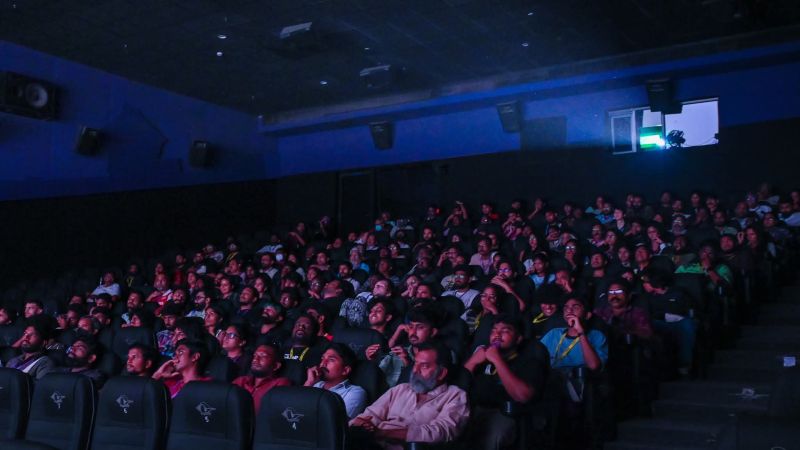
Audience at a screening at IFFK. (Supplied)
Oliver Laxe’s Sirat is one of the most popular films at IFFK. The film has a poignant theme, stunning visuals, and powerful music. It is a drama filled with intense tension and ends in a shocking tragedy. The film had housefull screenings throughout the festival.
Palestine 36 is a powerful film set during British rule in Palestine. It highlights the struggle of the Palestinian people. The film also depicts the early stages of Zionist forces driving innocent civilians into exile.
Shadowbox, co-directed by Tanushree Das and Saumyananda Sahi, stars Tillotama Shome as Maya. She plays a working woman dealing with difficult situations caused by her husband’s behaviour. Set in Kolkata, the film presents a strong narrative of love and resilience. Tillotama Shome’s performance is a major highlight.
Sentimental Value, directed by writer-director Joachim Trier, is a family drama. The film explores human emotions with restraint and sensitivity. It received a positive response from the audience.
Jafar Panahi’s It Was Just an Accident is a powerful film that has won accolades at Cannes. The story follows a group of former Iranian political prisoners. They struggle with the decision of whether to take revenge on a disabled man they believe once tortured them in prison. The film is one of the festival favourites.
Hasan Hadi’s debut film The President’s Cake is set in 1990s Iraq under the Saddam Hussein regime. It follows a third-grade student, Lamia, on a mission to bake a cake for the President’s birthday as part of a school assignment. The film delivers a strong political message and features notable performances by the lead actors.
Meanwhile, the malayalam filmmakers also showcased a slew of films with fresh narratives.
Rajesh Madhavan’s debut directorial Pennum Porattum features a fresh narrative. It avoids familiar tropes seen in other Malayalam films. All the characters speak the dialect of Palakkad town and nearby villages. This adds a raw and authentic layer to the film and stands out as a major highlight.
Jeo Baby, known for path-breaking films such as The Great Indian Kitchen and Kaathal, returns with his new film Ebb, which was screened at IFFK. The film uses an unconventional storytelling style. It tackles a bold theme by exploring polygamy.
Fazil Razak’s Moham (The Desire) tells the story of two toxic relationships. It examines male superiority and gender dynamics. The film features strong performances by Amrita Ramakrishnan, Ishak Musafir, and Beena Chandran.
(Edited by Sumavarsha)


