
Published Feb 26, 2026 | 8:00 AM ⚊ Updated Feb 26, 2026 | 8:00 AM

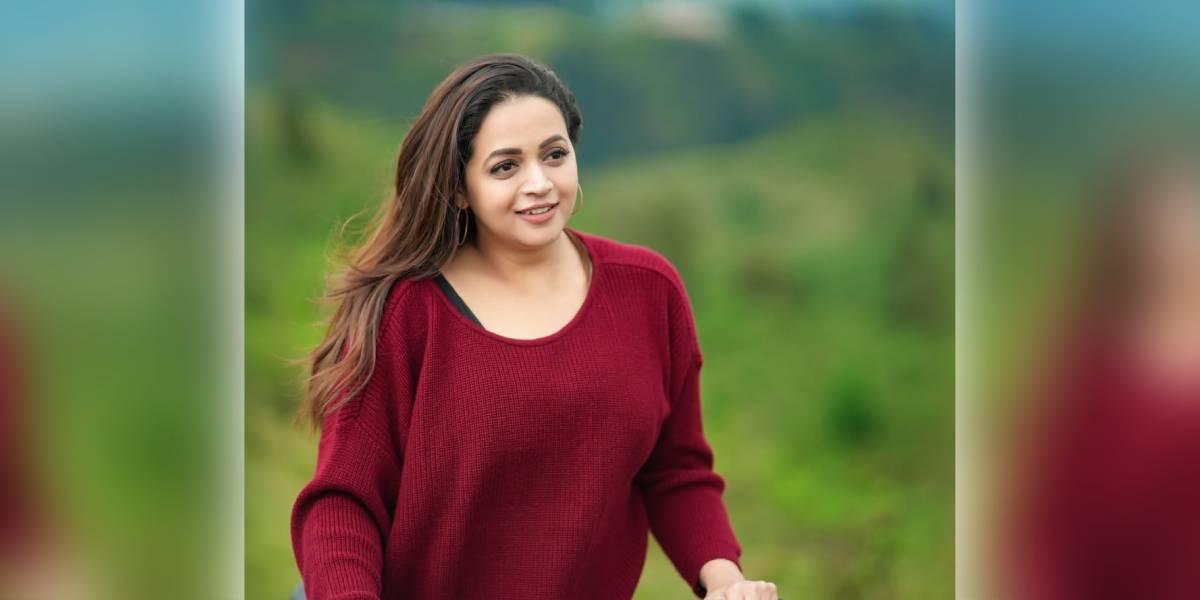
Actor Bhavana. (Instagram)
South Indian actor Bhavana has been in the industry for the past 23 years. Her 90th movie Anomie was released recently and has received good response from the audience. She was also awarded the Cine Icon Awards at the 70th Film Fare awards.
In an exclusive interview with South First, Bhavana speaks about her journey in cinema.
Q. Congratulations on your Filmfare Award. You had previously won a Filmfare Award for Chithiram Pesuthadi long ago. What kind of energy or motivation do you get from receiving such awards?
A. The Filmfare Awards are truly prestigious, and receiving one is always a joyful and surreal moment. During my school days, I watched actors like Shah Rukh Khan and Kajol holding the Black Lady and never imagined I would one day hold it myself. I won the Best Actress award for Chithiram Pesuthadi (2006) long ago, and it remains a special memory.
There were discussions about a nomination for one of my Kannada films, but it didn’t happen due to the COVID lockdown. Recently, receiving the Cine Icon Award for completing 90 films in 23 years was incredibly fulfilling. Any award is a great encouragement and motivation to keep doing better.
View this post on Instagram
Q. Anomie is your 90th film and has received wide appreciation, including during your overseas promotional tours. How do you feel about the overwhelming response to a film that carried the tagline reintroducing Bhavana?
A. More than winning awards, I feel happiest when my films do well at the box office. I had been waiting a long time for a theatrical success. I made my comeback with Ntikkakkakkoru Premondarnn (2023), Hunt (2024), and Nadikar (2024). Ntikkakkakkoru Premondarnn received good appreciation after its OTT release, and OTT platforms now have a strong influence on audiences.
Today, people go to theatres only for films that offer a complete theatrical experience. Since I hadn’t had a theatrical hit in a while, I was eagerly waiting for one. Anomie is that film. We promoted it strongly because many people feel they can always watch a good film later on OTT.
Now, the film is in its third week. Just before this interview, I received a message from a media professional praising it. There were even claps at the end of the show. We don’t have any superstars in the film, but it is receiving a warm response for its content and fresh narrative. In today’s time, a 3–4 week theatrical run is a big achievement. We are also happy that many people are watching it more than once. The film will release in Tamil in March, and the entire team is thrilled with the overwhelming response, especially for the climax.
View this post on Instagram
Q. You are also a producer and joined the project after the shooting had begun. Do you find this process interesting?
A. It wasn’t a planned decision to get into production. I entered the movie as only an actor. After the first or second schedule, the crew asked if I was interested in being part of the production. I said yes to them, as I trusted in the quality of the product and felt that I wouldn’t be disappointed. In the future, I am not going to produce films continuously, but since I liked the process, I may do it also.
Q. You had once decided to stop acting in Malayalam films, but you made a comeback with Ntikkakkakkoru Premondarnn. How do you view your journey as an actor now, especially with the success of Anomie?
A. I am not an actor who feels 100 percent satisfied. I have missed some good films for various reasons, including miscommunication and management issues, and that does make me sad.
At the same time, I have been fortunate to be part of many films. My journey has been a mix of highs and lows, with plenty of learning and unlearning. It has had both happy and disappointing moments, so I cannot describe it in just one word.
Q. You have seen hits and flops in your career spanning 23 years. How do you face social media criticism?
A. Healthy criticism is always welcome. People often have different opinions after watching a movie, and it’s important to have your own perspective. There have been times when I wasn’t very impressed with certain blockbuster films during their OTT premieres. At the same time, I’ve wondered why some movies I genuinely liked didn’t perform well commercially. Healthy criticism is fine, but criticizing someone when they are mentally down is not right. People can like or dislike films, but expressing those views without hurting others is the better approach.
Q: You have acted in many Kannada films. How did you find the industry different?
A. I was someone who didn’t know much about the Kannada film industry. My first Kannada movie was with Puneeth Rajkumar, and it was a great launch for me. I was very happy about it. The locations and overall working environment were quite similar to those in the Malayalam industry. Every industry has good films, average films, and bad films.
My debut Kannada film, Jackie (2010), ran for 175 days. I have also worked with actors like Sudeep, Ganesh, Upendra, and Shiva Rajkumar, and my Kannada filmography includes several successful films.
Q. What is your criteria while choosing a role?
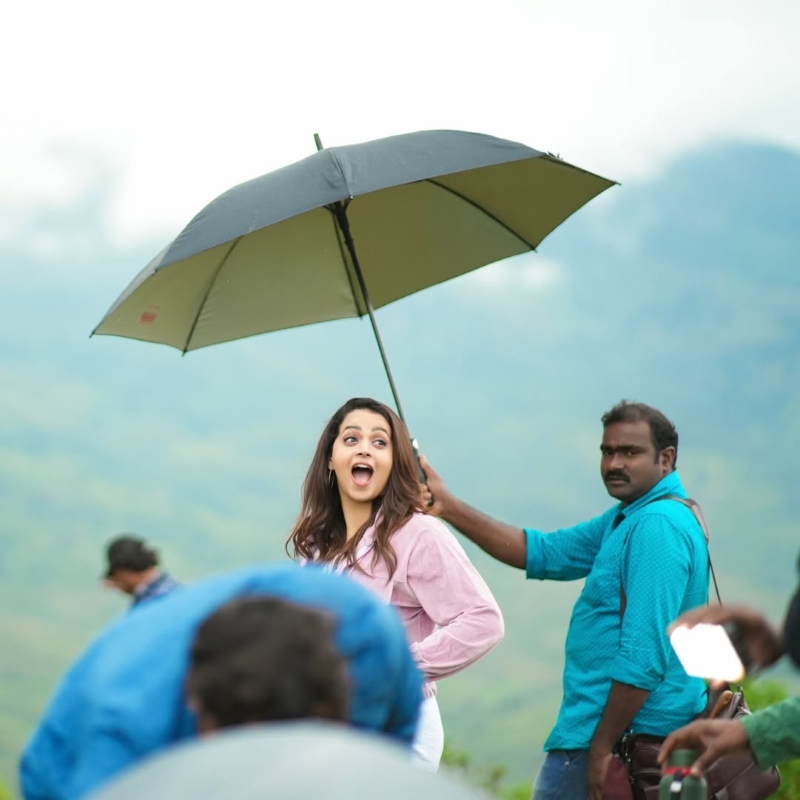
Bhavana on the sets of ‘Anomie’ (Instagram)
A. Nowadays, no one really uses the terms “hero” and “heroine”; everyone is considered an actor. In Manichithrathazhu (1993), Mohanlal’s heroine would probably be the character played by Vinaya Prasad. However, the film is widely known for the character portrayed by Shobana, which is the soul of the movie.
In my case, for example, in Adam Joan (2017), Prithviraj Sukumaran’s heroine dies after a song, but my character has scope to perform throughout the film. My priority is the importance of my character in the story. If my character does not contribute meaningfully to the narrative, there is no point in doing the role.
Q. If you could speak to your younger self at the start of your career, what would you tell her?
A. I clearly don’t know what to say. I might tell her, “Life is not easy. There will be lots of ups and downs. You are starting with dreams and ambitions, but everything won’t happen as you wish. There will be a lot of pain and at the same time, there will be happy moments too, so, just keep the balance. Don’t get carried away by the joyful moments and don’t get trapped in a dark hole when you are emotionally down”.
Q. What is that positive attitude that keeps you moving forward?
A. There is actually no positive attitude that anyone can adopt instantly. Just understand that life is tough. If there is any pain, process it and accept it. Understand the reality and move on. By that time, a new problem will arise. We cry when we are down and can’t always say that it will be fine. But recently, I have started thinking that in another three or five years down the line, the agony won’t be as painful as it is now.
Q. If you were to play a biopic role, what kind of woman’s story would you want to tell, and why?
A. I admire a lot of women. But I haven’t thought of playing any one in a biopic.
Q. Is there a woman from Kerala or Indian history whose life you think deserves a cinematic retelling?
A. There are lots of women who are an inspiration for many. Giving one or two names would be unfair. There are many unexpected heroes and I think it would be good if we can learn and know about them. I always try to learn. Honestly, I haven’t thought of a cinematic version.
Q. What would a truly progressive Malayalam film industry look like to you?
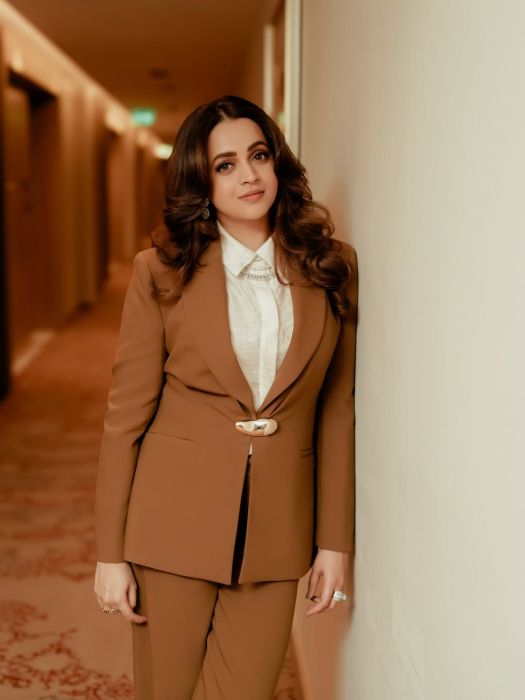
Actor Bhavana
A. Malayalam cinema has always given importance to strong stories. It is an industry that places less emphasis on stardom and focuses more on narratives and well-written characters. This approach should grow stronger rather than making films solely for stars. It would be ideal to develop good stories first and then cast actors who can perform them well.
It is also important to have a safe working environment for both male and female actors, as we spend most of our time at work. We should feel happy and secure in our workplace.
In recent times, more women and men have been working as technicians. When I recently shot for an advertisement, I noticed many women in the art department. Watching the making videos of Hollywood films, it often feels like an IT company, with many men and women across departments. Hopefully, our industry will continue to evolve into a safe and inclusive space for everyone.
Q. Some critics have pointed to a gap between how progressive Malayali’s appear publicly and how it functions behind the scenes. Did you experience anything like that?
A. When an issue arises, people will naturally have different opinions. We cannot expect everyone in society to think in the same way. In Kerala, I believe a large proportion of people think logically and ethically, while perhaps only a small percentage think otherwise. It ultimately depends on an individual’s mindset. Compared to others, many Malayalis think sensibly, and it is better to ignore the small number who constantly find faults.
Q. How has cinema changed from the time you started your career? Considering now female superhero films such as Lokah Chapter One, have become superhit.
A. If the script is strong, a film will succeed. As I mentioned earlier, Manichithrathazhu featured superstars Mohanlal and Suresh Gopi, yet the main attraction was Shobana’s character, Nagavalli. Without her, the film would feel incomplete. Even at that time, such a content-driven film became a superhit. There is no point in making female-oriented films just for the sake of it.
Films like Lokah and Anomie are being appreciated by audiences for their quality. I don’t believe in labeling films as male-oriented or female-oriented. Some stories have a male perspective, while others have a female perspective. What truly matters is the content and how well the film connects with the audience.
Q. What other projects can we see you in future?
A. I have completed a Kannada movie Spark in which I am playing a lawyer, which is a major role. Discussions are ongoing for other projects.
Q. You are an animal lover. Do you think there should be a solution against animal cruelty?
A. I am not aware of the laws in this matter. As a human being, I really love animals. I believe that this planet is also for animals. There are no strict laws against animal cruelty even if it’s happening on a daily basis. As an Indian citizen, I feel that there should be stringent laws against cruelty against animals.


