

Published Oct 23, 2026 | 2:46 PM ⚊ Updated Oct 23, 2026 | 2:46 PM



[Note: This is partnered content]
A fixed deposit can help you build savings for a future goal, from funding your child’s education to planning for retirement. The interest you earn adds to your deposit over time, giving you a clearer idea of how much your money may grow. However, the amount you receive after tax can differ from the interest shown in the FD offer. Understanding the tax rules can help you plan your deposits, estimate your earnings and make informed choices.
Interest earned on a fixed deposit is generally taxable under the head “Income from Other Sources” under the Income Tax Act, 2025. It is added to your taxable income and taxed according to the applicable rules and tax regime.
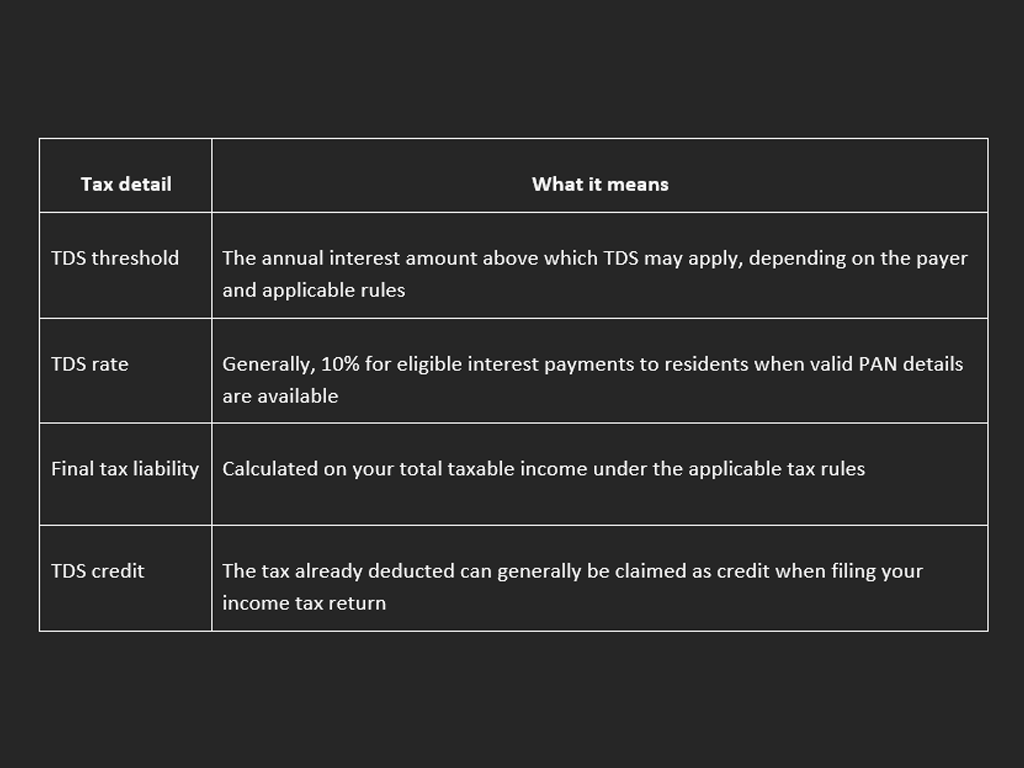
Your final tax depends on your total income, eligible deductions and applicable tax rates. The bank or financial institution may also deduct tax at source (TDS) when the interest meets the prescribed conditions and threshold.
For example, if your online Fixed Deposit earns INR 20,000 in interest during a tax year, you generally need to report the interest as part of your taxable income, even if no TDS is deducted. The tax payable depends on your overall income and tax position. This distinction matters because TDS is an advance tax collection mechanism. It is not the final calculation of your tax liability.
Section 393 of the Income Tax Act, 2025 covers TDS on specified interest payments to residents. For eligible bank deposits, the annual threshold is generally INR 50,000 for individuals below 60 years and INR 1,00,000 for senior citizens. A threshold of INR 10,000 generally applies to specified interest payments by other eligible payers, subject to the law’s provisions and exceptions.
The relevant threshold depends on the type of institution and deposit. Check the applicable rules for your FD before estimating whether TDS will apply.
The TDS threshold is not the same as a tax exemption. Even if the interest is below the threshold, you may still need to include it in your taxable income.
The quoted interest rate is only one part of an online Fixed Deposit decision. The amount you keep after tax and when you need the money also matter. These steps can help you plan your deposits around your financial goals.
For example, if you are saving for a fee payment due in two years, an FD that matures around that time may suit your plans better than a longer deposit. Matching the tenure to your goal helps you plan when the principal and interest will be available.
A few simple checks can help ensure the correct TDS amount is deducted.
First, provide your bank or financial institution with valid PAN details. Review the interest credited or paid during the year and check the TDS entries against your deposit statements.
Eligible resident individuals who meet the prescribed conditions may submit Form No. 121 under the Income Tax Act, 2025 to request no TDS on specified income. This declaration is available only when the required conditions are met, including the applicable estimated tax liability. The interest may still be taxable when you calculate your total income.
If your tax position requires a lower or nil deduction, check the relevant certificate procedure and eligibility requirements with the institution or a qualified tax professional. Keep in mind that the correct approach depends on your circumstances and the rules in force for the tax year.
An online fixed deposit platform can help you compare interest rates, tenures and issuer details before choosing a deposit. Reviewing several options in one place makes it easier to understand the terms and choose an FD that fits your savings plan.
Leading financial platforms like the JioFinance app allow users to compare FD options from partner banks and non-banking financial companies (NBFCs). The JioFinance service provides a digital process to review available rates and tenures, complete KYC and book eligible deposits through the app. Interest rates and terms can change, so confirm the latest details before investing.
When comparing deposits, consider these points:
A comparison platform can make it easier to review these details, while the final choice should reflect your financial goals, time frame and comfort with the issuer.
Review your deposit statements and interest certificates during the year. Check the TDS recorded by the institution against your own records and verify the details in the applicable tax statements, such as Form 26AS where relevant.
When filing your income tax return, report taxable FD interest as required and claim eligible TDS credit. If you hold deposits with several institutions, keep their details together so you can track interest income and maturity dates more easily.
Tax rules can change, so confirm the provisions that apply to the relevant tax year. For advice based on your income and investments, consult a qualified tax professional.
Planning tax on FD interest begins with understanding how the interest is taxed, when TDS may apply and how your total income affects your final liability. Compare deposit rates alongside tenure, issuer details and estimated after-tax returns. Keep your records updated and review the applicable rules each year. With careful planning and an online fixed deposit comparison platform, you can make informed choices that support your savings goals.
(Note: This is a sponsored post. No one from the South First editorial team was involved in generating this content.)



