

Published Feb 09, 2026 | 7:00 AM ⚊ Updated Feb 09, 2026 | 7:00 AM

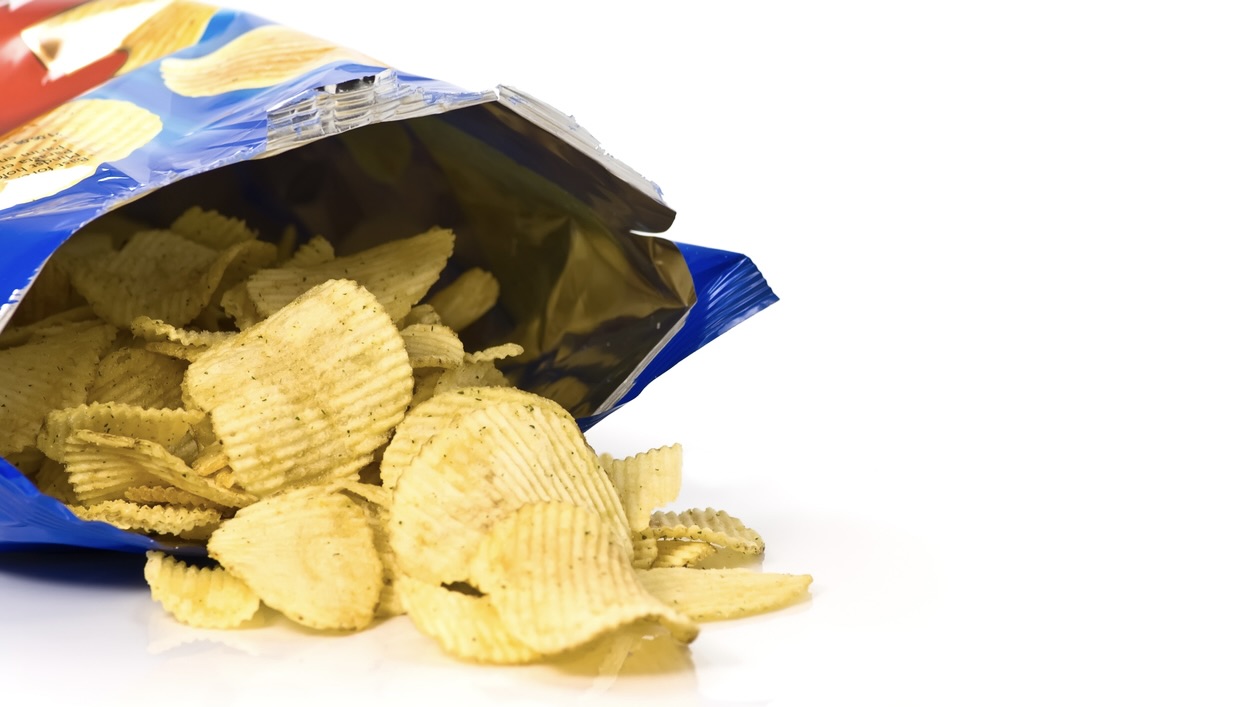
Industry scientists calibrated precise combinations of refined carbohydrates and fats to create a sensory “bliss point”.
Synopsis: A major study has found that ultra-processed foods are deliberately engineered to drive repeat consumption, using the same addiction principles once perfected by the tobacco industry, often at serious cost to public health. Drawing on internal industry documents and decades of research, the authors show how food companies optimise taste, texture and speed of digestion, among others, to override natural satiety and keep people eating more.
The flick of a lighter. The crinkle of a crisp packet. The ritual exhale of smoke. The satisfying crunch of a crisp. These moments seem worlds apart, but they share an unsettling kinship that stretches back decades, one food companies would prefer people did not know about.
A study published in The Milbank Quarterly has exposed what many suspected but few could prove: ultra-processed foods are not unhealthy by accident.
According to the authors, these products are “carefully engineered to maximise hedonic impact, consumption, and profitability through industrial processing”.
The researchers argue that ultra-processed foods “should be viewed not merely as poor nutrition choices but as industrial products designed to hijack human biology”.
Drawing parallels with cigarettes, they say food companies optimise taste, texture, speed of absorption and availability to drive repeat consumption and profit, often at the cost of public health.
The researchers emphasise that “addiction science is particularly valuable for understanding UPFs because it goes beyond identifying a single addictive agent (e.g. nicotine) to examine the entire engineered delivery vehicle (e.g. cigarette)”.
In the 1950s, tobacco scientists discovered something crucial: cigarettes had to deliver nicotine within a narrow range, enough to produce pleasure and stimulation, but not so much that smokers became nauseous or overwhelmed. This “sweet spot” kept people coming back, packet after packet, without triggering the body’s natural aversion response.
Food companies found their own sweet spot, though it took a different form. Industry scientists calibrated precise combinations of refined carbohydrates and fats, substances that barely exist together in nature, to create what they call the sensory “bliss point”.
As the study notes, “if there is too little nicotine, the smoker may not experience the stimulation, relaxation, or cognitive enhancement that reinforces smoking behavior. If there is too much nicotine, the effects can quickly become unpleasant.” The same principle applies to food: too little sugar and fat fails to satisfy; too much becomes cloying and unpleasant. Get it just right, and you create something irresistible.
This is not speculation. Industry insiders have been candid. The authors cite food industry documents that make this intent explicit: a recent trade advertisement boasted about “turning consumer cravings into commercial wins”, while a leading food industry newsletter noted that “for decades, indulgence has been the profit engine”.
In a segment on the American television magazine programme 60 Minutes, flavourists from Givaudan, one of the world’s largest flavour companies, explained their craft to interviewer Morley Safer. When asked about creating an addictive taste, one flavourist replied simply: “That’s a good word.”
The goal, they explained, was to engineer flavours that deliver “a burst in the beginning” but “a finish that doesn’t linger too much so that you want more of it”. As another added, “you don’t want a long linger, because you’re not going to eat more of it if it lingers”.
Safer pressed further: “So I see, it’s going to be a quick fix. And then have more. But that suggests something else? Which is called addiction?”
“Exactly,” came the response.
When a smoker takes a puff of cigarette smoke, nicotine from that cigarette crosses the blood–brain barrier within seconds and floods the brain’s reward centres with dopamine. This near-instant hit is what makes cigarettes so addictive. The authors explain: “The faster a reinforcing substance reaches the brain, the steeper the rise is in dopamine and the more addictive the product becomes.”
To achieve this speed, tobacco companies stripped tobacco leaves down to their molecular components, reconstituted them into uniform sheets and added ammonia to “freebase” the nicotine, making it absorb more efficiently through the lungs. They also manipulated particle size to ensure smoke penetrated deep into lung tissue. Every element was optimised for rapid delivery.
Ultra-processed foods follow the same blueprint. The study notes that “by breaking down the food matrix, UPFs become softer, more easily consumed, and rapidly digested, which speeds the delivery of reinforcing ingredients like sugar and fat.” Industrial processing strips away fibre, protein and water, the very components that slow digestion in whole foods.
The researchers describe ultra-processed foods as “prechewed”, “presalivated” and “predigested”, enabling the delivery of refined carbohydrates and fats with greater speed and potency. Some products even include enzymes that break down complex molecules before they reach the digestive system.
The result is clear. Ready-to-eat cereals and puffed snacks deliver refined carbohydrates to the bloodstream at speeds that would make a cigarette manufacturer proud. Blood sugar spikes rapidly, dopamine surges and then both crash, leaving people irritable, fatigued and craving more.
This biochemical rollercoaster keeps consumers reaching back into the packet. As the authors note, “in stark contrast, minimally processed foods retain their natural structure, including intact fibers, proteins, and water content that slow the process of digestion and absorption.” This slower pace supports satiety and reduces reward-driven overconsumption.
The connection between tobacco and ultra-processed foods is not metaphorical; it is literal. In the 1980s and through the mid-2000s, tobacco giants RJ Reynolds and Philip Morris acquired some of the world’s largest food companies, including Kraft, General Foods and Nabisco.
These were not passive investments. Tobacco companies brought their expertise in engineering addictive products into the food industry. The techniques refined over decades, including dose optimisation, rapid delivery, sensory manipulation and health washing, were applied to snack foods, cereals, soft drinks and processed meals.
When tobacco companies later divested from food, they left behind a blueprint. The knowledge did not disappear; it was embedded in corporate culture, product development processes and industry practices that continue today.
Cigarettes became ubiquitous through deliberate design. Long shelf life, portable packaging, vending machines and easy ignition removed every barrier between craving and consumption. By the mid-20th century, people could smoke almost anywhere, including offices, restaurants, aeroplanes and even hospitals.
Ultra-processed foods followed the same path. Preservatives and stabilisers extended shelf life from days to months, even years. Packaging became portable, resealable and eye-catching. Microwaves turned frozen meals into instant dinners. Vending machines spread through schools, workplaces and public spaces. Delivery apps brought crisps, sweets and fast food to the door within minutes.
The goal, as a Coca-Cola executive famously put it, was to keep the product “within arm’s reach of desire—to make sure it was always available, always present, always tempting”.
They succeeded. Today, avoiding ultra-processed foods takes constant vigilance and often feels nearly impossible. They are found in petrol stations, hospitals, schools, airports and workplace canteens. They are marketed during children’s television programmes. They sit at checkout counters, positioned at eye level.
Neuroscience research shows that cravings intensify when environmental cues signal that consumption is possible and acceptable. By making ultra-processed foods omnipresent, the industry has turned almost every environment into a trigger zone. Resisting takes extraordinary willpower, and that is the point.
When scientific evidence linking cigarettes to cancer became undeniable, tobacco companies did not stop selling. They innovated. “Light” cigarettes, filtered cigarettes and “low-tar” options were all marketed as safer alternatives. In reality, these products caused similar harm while giving smokers permission to continue.
The food industry uses the same strategy with precision. The authors warn that “just as filtered and ‘light’ cigarettes were marketed as safer without reducing harm, ultra-processed foods are often reformulated and sold as low-fat, sugar-free, fortified, or functional while retaining their addictive structure.” “Low-fat” crisps still combine refined carbohydrates and salt in addictive ratios. “Sugar-free” sweets replace sugar with non-sugar sweeteners while maintaining the same engineered appeal. Products are “fortified” with vitamins, protein or probiotics, creating a health halo that distracts from their ultra-processed nature.
Protein bars marketed as healthy alternatives to chocolate offer a clear example. Clinical trials show they promote overeating and carry similar health risks to conventional sweets, but their packaging suggests otherwise. Probiotic sodas do the same, adding fashionable functional ingredients to what remains an ultra-processed, highly sweetened beverage.
The study emphasises that “added vitamins, protein, fiber, or probiotics create a health halo that distracts from the underlying processing and metabolic effects.” These reformulations are not about improving health. They preserve consumption patterns while deflecting regulatory scrutiny, exactly what filtered cigarettes did for tobacco.
The consequences are stark. Ultra-processed foods now make up most of the calories consumed in many industrialised nations. They have been linked to obesity, type 2 diabetes, cardiovascular disease, cancer, neurological disorders and premature death.
The study cites recent estimates suggesting that “one American dies every four minutes from preventable disease associated with these products.” That is 360 deaths a day. More than 131,000 a year. From food engineered not to nourish, but to compel.
The authors draw a crucial distinction: “Although food, unlike tobacco, is essential for survival, this distinction should not preclude meaningful action because opting out of the modern food supply is difficult.” They add that “when cigarette use was common and unrestricted, avoiding the harms of secondhand smoke was virtually impossible. Today, exposure to a food environment dominated by UPFs is relentless.”
Tobacco control offers both warning and hope. Fifty years ago, cigarettes were glamorous, ubiquitous and socially acceptable. Today, smoking rates among American adults have fallen by 73 percent.
This shift did not come from willpower or personal responsibility alone. It required litigation that exposed industry deception, taxation that changed economic incentives, advertising restrictions that protected children and public health campaigns that reshaped cultural norms.
The researchers argue that “debates over whether ultra-processed foods are technically addictive should not delay action. Regardless of labels, their design and health impact are clear.” They call on policymakers to apply lessons from tobacco control, including restrictions on child-targeted marketing, clear warning labels, taxation of the most harmful products, removal from schools and hospitals, and stronger industry accountability.
Critics often argue that food, unlike tobacco, is necessary for survival. The authors say this strengthens rather than weakens the case for action. “Unlike tobacco, however, the solution is already in our hands: minimally and traditionally processed foods that have sustained human health for millennia.”
The researchers end with a stark warning: “Cigarettes are not merely nicotine-delivery devices but engineered delivery systems created for maximum appeal, and UPFs are not just nutrients but intentionally designed, highly engineered and manipulated, hedonically optimized products.”
They emphasise that policies confronting ultra-processed foods with the same seriousness once applied to tobacco, while actively promoting real food, offer the most promising path out of the current crisis. The question is not whether a healthier food system is possible. It is whether there is the political will to confront an industry that has spent decades engineering cravings and profiting from people’s inability to resist.
(Edited by Dese Gowda)


