

Published May 05, 2026 | 7:00 AM ⚊ Updated May 05, 2026 | 7:00 AM

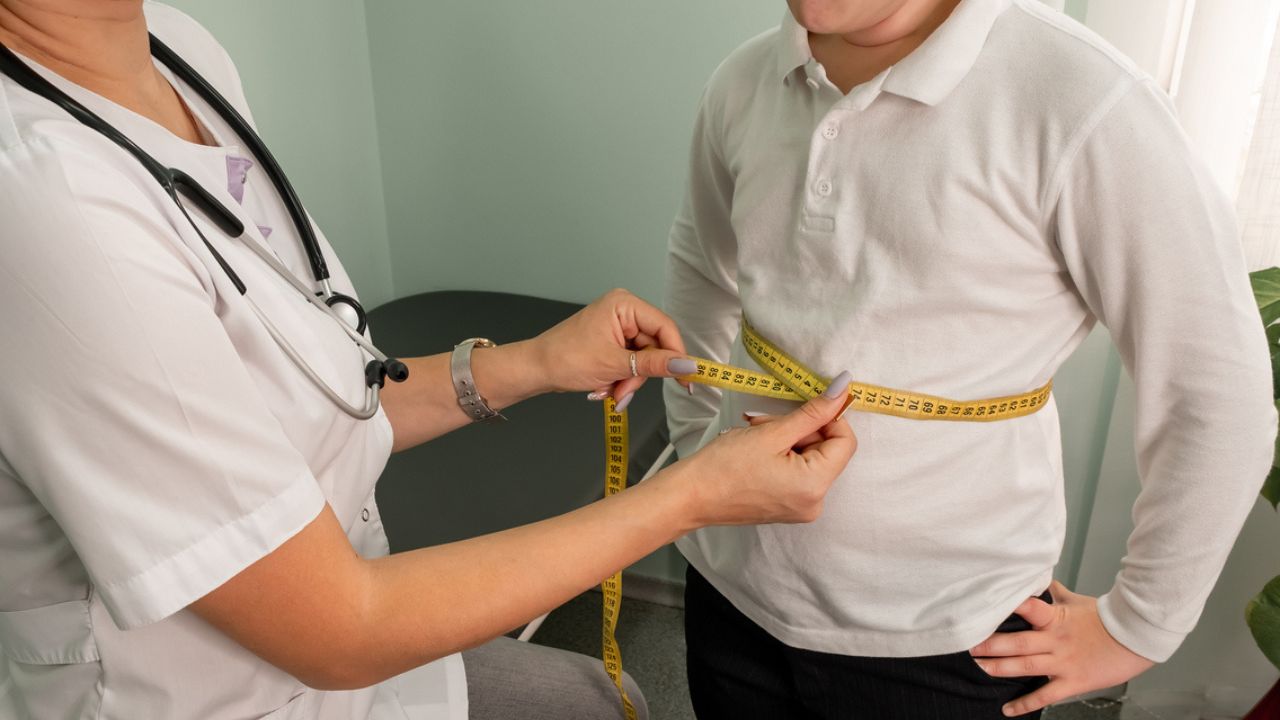
Representative image. Credit: iStock

Synopsis: Childhood obesity is rising across India, with nearly 7% of school-going children affected, according to a meta-analysis of 125 studies. South India shows a pooled prevalence of 6.24%, with Telangana among the worst-hit states at 11.23%. Urban lifestyles, processed diets, screen time, and reduced physical activity are driving the trend, posing long-term health risks.
A decade ago, a child turning up at a paediatric clinic with high cholesterol or early signs of insulin resistance would have been unusual enough to warrant a second look. Today, doctors in Hyderabad, Chennai, and Bengaluru say it is becoming routine.
The numbers now confirm what clinicians have been seeing on the ground. A sweeping new national study, published in the Indian Journal of Community Medicine, has found that nearly 7 percent of school-going children in India are obese.
South India, while not the worst-affected region in the country, is firmly embedded in this rising trend, and its urban centres are increasingly where the problem is concentrating.
The study is the most comprehensive of its kind. It is a systematic review and meta-analysis drawing on 125 studies conducted between 1995 and 2023, covering more than five lakh participants across India. The overall pooled prevalence of obesity among school-going children nationally stands at 6.97 percent.
South India contributed the largest share of studies in the analysis, at 37.6 percent, giving the region one of the more robust datasets in the entire review. That visibility in the data is itself telling. It reflects decades of research, greater institutional engagement, and a healthcare system that has been tracking the problem longer than most.
The regional picture places South India in a telling position. The South records a pooled obesity prevalence of 6.24 percent, which is lower than the Northern region at 8.58 percent and the Western region at 8.10 percent, but higher than the Central region at 5.63 percent, which recorded the lowest prevalence in the country.
The South sits firmly in the middle of the national spectrum, just below the 6.97 percent national average, but the direction of travel is what concerns researchers most.
But averages can obscure as much as they reveal.
Also Read: Cheap obesity drugs are finally here in India, but what if you plan to stop one day?
When the data is broken down at the state level, South India’s position looks less comfortable. Telangana emerges as the third most affected state in the entire country, with a pooled obesity prevalence of 11.23 percent. Only Arunachal Pradesh at 17.92 percent and Delhi at 13.57 percent rank higher.
The other southern states paint a more moderate but still significant picture. Kerala records 6.24 percent, Karnataka 4.68 percent, Tamil Nadu 4.74 percent, and Andhra Pradesh 5.59 percent. These figures may appear lower than Telangana’s, but they represent hundreds of thousands of children already carrying excess weight into their adolescent years.
Manipur, at the other end of the national spectrum, records the lowest prevalence at 0.80 percent, though researchers caution that this is based on a single study and may not reflect the full picture.
“This meta-analysis offers vital insights into the scope and geographical distribution of childhood obesity, helping to develop effective strategies to prevent its persistence into adulthood,” the authors of the study said.
The study does not identify a single cause. What it describes instead is a convergence, a set of forces that have reshaped how children in urban India eat, move, and spend their time, and South India’s rapidly growing cities are at the centre of it.
“Urban lifestyle changes play a major role,” said Dr C. Rahul Reddy, Consultant Paediatric Endocrinologist at Ankura Hospital in Hyderabad told South First.
“Increased access to fast food, sedentary habits due to academic pressure, and high screen exposure are key contributors. Limited outdoor spaces and safety concerns further reduce opportunities for physical activity. Together, these factors create an environment that promotes weight gain.”
The research bears this out. Studies included in the meta-analysis consistently link higher obesity rates with urban settings, more affluent school populations, and children with sedentary lifestyles and high fast food consumption. As South India’s cities have grown wealthier, more connected, and more screen-dependent, the conditions for childhood obesity have quietly multiplied.
The study identifies a cluster of overlapping causes rather than one single driver.
Diet has shifted dramatically. Traditional home-cooked meals have given way to energy-dense processed foods high in fat, sugar, and salt. Packaged snacks, sugary beverages, and fast food now form a regular part of many children’s diets, particularly in cities.
Children are moving less. Screen time across mobile phones, tablets, and televisions has replaced outdoor play. Academic pressure means children spend long hours sitting, both in classrooms and at home. Many urban neighbourhoods lack safe, accessible play spaces.
Affluence is a paradox. Obesity in India is more common in urban, higher-income families. Greater purchasing power has translated into greater access to processed foods and more sedentary routines. The gap between urban and rural prevalence is narrowing as smaller towns adopt similar habits.
Bodies are changing at a vulnerable time. Adolescence involves rapid hormonal and physical shifts. Poor nutrition during this period can disrupt metabolism and increase fat accumulation in ways that persist into adulthood.
Researchers describe this as part of India’s “dual burden of malnutrition,” where undernutrition and obesity exist side by side, driven by economic growth that has improved food availability but also introduced deeply unhealthy dietary patterns.
Also Read: Indian cardiologists recommend semaglutide for heart patients with obesity
Paediatricians across South India describe a steady shift in the profile of children walking through their doors.
“We commonly observe high consumption of processed and calorie-dense foods such as packaged snacks, sugary beverages, and fast food,” said Dr Reddy. “Irregular meal patterns, frequent snacking, and eating in front of screens are also contributing factors. In addition, reduced physical activity, excessive screen time, and poor sleep habits play a critical role in weight gain.”
The clinical consequences are arriving earlier than they should. Children who are obese face significantly elevated risks of type 2 diabetes, hypertension, fatty liver disease, and early cardiovascular problems. The mental health dimension is equally serious. Low self-esteem, social withdrawal, and psychological distress are well-documented in children living with obesity.
“Childhood obesity is a significant and growing public health concern,” Dr Reddy said. “What makes it particularly concerning is that obesity in childhood often tracks into adulthood, increasing the long-term disease burden on both individuals and the healthcare system.”
One of the study’s more striking findings is that obesity affects boys and girls almost equally. The pooled prevalence among males is 6.37 percent and among females 6.38 percent, with no statistically significant difference between the two. This cuts against older assumptions that boys were more physically active and therefore less susceptible.
The finding suggests that the forces driving obesity, screens, processed food, reduced outdoor access, and academic pressure, are working on children regardless of gender.
“Subgroup analyses based on gender revealed comparable estimates of obesity prevalence among male and female study populations, with no statistically significant difference observed among these groups,” the authors noted. “These findings suggest that obesity affects both genders similarly among school-going children in India.”
The meta-analysis did not just capture a snapshot. It traced the trajectory. Through a cumulative analysis of studies spanning from 1981 to 2020, the review found a consistent and unambiguous upward trend in childhood obesity prevalence across India. What was once a marginal concern has become, over four decades, a population-level problem.
“Based on studies from 1981 onwards, there is evidence of a growing prevalence of obesity among school-going children,” the authors wrote. “The cumulative meta-analysis revealed a consistent upward trend in the prevalence of obesity, underscoring the importance of continuous monitoring and intervention efforts to address this concerning public health issue.”
Researchers and clinicians are aligned on one point: single-point solutions will not work. The problem is structural, and the response needs to match its scale.
“The present study highlights the multifaceted nature of obesity prevalence in India, urging targeted interventions, continuous monitoring, and sustained efforts across diverse demographic segments,” the authors of the study said. “If one can identify the risk factors associated with the prevalence of obesity in various regions and states of India, it will enable stakeholders to prioritise and allocate resources more effectively.”
For clinicians, the prescription is equally clear. “A multi-level approach is essential,” said Dr Reddy.
“Schools should incorporate structured physical activity and nutrition education into daily routines. Awareness programmes for parents on healthy eating and screen-time management are equally important. At a policy level, regulating junk food availability in and around schools and promoting community-based fitness initiatives can help.”
For families, the advice is more immediate. Dr Reddy recommends focusing on balance rather than restriction. Home-cooked meals with adequate protein, fibre, and healthy fats, regular meal timings, at least 60 minutes of physical activity daily, and reduced screen time are the building blocks of prevention. Involving children in meal planning, he says, can make a meaningful difference.
“Parents should look out for rapid or disproportionate weight gain, increasing waist circumference, reduced physical stamina, and fatigue during routine activities,” he added. “Early behavioural changes, such as reluctance to engage in physical play, can also be indicators.”
Also Read: Awareness or surrogate advertising? CDSCO flags GLP-1 obesity campaigns
South India is not the epicentre of India’s childhood obesity crisis. But it is not watching from the sidelines either. Its cities are among the fastest-growing in the country, its middle class is expanding, and the conditions that produce obesity, abundant processed food, shrinking play spaces, relentless screens, and mounting academic pressure, are deeply embedded in daily life.
“This meta-analysis provides valuable insights into the prevalence of obesity among school-going children in India and highlights the need for targeted public health interventions to address this growing health concern,” the authors concluded. “The spatial analysis revealed that there is a significant difference in the prevalence across various regions and states of India.”
The children sitting in classrooms across Chennai, Bengaluru, Hyderabad, and Kochi today will carry the consequences of these years into adulthood. The study is clear that early intervention is the only way to break that chain.
The question is whether policymakers, schools, and families will act before the numbers grow any larger.



