

Published Apr 13, 2026 | 7:00 AM ⚊ Updated Apr 13, 2026 | 7:00 AM

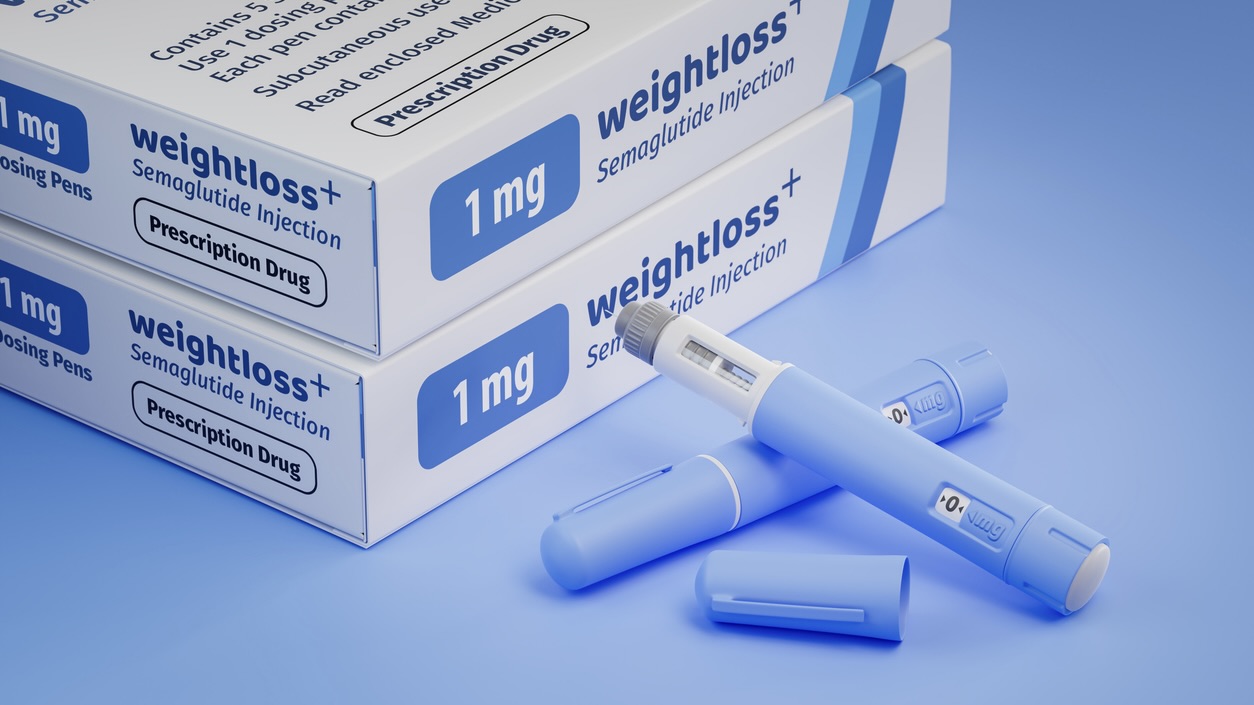
Until now, most evidence clinicians rely on about Ozempic and Mounjaro comes from Western populations.
Synopsis: Indian patients on semaglutide or tirzepatide lost a median of 8.2 percent of their body weight, with tirzepatide leading to greater and faster weight loss, a new study has found. Until now, clinicians in India have largely relied on data from Western populations to guide the use of GLP-1 drugs. Patients without diabetes lost more weight, but speed depended more on age and drug choice.
As more generic variants of semaglutide weight-loss drugs hit the market in India, a first-of-its-kind study examines how GLP-1 drugs perform in Indian patients.
Patients on semaglutide (sold as Ozempic and Wegovy) or tirzepatide (sold as Mounjaro) lost a median of 8.2 percent of their body weight, with 41.3 percent reaching at least 10 percent weight loss.
The median time to reach that 10 percent mark was 9.5 months. Further, 73.3 percent lost at least 5 percent, the minimum considered metabolically meaningful.
Researchers at Max Super Speciality Hospital in New Delhi followed 150 overweight or obese patients treated with semaglutide or tirzepatide for roughly six months. Their findings, published in the Indian Journal of Endocrinology and Metabolism, are the first from India to report real-world, time-to-event data on how these drugs perform outside controlled trials.
Until now, most evidence clinicians rely on comes from Western populations. In India, an estimated 254 million adults live with generalised obesity and nearly 90 million with diabetes. These patients carry distinct metabolic risks—higher central obesity and greater insulin resistance—which can change how these drugs behave in the body.
“These findings offer region-specific, real-world evidence to support personalised therapy selection and expectation setting when initiating GLP-1/GIP receptor agonists in Indian patients,” the researchers note.
The study found a clear gap between the two drugs.
Patients on tirzepatide lost 8.6 percent of their body weight on average, while those on semaglutide lost 5.62 percent. Tirzepatide users also reached the 10 percent weight-loss mark faster, in 8.6 months, compared with 11.4 months for semaglutide.
Researchers link this gap to tirzepatide’s dual mechanism. Semaglutide targets only GLP-1 receptors, but tirzepatide acts on both GLP-1 and GIP receptors, which produces a stronger metabolic effect.
“Tirzepatide-treated participants had a threefold higher hazard of achieving substantial weight loss compared with those treated with semaglutide,” the study states.
Gastrointestinal symptoms were the most common side effects. Nausea affected 31.3 percent of patients, while diarrhoea and constipation each affected 25.3 percent, and bloating was reported in 14 percent.
No severe adverse events that required patients to stop treatment were recorded.
Patients without type 2 diabetes responded markedly better. They lost an average of 11.21 percent of their body weight, more than double the 5.48 percent recorded in diabetic patients.
The researchers link this to the biology of diabetes: greater insulin resistance, impaired beta cell function, longer duration of obesity, and the effect of other glucose-lowering drugs all work against weight loss.
However, having diabetes did not significantly affect how quickly patients reached the 10 percent threshold. Instead, the data shows that speed of response depends more on age and drug choice than on diabetes status alone.
The analysis identified three independent factors that predicted a faster response.
First, younger patients responded faster. Next, patients who had never taken a GLP-1 drug before responded more quickly, while prior exposure showed a weaker response, possibly due to receptor adaptation. Finally, patients on tirzepatide consistently reached targets sooner.
“GLP-1/GIP-naive participants demonstrated a 2.6 times higher hazard of achieving substantial weight loss compared to those with prior exposure,” the paper notes.
The study lands as India undergoes a rapid shift in access to these drugs.
Semaglutide’s patent expired in India on 20 March. Within days, domestic manufacturers launched generic versions. More than 50 brand names from over 40 companies are expected across the market through 2026, with prices falling between 70 percent and 90 percent below the original branded price. For example, Natco Pharma’s vial formulation starts at ₹1,290 per month.
Tirzepatide, by contrast, remains under patent, so generics are years away.
Researchers are clear about what this study cannot prove. It covered a single centre, used a retrospective design, and the semaglutide group was small, just 33 patients against 117 on tirzepatide. Further, differences in dose titration and lifestyle factors were not fully accounted for.
“The observed association favouring tirzepatide requires cautious interpretation and confirmation in large prospective studies with balanced group sizes and standardised dosing,” the paper states.


