

Published Mar 03, 2026 | 7:00 AM ⚊ Updated Mar 03, 2026 | 7:00 AM

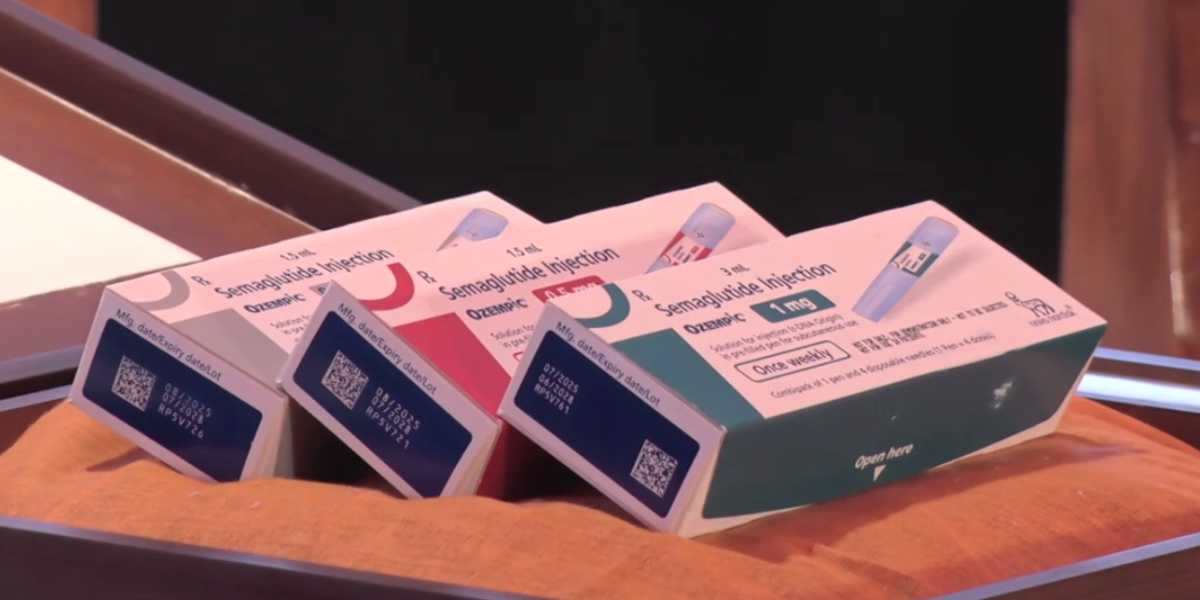
Ozempic. (Supplied)
Synopsis: Indian doctors are grappling with whether to prescribe new weight-loss drugs to children with obesity and early diabetes as demand for treatment rises. In the United States, semaglutide is approved for adolescents and its use has increased sharply, but it is not approved in India. Physicians say they must balance the need for timely treatment against limited long-term safety data.
A mother walks into a Hyderabad clinic with her 10-year-old son. He weighs 95 kilograms. His HbA1c reads 6.5, confirming diabetes. His triglycerides reach 600. His blood pressure rises. Despite strict dietary intervention and constant contact with a dietitian, he gains one kilogram every month.
She asks the doctor to prescribe medication. Dr Kavitha Sakamuri, Consultant Pediatrician and Pediatric Endocrinologist at Ankura Hospital, faces a dilemma. “Indian authorities have not yet licensed semaglutide for use in children,” she explained. “There is no licence for using this medication in a 10-year-old child in India” for weight management, even though liraglutide carries approval for diabetes treatment in this age group.
His mother had tried everything. A dietitian monitored him constantly. The family followed meal plans. Nothing worked. He gained one kilogram every month.
She asked Dr Sakamuri for medication. Specifically, she wanted GLP-1 drugs such as Ozempic or Wegovy, the weight-loss injections making headlines worldwide.
Dr Sakamuri, a pediatric endocrinologist at Ankura Hospital in Hyderabad, said no. Not because she disagreed with the mother’s logic. But because three barriers stood in the way.
“These drugs are relatively new in the market,” Dr Sakamuri explained. “We do not yet have complete long-term evidence about what they may do, especially in children and adolescents who are still growing and going through puberty. They have their entire lives ahead of them.”
The US Food and Drug Administration cleared semaglutide for adolescents aged 12 and above. India did not follow.
“Indian authorities have not yet licensed it for use in children,” Dr Sakamuri said. “In Western countries such as the US and the UK, semaglutide is being used in children above 12 years who are obese. The FDA has approved it for children above 12 years.”
India approved one drug for one narrow use: liraglutide for children aged 10 and older with Type 2 diabetes. That approval came in June from the Central Drugs Standard Control Organisation. However, it is still not available in India.
Even the one approved drug remains unavailable. Dr Sakamuri cannot prescribe liraglutide to her 10-year-old patient because no pharmacy in India stocks it.
The regulatory approval exists. Manufacturing licences went to Biocon, Natco and Dr Reddy’s. But patents do not expire until 20 March 2026. Until that date, companies face legal restrictions blocking sales.
Novo Nordisk’s Victoza, the original liraglutide, disappeared from Indian shelves as the company phased it out. The gap between approval and availability has stretched to nine months and counting.
“There is no licence for using this medication in a 10-year-old child in India” for weight management, Dr Sakamuri said. And even for diabetes, where approval exists, the drug does not exist.
“As an endocrinologist, I feel this is a double-edged sword,” Dr Sakamuri said. “When I see children who are obese and already in the pre-diabetes range, I feel they need treatment.”
She watches the progression daily. Children move from pre-diabetes to diabetes. Cholesterol climbs. Fatty liver worsens. “If cholesterol levels keep rising, they are at risk of heart problems. If liver enzymes increase because fat is deposited in the liver, the liver is at risk.”
Dietary intervention works in theory. In practice, adherence collapses. “The dietitian gives a structured plan, but the child continues to eat pizzas, biryanis and doughnuts. The mother says he is not listening to her.”
The urge to eat involves hormonal pathways beyond willpower. But acknowledging biology does not solve the problem when treatment options do not exist.
“As a doctor, the first principle is to do no harm,” Dr Sakamuri said. “But at the same time, I do not yet have the complete long-term safety profile of these newer medications to confidently use them in young children.”
The mother said she would sign anything. Any consent form. Any waiver releasing the doctor from liability.
“She says, ‘Whatever consent form you want me to sign, I will sign. You will not be penalised for whatever happens,'” Dr Sakamuri recalled.
Legal protection does not resolve medical uncertainty. Consent does not create evidence. A signed form does not make unavailable drugs appear in pharmacies.
“I honestly do not have a straightforward answer,” Dr Sakamuri said. “It has to be a two-way communication. I need to sit down and speak to the mother in detail.”
The conversation has no good resolution. The boy needs intervention. The drugs exist. The approval exists for one narrow indication. The evidence for long-term safety does not exist. The drug in pharmacies does not exist.
After American pediatric guidelines recommended GLP-1 drugs in 2023, prescriptions to young people aged eight to 17 jumped 65 percent immediately. They then climbed 5 percent per month.
Between 2022 and 2024, prescriptions for semaglutide and liraglutide to young people increased 700 percent.
Some children under 12 now receive these drugs off-label despite no approval from the US Food and Drug Administration for that age group. The guidelines opened the door. Clinical practice moved faster than the evidence base.
American doctors are, in effect, running a vast uncontrolled trial on children. The data will take decades to collect. By then, millions of children will have spent years on these medications without a clear picture of long-term effects.
India’s approach differs. The Indian Council of Medical Research states that lifestyle intervention must come first. Medication should only be considered for severe obesity with life-threatening complications.
ICMR guidelines emphasise distinguishing between Type 1 and Type 2 diabetes. GLP-1 drugs should not be used for Type 1 diabetes, which remains more common in Indian children.
Even when drugs gain approval, ICMR restricts their use to specialised pediatric endocrinology clinics. Not primary care. Not general practitioners. Only tertiary care centres with cold-chain storage, monitoring capacity and specialist oversight.
The restrictions reflect caution about long-term metabolic impacts on developing children. Indian regulators want local trial data or rigorous global evidence before expanding approvals to minors.


