

Published Apr 16, 2026 | 7:00 AM ⚊ Updated Apr 16, 2026 | 7:00 AM

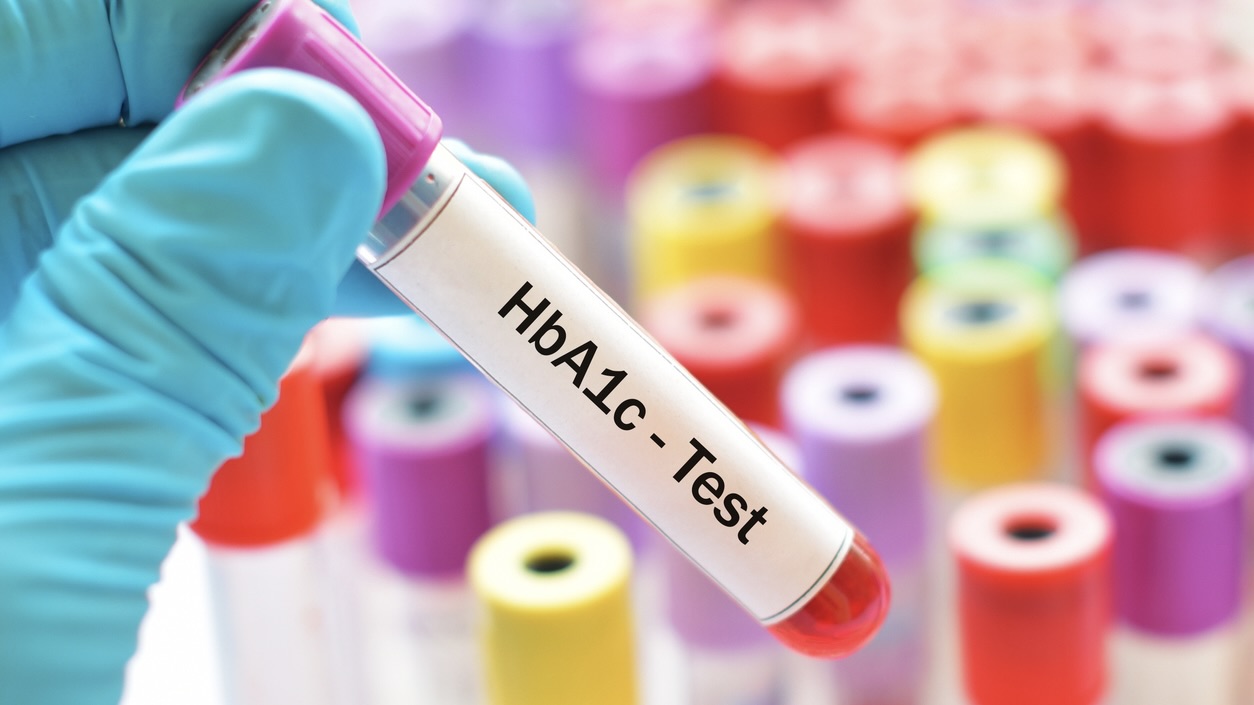
The HbA1c test works by measuring the percentage of haemoglobin in red blood cells that has absorbed glucose.

Synopsis: After a Lancet paper earlier this year suggested that the widely used HbA1c blood test may give misleading results for many Indians, particularly due to conditions such as anaemia and G6PD deficiency, it has triggered a scientific debate. Some researchers have defended the test’s reliability and practicality, while others argue that biological factors limit its accuracy and call for alternative methods.
In February, a study published in The Lancet Regional Health – Southeast Asia set off alarm bells across India’s medical community. It argued that the HbA1c test, the blood test that hundreds of thousands of Indians take every day to screen for diabetes, was producing misleading results for a significant portion of the population.
The findings landed hard. India has more than 100 million people living with diabetes. Millions more sit on the borderline. A test that gets it wrong, at that scale, has consequences measured in heart attacks, kidney failure, and blindness.
Now, two months later, that paper has triggered a formal scientific rebuttal, and then a counter-rebuttal. The argument is playing out in the pages of one of the world’s most read medical journals, and it has no clean resolution yet.
The HbA1c test works by measuring the percentage of haemoglobin in red blood cells that has absorbed glucose. Because red blood cells live for roughly 120 days, the reading captures an average of blood sugar over three months. No fasting required. No repeat visits. One blood draw tells a doctor how well a patient has managed blood sugar over the past quarter.
That convenience made it the dominant tool for diabetes diagnosis and monitoring across India. Doctors rely on it. Insurance companies require it. Public health programmes build around it.
But the Lancet paper, authored by Samajdar and colleagues, argued that the very biology the test depends on gets disrupted in large sections of the Indian population.
Anaemia, which affects 57 percent of Indian women and roughly 25 percent of men according to national survey data, alters how red blood cells form and how long they survive. That distorts the HbA1c reading, sometimes pushing it higher than actual blood sugar warrants, sometimes lower.
A further problem comes from G6PD deficiency, an inherited condition where the body lacks sufficient quantities of an enzyme that protects red blood cells from breaking down prematurely. It affects approximately 8.5 percent of Indians, particularly in tribal populations.
Because red blood cells in these individuals survive for a shorter period, they carry less accumulated glucose, pushing HbA1c readings below where they should be. Research cited in the paper found this can delay a diabetes diagnosis by a median of 4.1 years, during which kidney and nerve damage accumulates silently.
Dr Vidya Tickoo, an endocrinologist based in Hyderabad, described to South First what this looks like in her clinic. “Many times, we notice a mismatch. For example, HbA1c may be elevated, but the fasting sugar is 82, and the post-meal sugar is 100. In such cases, we have to evaluate haemoglobin levels and several other factors.”
She was clear that the test remains valuable but cannot stand alone. “I am not saying we should stop using it. It is an excellent and indispensable test, especially in the Indian setting. We rely on it heavily. But we must always remember its limitations. The assessment is complete only when HbA1c is interpreted along with blood sugar readings.”
That February paper has now drawn two formal responses, both published in the same journal, and both pushing back against what they see as an overstated case.
The first came from a researcher at ICMR’s National Institute of Epidemiology in Chennai. The argument: the Lancet paper conflates all anaemia with the kind that actually distorts HbA1c. Data from the Longitudinal Ageing Study in India show that severe anaemia, the threshold at which diagnostic precision genuinely breaks down, affects under 2 percent of Indian adults below the age of 70.
“Although anaemia is a recognised confounder, its population-level impact must be balanced against its prevalence,” the researcher wrote. “For the majority, HbA1c remains a reliable metric for diabetes care.”
The researcher also raised a practical concern that the original paper underweighted. In rural India, switching to glucose-based alternatives means asking patients to make multiple visits for fasting tests. For daily wage workers, that translates directly into lost income and, often, abandoned follow-up care.
The second response came from Sutirtha Chakraborty, a researcher at Haugesund Hospital in Norway, who approached the problem from a different angle. His argument focused on the weaknesses of the alternatives the Lancet paper proposed.
The oral glucose tolerance test, or OGTT, works by measuring blood sugar before and two hours after a patient drinks a fixed quantity of glucose solution.
It is considered a thorough method. But Chakraborty pointed out a fundamental inconsistency: the test produces different results when the same person takes it again on a different day. “OGTT yields discordant results in 15 to 25 percent of individuals upon repeat testing,” he wrote. That means a significant number of patients would receive a different diagnosis simply by retaking the same test.
He also pointed to problems with routine glucose measurement in smaller Indian laboratories. The method most widely used is vulnerable to interference from ascorbic acid, uric acid, and bilirubin, which can push glucose readings artificially low. And glucose in blood samples degrades rapidly, losing roughly 5 to 7 percent of its concentration per hour at room temperature, a serious problem when samples travel from remote collection centres to centralised labs.
HbA1c, measured using methods that meet internationally recognised accuracy standards such as HPLC, a technique that separates and measures different forms of haemoglobin with precision, does not carry these pre-analytical vulnerabilities. “The path forward is national standardisation and clinical cut-off validation,” Chakraborty concluded. “Not replacement.”
The original authors did not concede ground.
On the anaemia question, they challenged the claim that only severe anaemia matters. Citing research by Hardikar and colleagues conducted in India, they argued that even mild anaemia and iron deficiency without any anaemia at all can meaningfully distort HbA1c values.
That study found that people with mildly low iron levels, even when their haemoglobin appeared normal, showed inflated HbA1c readings. “The use of HbA1c to diagnose prediabetes and diabetes in iron-deficient populations may lead to a spuriously exaggerated prevalence,” the study concluded.
In a country where iron deficiency cuts across income levels and geographies, that finding carries significant weight.
On the laboratory standardisation argument, Samajdar et al. acknowledged that better equipment and certification would help. But they argued it misses the deeper problem entirely. “Laboratory standardisation alone cannot overcome the fundamental impact of shortened or prolonged red blood cell survival on glycation equilibrium,” they wrote.
The issue is not the machine running the test. It is the biology of the blood going into it.
They also turned the cost and access argument around. HbA1c, they pointed out, is not cheap. And the quality of the test varies considerably across suburban and rural laboratories, precisely the settings where iron deficiency also runs highest. Meanwhile, the pre-analytical degradation problem that Chakraborty raised about glucose testing has a straightforward and inexpensive solution: fluoride tubes, a basic collection method that prevents blood sugar from breaking down in the sample before it reaches the lab.
Patients, they argued, can monitor fasting and post-meal blood sugar at home, once or twice a week, without visiting a hospital. “Capillary glucose monitoring is inexpensive, empowers patients, and can be performed at home once or twice weekly without requiring hospital visits even in underserved populations.”
Their conclusion came with some force. “For most Indian patients, regardless of location of residence and socio-economic strata, simple and low-cost blood glucose monitoring remains the most pragmatic and feasible tool for longitudinal tracking of glycaemic control.”
The argument among researchers has not reached a verdict. But it has produced something useful: a clearer picture of the trade-offs involved in every diagnostic choice, and a sharper acknowledgement that India cannot simply import testing frameworks designed for populations with different biology.
For the ordinary person sitting in a pathology lab, the immediate takeaway is this. If you receive an HbA1c reading that does not match how you feel, or that contradicts a fasting or post-meal glucose test, push your doctor to investigate further. Ask whether anaemia or iron deficiency could be influencing the result. Do not treat a single number as a final answer.
All sides of this debate agree on that much. Where they diverge is on what India’s public health system should build around next. That question, for now, remains open.



