

Published Mar 11, 2026 | 7:00 AM ⚊ Updated Mar 11, 2026 | 7:00 AM

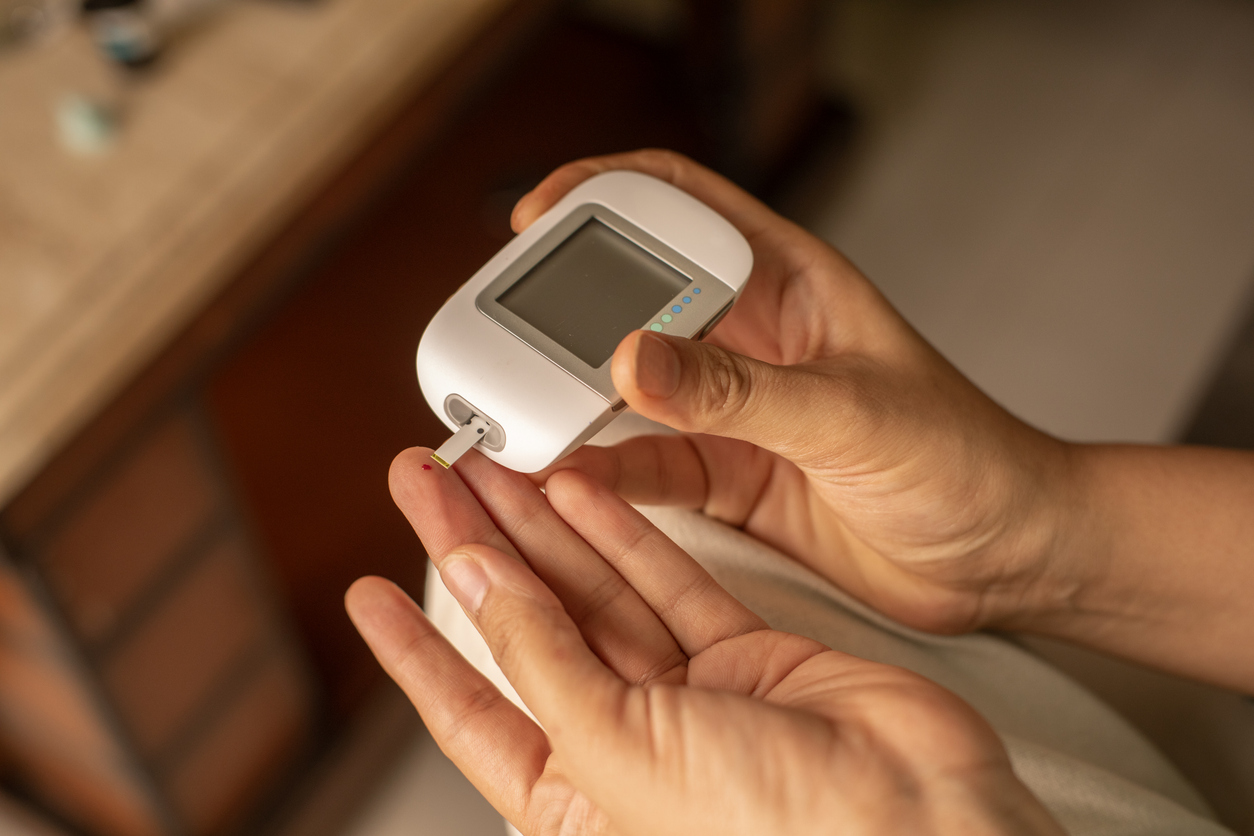
Representational image. Credit: iStock
Synopsis: A growing body of evidence shows BMI misses India’s biggest metabolic risk: abdominal obesity. Indians store fat differently, with smaller subcutaneous capacity and higher visceral deposits around organs, driving diabetes, fatty liver, and heart disease at lower weights. Waist circumference—cheap, simple, and more predictive than BMI—emerges as the vital sign India must measure to confront its hidden obesity crisis.
A 35-year-old woman walks into a Mumbai clinic. She weighs 58 kilograms, stands 160 centimeters tall. Her BMI calculates to 22.6—normal by any international standard.
Her blood tests show diabetes.
The doctor pulls out a measuring tape and wraps it around her waist, just above the hip bone. The reading: 78 centimeters.
“Your weight is normal,” the doctor explains. “But your waist tells a different story.”
This scene repeats across India thousands of times daily. People with normal body weight discover they have diabetes, fatty liver, or early heart disease. The culprit hides in plain sight, wrapped around the abdomen, missed by the weighing scale and ignored by BMI calculations.
Europeans and Indians at the same height and weight carry fat in fundamentally different patterns. A 70-kilogram European and a 70-kilogram Indian may register identical BMI numbers, but the Indian body deposits more fat around internal organs and less under the skin.
Scientists call this the “Asian Indian phenotype”—high fat, normal weight, low muscle mass.
National Family Health Survey-5 data covering 636,699 households shows abdominal obesity affects 40% of Indian women and 12% of men. Among women aged 30 to 49, five to six out of every ten show abdominal obesity.
Think of subcutaneous fat—the fat under your skin—as a storage tank. In Europeans, this tank holds more before reaching capacity. In Indians, the tank is smaller and fills faster.
When the tank saturates, fat overflows. But it does not expand outward into visible layers. Instead, it spills inward, depositing in organs never designed to store it: the liver, pancreas, and around the heart.
This ectopic fat drives metabolic dysfunction. The liver accumulates fat and starts secreting a protein called fetuin-A, which blocks insulin from working in muscles. Fat also deposits in the pancreas, damaging cells that produce insulin.
The cascade completes: subcutaneous fat saturates, free fatty acids overflow into liver and pancreas, liver releases proteins that block insulin, pancreas fails to compensate. Diabetes arrives at a body weight considered safe in European populations.
BMI was developed using European data. Indians exhibit higher body fat at comparable BMI levels. A BMI of 24 might fall within normal range for a European while an Indian at the same BMI already carries excess abdominal fat and faces elevated metabolic risk.
Researchers studied 2,050 Indian adults two decades ago to determine appropriate waist circumference cut-offs. They found substantially lower thresholds than international standards.
For Indian men, waist circumference of 78 centimeters or higher indicates concern. At 90 centimeters or higher, multiple cardiovascular risk factors cluster. For Indian women, 72 centimeters signals concern, while 80 centimeters indicates high risk.
International guidelines use 94 centimeters for men and 80 centimeters for women—numbers that miss high-risk Indians entirely.
Abdominal obesity drives multiple diseases beyond diabetes.
The INTERHEART study showed South Asians develop heart attacks nearly six years earlier than other populations. A systematic review found chronic kidney disease prevalence of 14 percent among overweight or obese South Asians without diabetes.
Among 106 morbidly obese Indian women studied, 74 percent showed fatty liver disease. Waist circumference emerged as a key predictor. A Mumbai hospital study of 1,633 breast cancer cases showed waist-hip ratio of 0.95 or higher markedly increased risk in both pre- and postmenopausal women.
Urban Indian schoolchildren show abdominal obesity at alarming rates. A study of 38,296 children aged 8 to 18 found prevalence of 4.5 percent. Girls showed higher rates than boys.
The pattern reflects India’s unique nutritional transition: early undernutrition followed by rapid lifestyle changes. Children born into food scarcity develop bodies optimised for storing every calorie. When abundance arrives through processed foods and sedentary lifestyles, those bodies store fat in all the wrong places.
High waist-hip ratio in young adults emerged as one of the strongest predictors of early Type 2 diabetes.
Body weight gets recorded for many people. BMI gets calculated for fewer. Waist circumference gets measured for the least—even though abdominal obesity drives diabetes more strongly than weight or BMI in Indians.
The measurement requires no expensive equipment. A non-stretchable tape costs less than Rs 50. The person should fast, stand straight, and the tape wraps horizontally just above the hip bone at the end of a normal breath out.
Waist-to-height ratio provides another useful parameter. Divide waist by height. The ratio should stay below 0.50. A person 170 centimeters tall should maintain waist below 85 centimeters.
The International Atherosclerosis Society recommended in 2020 that waist circumference be considered a routine clinical “vital sign.” It provides cardiometabolic risk information beyond BMI.
Indians carry genes shaped by millennia of periodic famine. Bodies evolved to store fat efficiently during rare abundance. The subcutaneous fat storage capacity appears genetically smaller. When intake exceeds this threshold, fat routing shifts to organs.
Muscle mass also differs. Indians carry less lean muscle relative to body weight. Muscle tissue consumes glucose and buffers nutrient intake. Less muscle means less capacity, accelerating overflow into organs.
The combination creates vulnerability: smaller subcutaneous storage, less muscle buffer, genetic predisposition to visceral fat. Add rapid dietary transition to processed foods high in refined carbohydrates, and the metabolic crisis accelerates.
Unlike weight or BMI, waist circumference directly reflects the fat depot that matters most for metabolic disease. It captures both subcutaneous abdominal fat and intra-abdominal visceral fat surrounding organs.
Visceral fat secretes inflammatory molecules, releases free fatty acids directly into the liver, and produces hormones that interfere with insulin signaling. The metabolic damage begins here, in fat wrapped around intestines, liver, and pancreas.
Two people with identical weight and BMI can carry vastly different amounts of visceral fat. The tape measure reveals what the scale hides.
Why do Indians get diabetes at lower body weights than Europeans? Because the dangerous fat hides inside, wrapping around organs, even when total body weight appears normal.
The weighing scale cannot see it. BMI calculations cannot capture it. Only the measuring tape reveals it.
“India’s expanding waistlines are the visible sign of a deep, largely invisible metabolic emergency,” wrote Dr Amerta Ghosh and Dr Anoop Misra in Diabetes & Metabolic Syndrome journal. “The evidence is clear: abdominal adiposity is the dominant obesity phenotype in India’s diabetes crisis. We should measure it in all patients.”
The answer literally wraps around the waist.
(Edited by Amit Vasudev)


