

Published Feb 02, 2026 | 7:50 AM ⚊ Updated Feb 02, 2026 | 7:50 AM

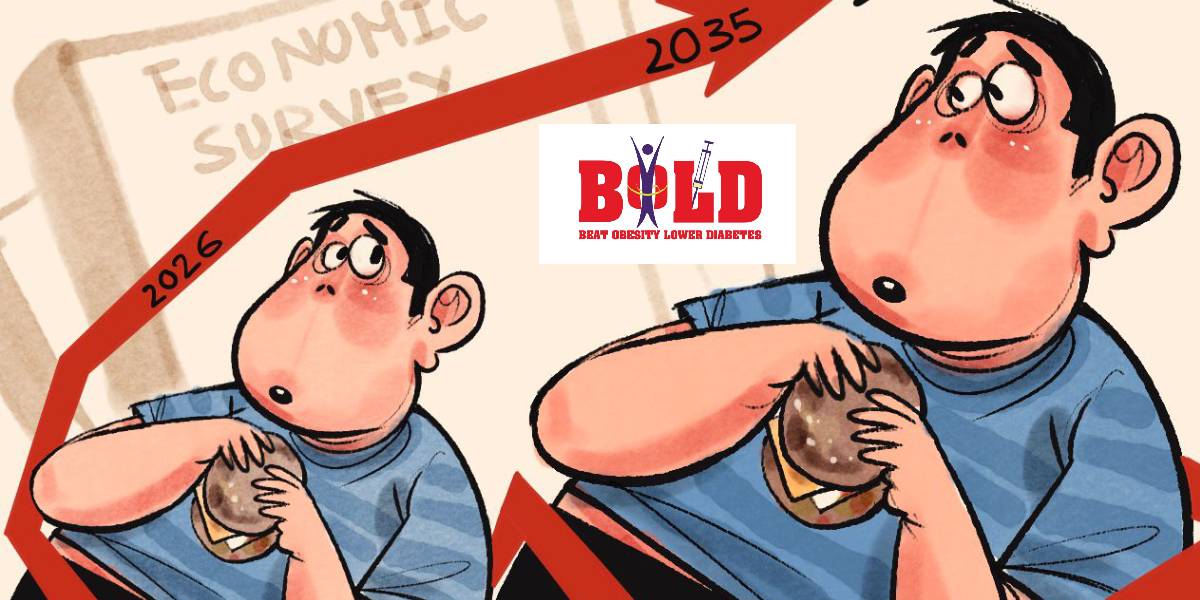
The projection of 8.3 crore obese children by 2035 points to an entire generation at risk of chronic diseases.
Synopsis: India could have 8.3 crore obese children by 2035, more than double the 3.3 crore recorded in 2020, the Economic Survey 2025–26 has warned, linking the sharp rise to growing consumption of ultra-processed foods and changing diets. The survey notes that excess weight among children under five has increased in recent years, even as ultra-processed food sales have surged more than 150 percent since 2009, creating a looming public health crisis.
The number of obese children is projected to rise from 3.3 crore in 2020 to 8.3 crore by 2035, more than doubling in 15 years, according to the recently released Economic Survey 2025-26.
The projection comes as the survey revealed that “the prevalence of excess weight among children under five has risen from 2.1 percent in 2015-16 to 3.4 percent in 2019-21,” coinciding with a sharp rise in ultra-processed food (UPF) sales across India.

“India is one of the fastest-growing markets for UPF sales. It grew by more than 150 percent from 2009 to 2023,” the survey stated.
“Retail sales of UPFs in India surged from USD 0.9 billion in 2006 to nearly USD 38 billion in 2019, a 40-fold rise. It is during the same period that obesity has nearly doubled in both men and women.”
The survey described converging trends that are creating a health crisis. Currently, “24 percent of Indian women and 23 percent of Indian men are overweight or obese,” according to the 2019-21 National Family Health Survey. “Among women aged 15-49 years, 6.4 percent are obese, and among men, 4.0 percent are obese.”
However, it is the trajectory for children that has alarmed policymakers. The projection of 8.3 crore obese children by 2035 points to an entire generation at risk of chronic diseases from an early age.
“UPFs are displacing long-established dietary patterns, worsening diet quality, and are associated with increased risk of multiple chronic diseases,” the survey warned.
The survey cited global research linking ultra-processed foods to adverse health outcomes.
“A global team of researchers worked on the Lancet Series on UPFs and Human Health, consolidating the global evidence demonstrating that high UPF consumption is associated with several adverse health outcomes, such as obesity, chronic heart disease risk, respiratory issues, diabetes, mental health disorders, etc,” it added.
“The rising use of UPFs imposes a substantial economic cost through higher healthcare spending, lost productivity, and long-term fiscal strain.”
The survey’s analysis of food patterns revealed troubling trends across India:
“An analysis of food patterns and preferences reveals that a significant segment of the population in India consumes far more cereals than recommended, along with fewer protective foods such as legumes, milk, nuts, vegetables, and fruits.”
Regional variations showed different challenges.
“In the urban region of north India, fat intake (67.3 g) was among the highest; Northeast India consumed the highest total calorie intake (2,908 Kcal) and carbohydrates (457 g) per day; the highest percentage of protein from meat, poultry, fish and seafood was observed in urban (16.9 percent) and rural (28 percent) southern regions,” it said.
However, a common problem emerged across regions: “Only 8.7 percent of the population in rural areas and 14.3 percent of the population in urban areas consumed milk and milk products as per recommended levels.”
The survey highlighted India’s unique challenge of tackling malnutrition and obesity at the same time.
“The nutrition landscape is one of complexities characterised by the incidence of child malnutrition; key nutrient deficiencies in adolescent girls, pregnant and lactating mothers, and micronutrient deficiencies, especially among vulnerable and marginalised sections of society,” it stated.
“The concerns of rising lifestyle diseases, rising burden of cancers, increasing antibiotic resistance, and falling general immunity levels are exacerbated as a consequence of nutritional deficiencies.”
Government screening programmes have already highlighted the scale of the obesity challenge:
“The Ministry of Health and Family Welfare (MoHFW) has issued instructions to all States and Union Territories to take action for a 10 percent reduction in oil consumption and intensify awareness through National Programme for Prevention and Control of NCDs (NP-NCD) platforms. Under the programme, over 31.5 crore adults have been screened, and 8.47 crore identified as overweight or obese.”
The survey placed strong emphasis on schools as key sites in the fight against childhood obesity.
“Schools serve as formative environments where children learn and adopt healthy nutritional and physical activity practices. Considering the amount of time children spend at school, it is an ideal place to encourage them to learn and practise healthy habits,” it said.
The survey recommended a range of measures: “School-level interventions such as increasing water accessibility, providing free fruits, offering only healthy options in the school cafeteria, and removing vending machines will provide a choice of healthier foods. Integrating mandated daily and weekly physical activity time with classroom activity is crucial for both mental and physical health.”
It also proposed an accountability mechanism. “To incentivise both public and private schools to prioritise student well-being, a school well-being score may be calculated. This would allow parents to assess school performance based on both academic achievements and students’ well-being,” it said.
“The formation of a wellness council by school staff, along with a written wellness policy, may enhance the effectiveness of school-level interventions. Regular training and workshops for parents and staff, and collaboration with the local community, will enhance the effectiveness of measures.”
The survey emphasised that school interventions alone would not be sufficient.
“Any intervention at the school level would only be effective with the active participation of families and communities to ensure that healthy habits are followed outside schools as well,” it said.
It recommended that “families should be educated and encouraged to promote screen-time limits, device-free hours, and shared offline activities. Parental workshops should be provided through schools and community centres to train guardians in setting healthy boundaries.”
The survey highlighted the 2024 ICMR-NIN Dietary Guidelines as addressing “India’s evolving food environment. They tackle the dual burden of malnutrition, undernutrition and rising obesity, while emphasising sustainable food choices, micronutrient sufficiency, and the prevention of diet-related NCDs.”
“Key recommendations include consuming a diverse range of foods, increasing intake of vegetables and legumes, and reducing consumption of salt, fat, and sugar. The guidelines also promote regular physical activity and serve as a vital resource for public health policymakers, nutritionists, and the wider public.”
The survey called for a return to traditional dietary patterns: “Traditional foods, such as millets and lesser-known pulses, may be considered for distribution through the public distribution system, ensuring that they do not perpetuate reliance on cereals and help widen dietary diversity.”
The survey stressed the importance of culturally appropriate communication: “Sustained awareness generation and education are possible only with a change in behavioural choices, and this can be enabled by embedding the messages in a culturally relevant manner.”
It pointed to an emerging trend: “Efforts to popularise locally grown food, traditional foods, and traditional cooking methods are reflected in the increasing number of social media influencers creating content around such knowledge and practices. The attractiveness and reach of social media should be leveraged to disseminate the importance of nutrition in the prevention and management of NCDs.”
The survey acknowledged several government programmes already in place.
“Recognising obesity as a critical public health concern, the government has launched comprehensive, multi-pronged initiatives to prevent, manage, and reduce obesity in the country,” it said.
“The interventions are strategically designed by multiple ministries to promote a holistic approach that integrates health, nutrition, physical activity, food safety, and lifestyle modifications.”
These include: “POSHAN Abhiyaan and Poshan 2.0, Fit India Movement, Khelo India, Eat Right India, Nationwide Awareness Campaign ‘Aaj Se Thoda Kam’ and AAMs, the School Health Programme, and Yoga promotion.”
The FSSAI has launched the “Stop Obesity and Fight Obesity Awareness Initiative to Stop Obesity” campaign.
“As part of the campaign, communication materials to raise awareness of obesity have been prepared in regional languages and sign language, alongside media outreach through FM radio, railway announcements, and digital platforms,” it said.
The survey also raised concerns about unregulated health products.
“Today, the market offers a growing range of products sold as energy drinks, health drinks, nutrient drinks, stress-relief formulations, and weight-loss beverages, many of which make quasi-medical claims without being considered medicines. These products are known as ‘health supplements’ or ‘nutraceuticals’,” it said.
“Since these products can be purchased without a doctor’s prescription, concerns exist that long-term, unregulated use, particularly of poorly manufactured products, may lead to adverse reactions. Consumers must be clearly informed and educated that such products are not equivalent to clinically validated therapies, enabling them to make an informed choice.”
The survey emphasised the role of States in implementation.
“While national nutrition programmes play a vital role in setting the tone of the policy framework and extending financial support, it is the States that, through successful on-the-ground implementation, determine the efficiency and effectiveness of programmes. State-level innovations are powerful tools for addressing local challenges and issues,” it said.
It highlighted Rajasthan’s Cash Plus Model as an example, “which integrates DBT with behaviour change interventions to tackle child and maternal undernutrition.”
(Edited by Majnu Babu.)


