

Published Feb 01, 2026 | 6:15 PM ⚊ Updated Feb 01, 2026 | 6:15 PM

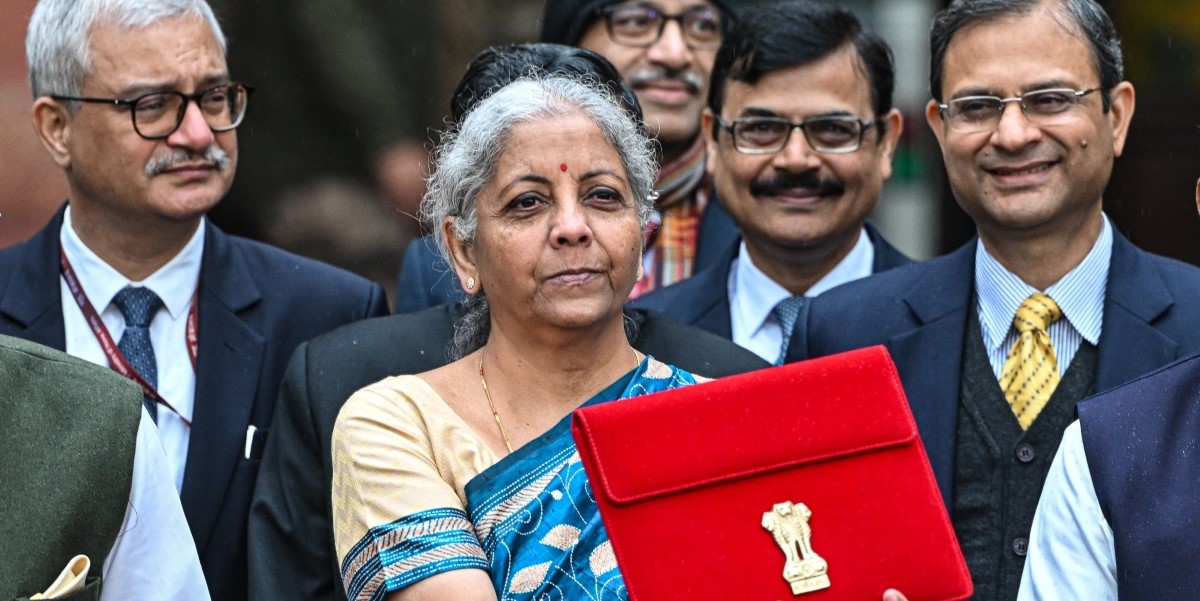
Finance Minister Nirmala Sitharaman.
Synopsis: The Union government underspent on more than 100 of the 191 Centrally Sponsored Schemes in 2025–26, with revised estimates showing cuts of over ₹1.2 lakh crore, largely affecting welfare, rural infrastructure, education and agriculture. The sharpest reduction was in the Jal Jeevan Mission while several housing, road, education, nutrition, farm and social welfare schemes also saw lower spending than budgeted.
The Union government underspent on over 100 of the 191 Centrally Sponsored Schemes originally budgeted for the 2025–26 financial year, figures released with the 2026–27 Budget show. Most of these cuts came from welfare, rural infrastructure, and education, together exceeding ₹1.2 lakh crore.
In aggregate, allocations for all 191 Centrally Sponsored Schemes were pared down from ₹5.42 lakh crore in the Budget Estimates to ₹4.20 lakh crore in the Revised Estimates.
The sharpest reduction was in the Jal Jeevan Mission, launched in 2019 to provide safe and adequate drinking water through individual household tap connections by 2024. Its allocation was cut from ₹67,000 crore to ₹17,000 crore.
In the past, cuts to the Jal Jeevan Mission have drawn criticism from states such as Tamil Nadu and Karnataka.
Tamil Nadu Chief Minister MK Stalin had sought the release of ₹3,112 crore for the scheme, saying that Tamil Nadu had implemented it effectively but had not received its full share of central funds. Karnataka IT-BT Minister Priyank Kharge said the State had paid up to ₹15,000 crore from its own resources to cover the Centre’s share so that the scheme could continue.
Other flagship rural infrastructure programmes also saw sizeable cuts.
The Pradhan Mantri Awas Yojana (Rural), which facilitates access to affordable housing for low- and moderate-income households, was revised down from ₹54,832 crore to ₹32,500 crore. The outlay for the Pradhan Mantri Gram Sadak Yojana, which provides all-weather road connectivity to unconnected villages, was reduced from ₹19,000 crore to ₹11,000 crore.
Cuts were also evident in education and nutrition. The allocation for Samagra Shiksha was brought down from ₹41,250 crore to ₹38,000 crore, while PM POSHAN—a midday school meal programme—was revised from ₹12,500 crore to ₹10,600 crore.
Funding for PM SHRI Schools—meant to showcase the implementation of the National Education Policy 2020—saw a sharper drop, falling from ₹7,500 crore to ₹4,500 crore. Higher education support under PM-USHA, which aims to improve quality, accessibility, and equity in state-run institutions, was almost halved, from ₹1,815 crore to ₹800 crore.
The PM SHRI scheme has also become a political flashpoint. In Tamil Nadu, the State government has declined to sign the memorandum of understanding required for its implementation, citing objections to the National Education Policy.
As a result, the scheme has not taken off in the State, even as its national allocation was trimmed in the Revised Estimates.
Ahead of the Union Budget 2026, M. K. Stalin urged the Union government to spell out clear, time-bound financial commitments to the State, particularly in education. In a social media post, he sought the release of ₹3,548 crore towards students’ education funds which, he said, had been withheld.
In the same sector, child nutrition and early childhood care programmes were affected, with Saksham Anganwadi and POSHAN 2.0 recording lower spending than budgeted.
A similar pattern was visible in agriculture and allied sectors. The allocation for the Rashtriya Krishi Vikas Yojana—an umbrella scheme for the development of agriculture and allied sectors—was revised down from ₹8,500 crore to ₹7,000 crore, while the Krishionnati Yojana, which aims to increase the production of rice, wheat, pulses, coarse cereals, and commercial crops, saw its outlay reduced from ₹8,000 crore to ₹6,800 crore.
Support for the Pradhan Mantri Krishi Sinchai Yojana, which expands irrigation coverage, was also scaled back, from ₹8,260 crore to ₹6,372 crore.
Large irrigation projects were not insulated from these revisions. The Interlinking of Rivers programme saw its allocation cut from ₹2,400 crore to ₹1,808 crore, while the Polavaram irrigation project was reduced from ₹5,936 crore to ₹3,017 crore.
In the fisheries sector, the outlay for the Pradhan Mantri Matsya Sampada Yojana, aimed at a “Blue Revolution” through sustainable fisheries development, was similarly reduced, from ₹2,465 crore to ₹1,500 crore.
Alongside these cuts, livelihood programmes also saw lower utilisation. The budget for DAY–NRLM, which supports women’s self-help groups and rural livelihoods through skill training, was cut from ₹19,005 crore to ₹16,000 crore.
Reductions were also visible across a range of social welfare schemes. The allocation for the National Social Assistance Programme, which provides pensions to the elderly, widows, and persons with disabilities, was revised down from ₹9,652 crore to ₹9,197 crore.
Funding for women- and child-focused schemes was cut as well. Mission Shakti, which provides integrated support to women affected by violence and those in distress, was reduced from ₹3,150 crore to ₹2,000 crore, while Mission Vatsalya, which promotes family-based, non-institutional care for children in difficult circumstances, fell from ₹1,500 crore to ₹1,100 crore.
Schemes meant for historically marginalised communities were also affected. The allocation for PM AJAY, which targets Scheduled Castes, was brought down from ₹2,140 crore to ₹1,250 crore. PM YASASVI, which covers OBCs, EBCs, and de-notified tribes, was cut from ₹2,190 crore to ₹1,500 crore. Funding for the Vanbandhu Kalyan Yojana for Scheduled Tribes was similarly reduced, from ₹5,582 crore to ₹4,023 crore.
Even as several welfare and development schemes saw their allocations lowered, a few major expenditure items recorded higher spending than originally budgeted.
The budget for the world’s largest food security programme under the Pradhan Mantri Garib Kalyan Anna Yojana was raised from ₹2.03 lakh crore to ₹2.28 lakh crore.
Fertiliser support also increased, with the urea subsidy going up from ₹1.18 lakh crore to ₹1.26 lakh crore, and the nutrient-based subsidy from ₹49,000 crore to ₹60,000 crore.
In addition, a new and sizeable provision was made under Technology in National Security, which did not figure in the original Budget but received ₹31,631 crore in the Revised Estimates.
Some defence procurement items, along with select railway and infrastructure works, also recorded upward revisions.
(Edited by Dese Gowda)


